For the first time since the inception of the Ukraine Defense Contact Group, a pivotal meeting of over 50 nations supporting Ukraine’s defense effort will convene without the presence of the United States Secretary of War.
Multiple European and U.S. officials confirmed that Defense Secretary Pete Hegseth will not attend the upcoming April 11 gathering in Brussels, signaling a significant shift in America’s role in the coalition.
The upcoming meeting, which will be chaired by Germany and the United Kingdom, marks a historic departure from tradition.
The U.S., long the backbone of the coalition both militarily and diplomatically, will not send Hegseth in person or virtually.
Here's What They're Not Telling You About Your Retirement
According to a U.S. official speaking anonymously, the Pentagon is unlikely to send any senior representatives at all — a stark contrast to previous gatherings where top-level American defense leadership was not just present but steering the conversation.
While Washington continues to assess its participation in forums supporting Ukraine, the absence of senior U.S. officials from this round of talks raises pressing questions about the future of American engagement in the war effort. The implications are being felt acutely across Europe.
For many European leaders, Hegseth’s decision is not entirely unexpected but is nonetheless unsettling.
This Could Be the Most Important Video Gun Owners Watch All Year
It serves as another clear signal of the Trump administration’s recalibrated approach to military support for Ukraine — an approach that puts greater responsibility on European nations and reduces America’s historic defense leadership.
In his last appearance at the Ukraine Defense Contact Group’s February meeting, Hegseth issued a sharp rebuke to his European counterparts. Speaking from Brussels, he challenged the continent’s reliance on American military power.
“President [Donald] Trump will not allow anyone to turn Uncle Sam into Uncle Sucker,” Hegseth declared, echoing a famous line from former President Dwight D. Eisenhower. His statement underscored a broader message: Europe must begin to shoulder more of the burden of its own defense.
Hegseth also made headlines at the February meeting by preemptively ruling out NATO membership for Ukraine — a stance not yet formally adopted by the administration at that time. Senator Roger Wicker, R-Miss., chairman of the Senate Armed Services Committee, criticized the comment as a “rookie mistake,” highlighting concerns about the mixed signals coming from the U.S. government.
The absence of the U.S. at the April summit is especially significant given the role it has played since the Ukraine Defense Contact Group was launched in 2022.
The group, founded by then-Defense Secretary Lloyd Austin shortly after Russia’s full-scale invasion, quickly became a cornerstone of coordinated Western military support. More than $126 billion in security assistance has been channeled through the group, with roughly half coming from the United States.
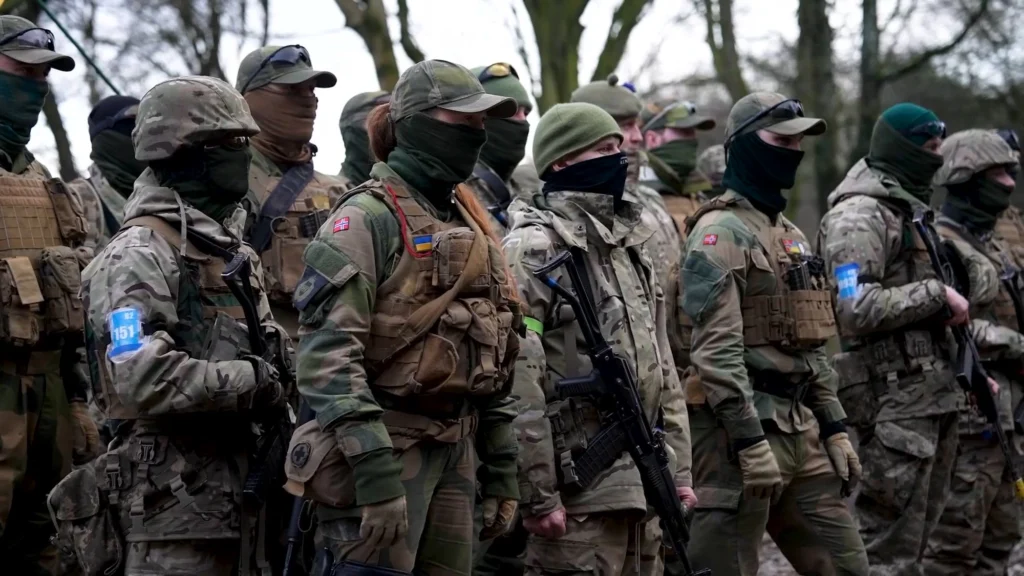
Over the past three years, the group became synonymous with U.S. leadership — especially at Germany’s Ramstein Air Base, where the coalition first convened.
Austin’s physical presence at the meetings was a mainstay, interrupted only once when he was recovering from complications related to cancer treatment. Even then, he participated remotely and had senior Pentagon policy official Celeste Wallander stand in.
Wallander, speaking in an interview, noted that European leaders had already started planning for scenarios in which the U.S. might take a back seat. “We had discussed a contingency where Germany and the U.K. could step forward,” she said, pointing to their respective economic and military capacities.
That contingency is now reality.
While the group may continue without direct U.S. leadership, the absence is not without consequence.
According to Wallander, key elements of the coalition’s strength — namely, the U.S. intelligence briefings and coordination from U.S. European Command — may be diminished. “Without them, we lose crucial battlefield insight,” she warned.
That warning has already materialized in part. Following a reportedly unproductive February Oval Office visit by Ukrainian President Volodymyr Zelenskyy, the U.S. temporarily stopped sharing intelligence with Ukraine and paused weapons shipments for a week — a move that sent shockwaves through the alliance.
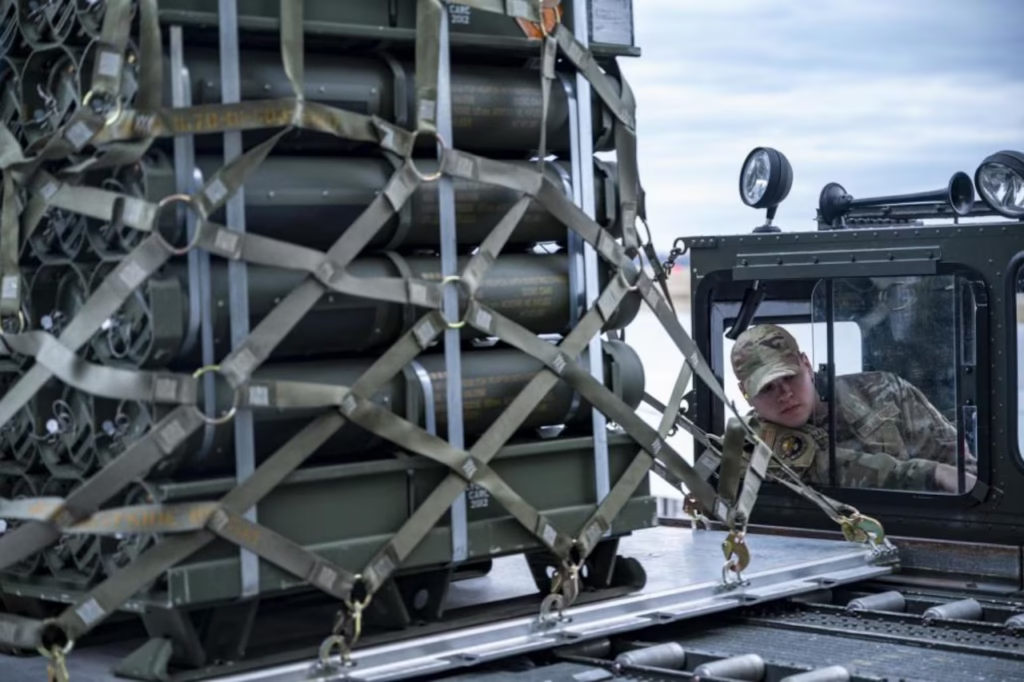
Compounding the issue, the Pentagon has $3.85 billion left in authority to send weapons to Ukraine but no additional funds to replenish that equipment.
Despite growing urgency, Congress has yet to approve new aid packages, and key lawmakers have stated they have no plans to do so in the near term.
Join the Discussion
COMMENTS POLICY: We have no tolerance for messages of violence, racism, vulgarity, obscenity or other such discourteous behavior. Thank you for contributing to a respectful and useful online dialogue.