President Donald Trump made it clear this weekend that the war against Iran is far from over, even as the formal paperwork on “Operation Epic Fury” has been closed.
The bureaucrats may have called it “terminated,” but Trump made no secret that America’s fight against the rogue regime still has a few rounds left in the chamber.
During a sit-down with “Full Measure,” Trump dismissed the notion that combat operations had concluded. “No, I didn’t say that,” he said flatly when pressed.
The president noted that while Iran’s warfighting capacity had been crushed, that doesn’t mean U.S. operations are finished.
MORE NEWS: Pentagon Confirms First Military Execution in Over 60 Years Will Be Publicly Livestreamed
“We could go in for two more weeks and hit every single target,” Trump said, estimating that roughly 70% of all targets inside Iran had already been hit.
The president also noted that the remaining Iranian infrastructure would take years to rebuild if the U.S. stopped operations tomorrow.
“Even if we didn’t do that, it would take them many years to rebuild,” he added, speaking with the confidence of a commander who knows strength deters aggression, not half-measures or “restraint.”
Trump was equally blunt about Tehran’s latest “peace” offer to end the hostilities. From the White House Monday morning, he blasted the proposed ceasefire as a “piece of garbage.”
After more than ten weeks of conflict, Trump isn’t falling for Iran’s typical diplomatic deception. “The ceasefire,” he said, “is on life support.”
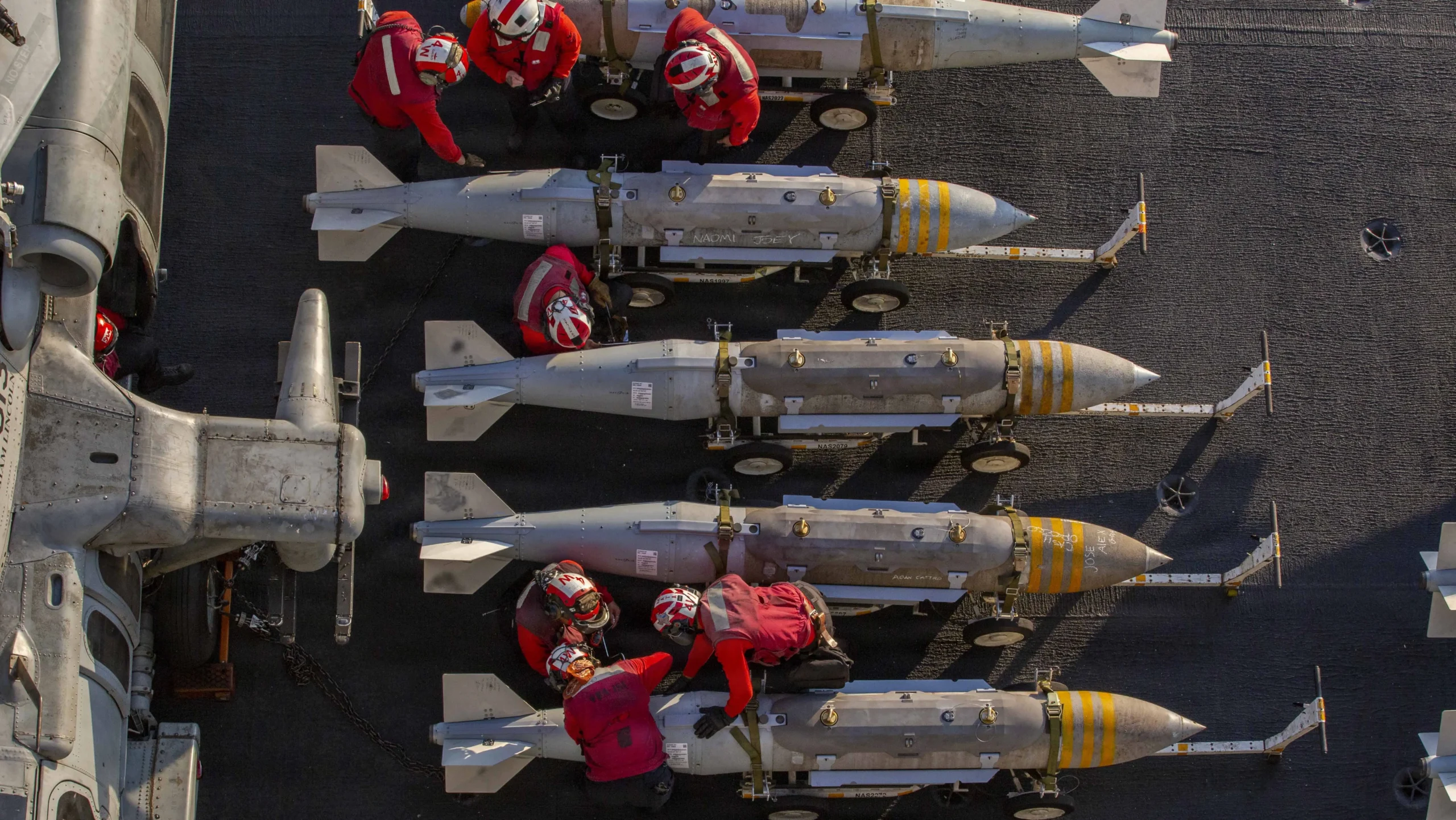
Before the campaign began, Trump’s War Department outlined four clear goals: erase Iran’s Navy, cripple its ballistic missiles, cut off support to its terror proxies, and push Iran’s leaders to abandon nuclear ambitions entirely. Those goals aren’t fully met yet—and Trump’s not pretending they are.
Israeli Prime Minister Benjamin Netanyahu agreed during a “60 Minutes” interview that the mission remains unfinished.
“I think it’s accomplished a great deal, but it’s not over,” he said plainly.
Netanyahu reminded the world that “there’s still nuclear material, enriched uranium that has to be taken out of Iran” and that dismantling their enrichment facilities must still be done. He noted that Iran’s dangerous missile projects also remain a problem.
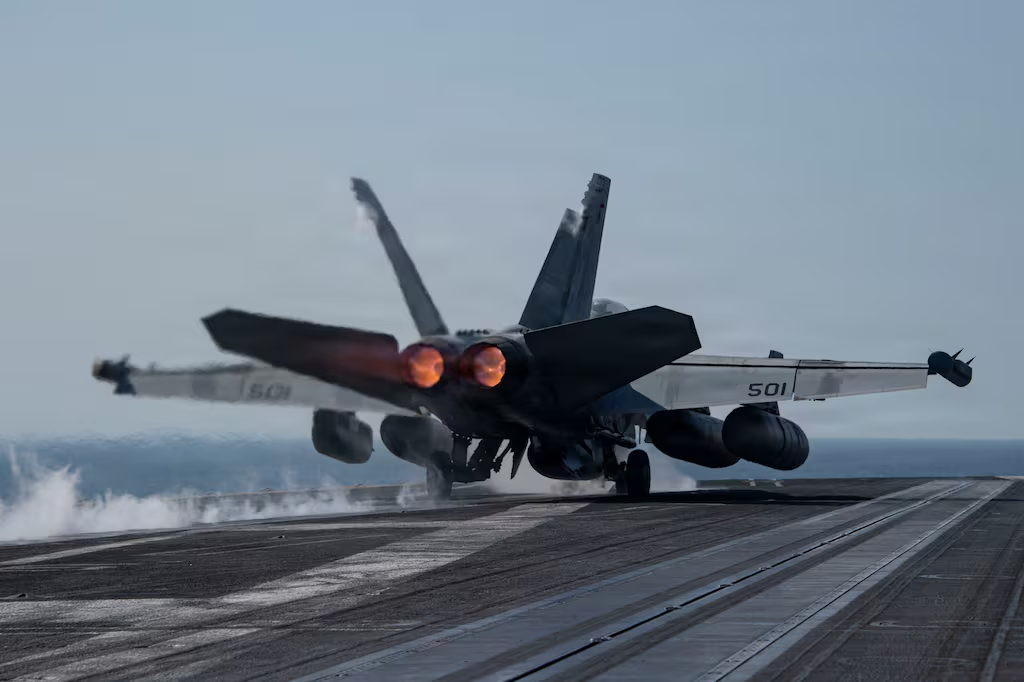
Netanyahu didn’t mince words on how to solve it either. “You go in, and you take it out,” he declared, suggesting that direct action—not more sanctions or wishful words—is the only way to eliminate the threat.
He added that President Trump had assured him he’s ready to do what’s necessary, though he held back on operational details about whether special forces from the U.S. or Israel would handle the task.
Trump also revealed that the Space Force, an institution he championed during his first term, has Iran’s nuclear sites under close surveillance.

“If anybody got near the place, we will know about it, and we’ll blow them up,” he said, underscoring just how seriously his administration continues to monitor and prepare for any potential escalation.
While the strategic goals are clear, some in Washington are now wringing their hands about America’s munitions levels. Senator Mark Kelly, a Democrat and former astronaut, complained on “Face The Nation” that U.S. stockpiles of key munitions have been deeply drawn down.
Kelly cited “classified briefings” and claimed that inventories of Tomahawk missiles, Patriots, THAADs, SM-3s, and Army Tactical Missile Systems were heavily depleted during the 10-week campaign.
“It’s shocking how deep we have gone into these magazines,” Kelly lamented. He claimed that the depletion made America “less safe” against potential threats from regions like the western Pacific. Like clockwork, the liberal panic machine shifted from opposing Trump’s Iran strategy to fretting about “running out” of weapons all over the world.
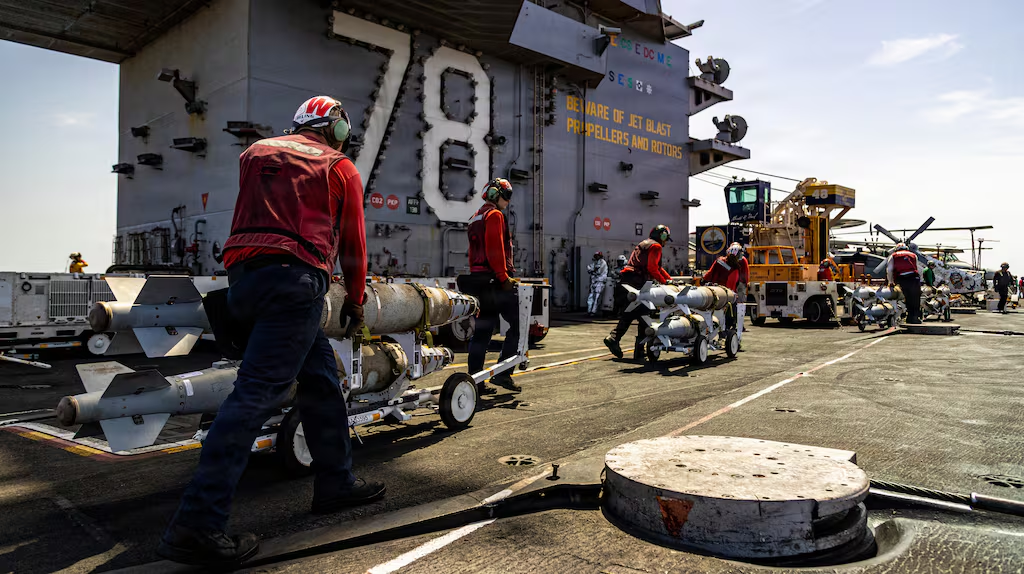
Secretary of War Pete Hegseth wasn’t about to let that slide. When Kelly took his classified concerns to prime-time television, Hegseth pushed back hard, questioning whether the senator had once again violated his oath of confidentiality. “Did he violate his oath… again?” Hegseth posted on X, adding that the Department of War’s legal counsel would look into it.
Kelly then tried to clap back online, posting a clip from an April 30 hearing showing Hegseth admitting that replenishing the weapon stockpiles could take “months and years.”
What Kelly ignored, of course, is that every serious war effort entails resource strain, and the point of rebuilding afterward is to come out stronger—not to whine on television.
Analysts estimate that in just 39 days of the campaign, America used nearly half its stocks of certain interceptors and precision missiles, but that’s what happens when a superpower flexes its muscle to protect national interests.
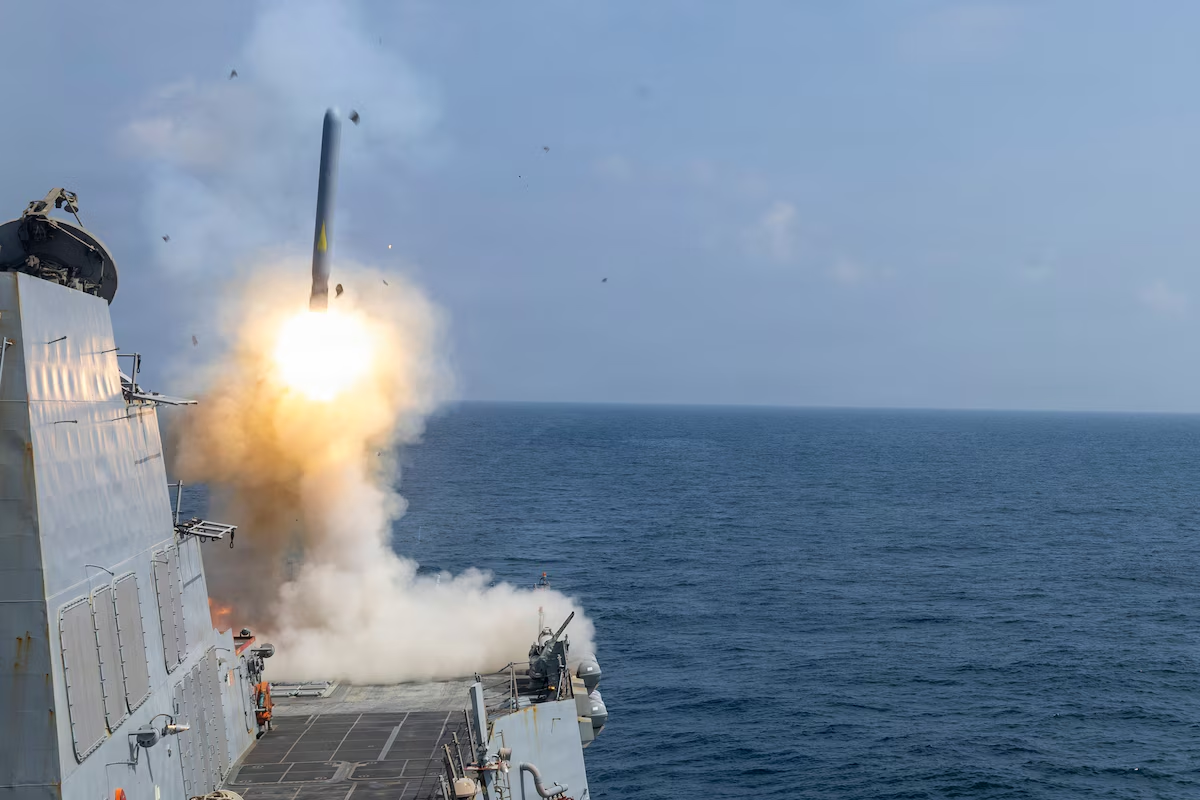
The Center for Strategic and International Studies noted that rebuilding these inventories might take up to four years, but the U.S. industrial base has responded before and can do it again—especially under leadership that prioritizes war readiness over “green energy” or “diversity metrics.”
For President Trump and Secretary Hegseth, the Iran campaign isn’t a quagmire—it’s a function of real deterrence and American muscle.
The mission always was to pulverize Iran’s war-making ability, not to negotiate fake peace deals.
Washington insiders might grumble about missile stockpiles, but the men in charge understand that peace comes through strength, not supply spreadsheets.
As the administration continues watching Iran’s nuclear movement from orbit and dismantling what’s left of the regime’s capability on the ground, one message has been consistent from President Trump: America fights to win.
And from the looks of things, that fight isn’t over yet.
Join the Discussion
COMMENTS POLICY: We have no tolerance for messages of violence, racism, vulgarity, obscenity or other such discourteous behavior. Thank you for contributing to a respectful and useful online dialogue.