In a stark reminder of the challenges facing America’s military families, senior enlisted leaders testified before the House Appropriations Committee this week, calling on lawmakers to take urgent action to improve access to health care for service members and their loved ones.
The hearing, focused on military quality-of-life issues, spotlighted the growing concern over gaps in the Military Health System and the Defense Health Agency (DHA) that are undermining troop and family readiness.
Master Chief Petty Officer of the Navy James Honea delivered a direct appeal to Congress, urging them to bolster the Military Health System and find sustainable solutions to persistent funding shortages.
“I ask for your continued support for the Military Health System and finding innovative ways to ensure that DHA funding doesn’t compete with our warfighting priorities,” Honea said during his testimony.
Here's What They're Not Telling You About Your Retirement
The implications of insufficient care are far-reaching. When military treatment facilities are unable to provide care, beneficiaries must turn to civilian providers through Tricare.
However, low reimbursement rates—tied to Medicare’s payment structure—have made Tricare less attractive to many civilian providers. As a result, the network is shrinking, and access to care is dwindling.
“Tricare’s reimbursement rates are often too low for providers,” Honea warned.
He also pointed to delays and confusion resulting from the recent changes to Tricare contracts, which began in January, noting that these disruptions have shaken civilian providers’ trust in being paid on time.
This Could Be the Most Important Video Gun Owners Watch All Year

One of the most glaring examples came from Rep. John Rutherford, R-Fla., who described the consequences of those delays. “Our family members in Jacksonville deserve to have these outside providers available,” he said, citing a local provider who is owed nearly $100,000 by Tricare.
Rutherford and others fear that if payments aren’t resolved quickly, more civilian providers will withdraw from the Tricare network altogether.
That fear appears to be coming true. According to Military Times reporting, the new Tricare contract rollouts have led to widespread dissatisfaction and dropped coverage in many areas, particularly in the West Region where TriWest Healthcare Alliance replaced Health Net Federal Services.
Even in the East Region, where Humana Military remains the contractor, providers have reported delayed payments and administrative headaches.
“I’ve taken a number of complaints from those providers,” Honea acknowledged. “They’re not being reimbursed on time. Defense Health Agency has worked with me to have those bills paid as quickly as possible.”
The issues with the health care system aren’t just administrative—they’re deeply personal for military families who rely on consistent access to care.
Service members, unlike civilians, often have no control over where they are stationed, and limited ability to choose or retain their health care providers.
This dependence on a faltering system puts an additional strain on families already facing frequent moves, deployments, and other stresses of military life.
“When that access to health care doesn’t happen,” Honea said, “It’s going to have detrimental effects to our family readiness and possibly to our military readiness, especially if we end up having to spend military readiness dollars toward making that account whole.”
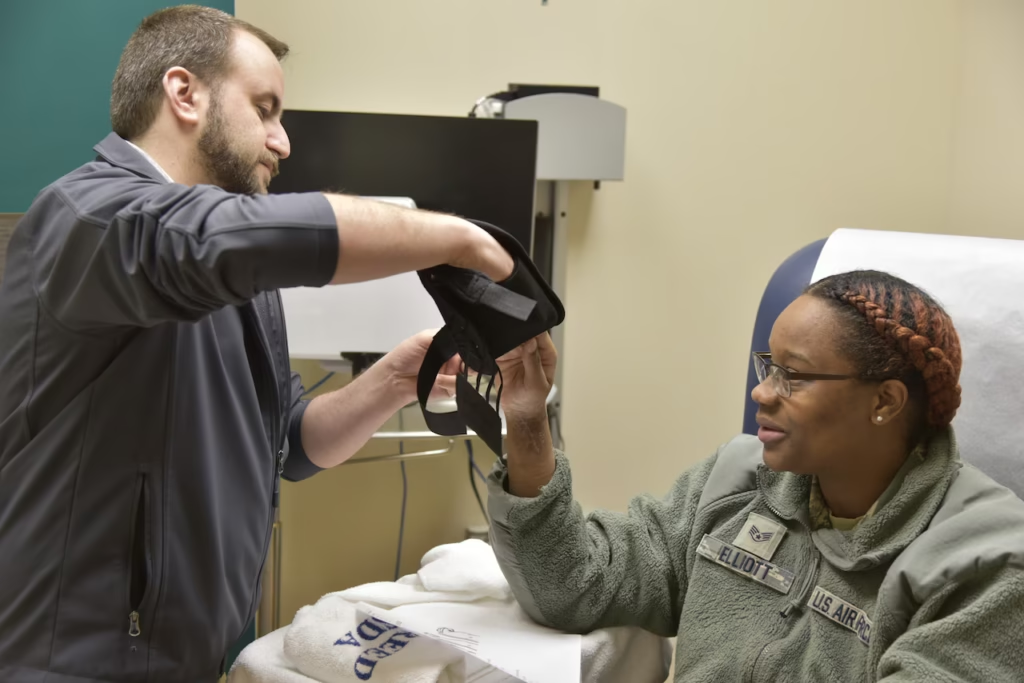
The concerns echoed across branches. Sergeant Major of the Marine Corps Carlos Ruiz emphasized the mental health care crisis affecting Marines.
MORE NEWS: Army Abruptly Scraps Deployment of 4,000 Troops to Poland Amid Chaos and Budget Shortfall
With too few mental health professionals in military facilities, Marines are being pushed into the civilian care system—where long wait times and limited availability are the norm.
“Some Marines are having to seek out mental health care from civilian providers because there aren’t enough mental health providers in military treatment facilities,” Ruiz testified.
“They may have to wait 45 to 60 days to get the help they need.”
The delay, Ruiz explained, can be devastating for service members struggling with mental health challenges. “I can’t solve that problem, so I’m looking for you to help us bring attention to it,” he told lawmakers.
The challenges facing military health care are not isolated—they reflect broader national trends of provider shortages and strained health systems.
But for the men and women serving in uniform, and their families, the stakes are uniquely high. Their well-being is directly tied to mission readiness and national security.
Lawmakers at the hearing appeared receptive to the concerns, though whether action will follow remains to be seen.
The hearing made one thing clear: without immediate improvements to funding, provider access, and Tricare support, military families will continue to face avoidable hardships that jeopardize both family stability and force readiness.
As Master Chief Honea and others emphasized, supporting military health care is not just about benefits—it’s about ensuring that those who serve can do so knowing their families are cared for and their health needs met.
Join the Discussion
COMMENTS POLICY: We have no tolerance for messages of violence, racism, vulgarity, obscenity or other such discourteous behavior. Thank you for contributing to a respectful and useful online dialogue.