In a bold move aimed at reshaping the U.S. Army for 21st-century combat, Secretary of War Pete Hegseth has issued a sweeping directive that mandates structural consolidation, acquisition reform, and a technological leap forward in unmanned systems and electronic warfare.
The April 30 memorandum, titled “Army Transformation and Acquisition Reform,” outlines a dramatic overhaul of the Army’s current organization and strategy to make it “leaner, more lethal,” and better prepared for “future warfare.”
“To build a leaner, more lethal force, the Army must transform at an accelerated pace by divesting outdated, redundant, and inefficient programs, as well as restructuring headquarters and acquisition systems,” Hegseth’s memo declares.
The directive serves as both a roadmap and a mandate for the Army, signaling a comprehensive shift in focus—from reducing outdated bureaucracies and heavy platforms to expanding advanced technologies like drones, counter-drone systems, and electronic warfare capabilities.
Here's What They're Not Telling You About Your Retirement
Many of the initiatives build upon current programs, while others align closely with the Pentagon’s broader Indo-Pacific strategy to deter China’s growing influence.
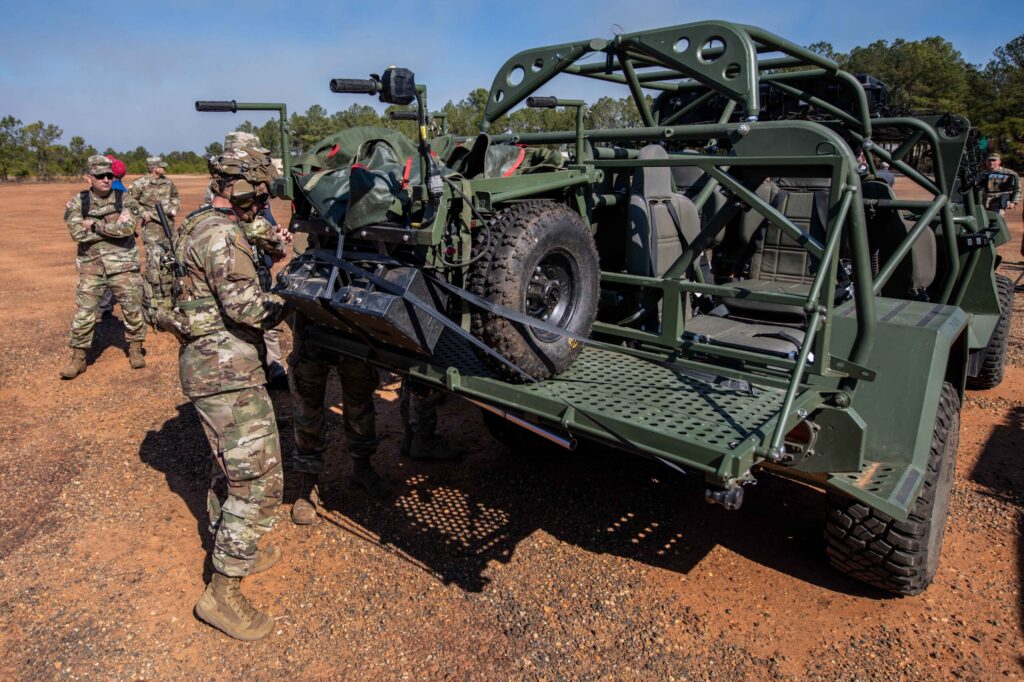
Command Restructuring: Fewer Generals, More Efficiency
Among the most consequential changes is the consolidation of several high-level Army commands. The memo proposes merging U.S. Army North and U.S. Army South into a single unified headquarters, and calls for combining Army Futures Command—which is responsible for technological innovation—and Training and Doctrine Command into a new four-star command headquartered in Texas.
This Could Be the Most Important Video Gun Owners Watch All Year
Army Chief of Staff Gen. Randy George confirmed the location of this new command in a separate statement, emphasizing that the goal is to reduce layers of redundancy while increasing agility.
Hegseth explicitly calls for the closure or merging of other “redundant headquarters” and a reduction in the number of general officers to streamline the chain of command.
Drones at the Forefront of Army Modernization
Central to Hegseth’s transformation plan is the broad integration of unmanned aerial systems (UAS) into Army operations.
Drawing from hard-earned lessons in Ukraine, where drone warfare has reshaped the modern battlefield, the Secretary’s memo mandates that “every Army division will field drones in some capacity by the end of 2026.”
Additionally, Hegseth is pushing for a robust expansion of counter-UAS capabilities, instructing the Army to find cost-effective tools that can be embedded at the platoon level by 2026 and at the company level by 2027.
The memo also orders a reduction in crewed attack helicopter formations, offset by drone swarms designed to support existing aircraft operations.
This push is not merely experimental. It signals a new operational doctrine in which drone warfare is no longer auxiliary but central to the Army’s tactical playbook.
The Right to Repair: A Move Toward Autonomy and Cost Efficiency
Another groundbreaking provision in Hegseth’s memo is the Army’s push for the “right to repair.” Traditionally, the military has relied on contractors and original equipment manufacturers for maintenance and repairs—a process that can be costly and slow due to transportation and proprietary constraints.
The memo calls on the Army to “identify and propose contract modifications for right to repair provisions where intellectual property constraints limit the Army’s ability to conduct maintenance.”
By enabling Army units to service their own equipment, the force could gain greater self-sufficiency and reduce downtime in combat zones.
Supply Chain and Sustainment Reforms
The Secretary’s directive also addresses logistics and supply chain readiness, particularly in light of rising tensions in the Indo-Pacific and ongoing global supply chain vulnerabilities.
It mandates forward-deployment of ammunition and supplies in the Pacific theater and emphasizes the need to build out the U.S. industrial base.
To meet this goal, the memo sets a deadline for the defense industrial base to reach “full operational capability” by 2028.
This includes growing domestic manufacturing capacity and incorporating technologies such as 3D printing at the unit level to address immediate field needs.
Additionally, there are plans to consolidate certain units within Army Materiel Command, creating a more efficient and agile sustainment system to ensure frontline troops are well-equipped and supported.
Secretary Hegseth’s memo represents one of the most aggressive restructuring efforts in recent Army history.
Its blend of technological integration, structural downsizing, and logistical innovation reflects a growing recognition that the wars of the future will not be fought with the tools and tactics of the past.
As the Army begins implementing these sweeping reforms, the path forward will likely involve institutional resistance, budgetary challenges, and intense scrutiny.
But if successful, Hegseth’s vision could lay the foundation for a more adaptive, responsive, and dominant land force—one ready to meet the demands of great power competition and asymmetric threats alike.
Will the Army meet its 2027 and 2028 targets? That remains to be seen. But one thing is clear: the era of heavy bureaucracy and outdated platforms is drawing to a close, and the era of lean, tech-enabled warfare has begun.
Join the Discussion
COMMENTS POLICY: We have no tolerance for messages of violence, racism, vulgarity, obscenity or other such discourteous behavior. Thank you for contributing to a respectful and useful online dialogue.