As tensions mount in the Middle East, U.S. military installations and personnel stationed in the region are increasingly vulnerable to potential attacks, especially if former President Donald Trump authorizes military action against Iran.
While a direct strike on American soil remains unlikely, U.S. forces deployed across key locations in the Middle East could become primary targets in any escalation of conflict.
During a Senate hearing on Wednesday, Defense Secretary Pete Hegseth acknowledged the risks American troops could face and emphasized that the Pentagon is taking measures to bolster security across the region.
“We have maximum force protection in the region at all times being maintained,” Hegseth told senators, noting that several strategic options have been presented to Trump should he decide to pursue military action against Iran.
Here's What They're Not Telling You About Your Retirement

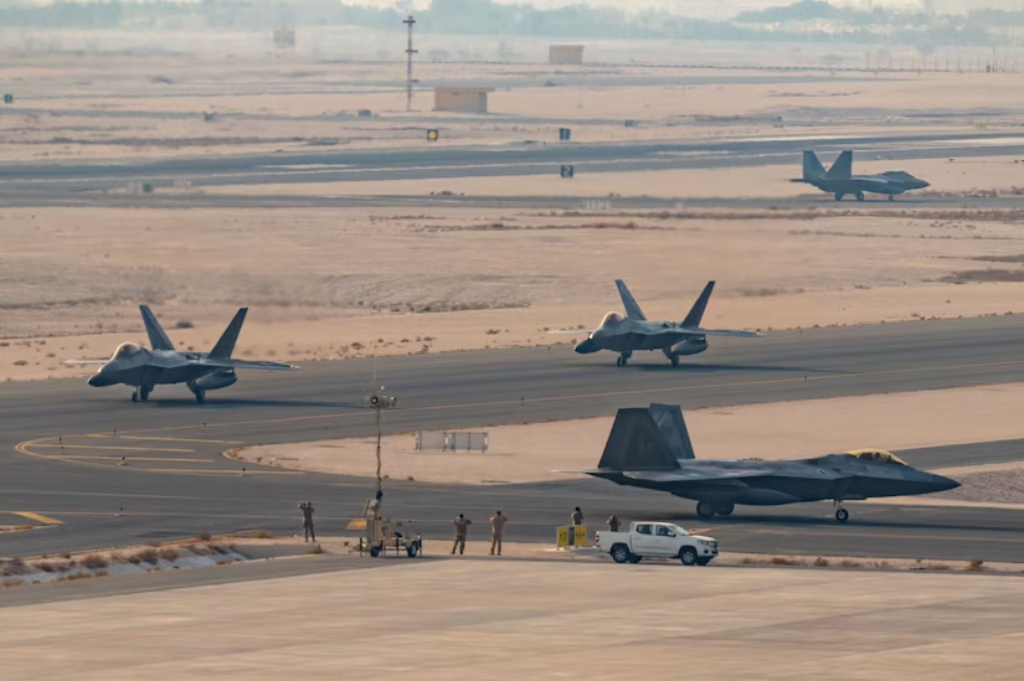
Despite recent withdrawals, the U.S. still maintains a substantial military footprint in the region.
According to Pentagon figures, approximately 40,000 active-duty troops and Defense Department civilians are currently deployed in the Middle East.
These forces are concentrated in several key military bases, including Al Udeid Air Base in Qatar, which serves as the regional headquarters for U.S. Central Command, and multiple sites in Kuwait—an important U.S. ally that shares a border with Iran.
This Could Be the Most Important Video Gun Owners Watch All Year
Last week, Hegseth authorized the “voluntary departure” of all military dependents from the region, citing potential threats stemming from escalating tensions. That decision follows growing concerns that American bases could be targeted if the U.S. deepens its involvement in Israel’s ongoing conflict with Iran.
A report from The New York Times this week revealed that U.S. intelligence agencies have uncovered Iranian plans to strike American military facilities in the Middle East should the U.S. commit further support to Israel’s military operations.

These findings come amid an already volatile security landscape.
Since Israel's war in Gaza began in the fall of 2023, American sites in Iraq and Syria have faced over 180 attacks by Iran-backed proxy groups, according to the Foundation for Defense of Democracies.
These assaults have primarily involved drones and other relatively low-cost weapons systems.
While these earlier attacks injured some U.S. personnel, the Pentagon is concerned that Iran’s own military could inflict far greater damage.
Iran maintains a large stockpile of drones and ballistic missiles that would pose a far more serious threat to American assets in the region.
Senator Richard Blumenthal (D-Conn.), a member of the Senate Armed Services Committee, voiced concern over the U.S. military’s current defenses.
“I have no assurance that we have the capacity to safeguard against a swarm of small, lightweight, slow moving drones,” he said. “Right now, if we engage in the Iran conflict, that would put U.S. personnel at risk there.”
To reinforce regional defenses, the U.S. Navy has repositioned assets in recent days.
Two Navy destroyers were dispatched to the eastern Mediterranean Sea for potential force-protection missions, while a second carrier strike group is also being deployed to bolster readiness.
This is one of several such deployments in recent years aimed at projecting strength and deterring aggression in the region.
Despite these measures, Defense Secretary Hegseth declined to share specific details about how the U.S. would defend against a direct Iranian assault, stating only that the military is preparing for a range of contingencies.
The U.S. has already played a role in Israel’s self-defense, reportedly helping intercept Iranian missiles targeting major Israeli cities such as Tel Aviv.

That engagement began after a recent exchange of missile strikes between Iran and Israel heightened fears of a broader regional war.
In a press conference Wednesday, Trump was asked whether he had made a decision about launching strikes on Iran’s nuclear infrastructure. His response left the situation deliberately ambiguous.
“Will we strike the Iranian nuclear component? I may not do it. I mean, nobody knows what I’m going to do,” Trump said.
MORE NEWS: New Marine Scout MOS Officially Launches, Bringing Eyes and Ears to the Modern Battlefield
“I can tell you this, that Iran’s got a lot of trouble, and they want to negotiate.”
As the U.S. weighs its next moves, the safety of its deployed troops remains a pressing concern.
With thousands of American personnel still stationed across the Middle East, any military engagement with Iran would likely come at a significant cost and place these service members directly in harm’s way.
Join the Discussion
COMMENTS POLICY: We have no tolerance for messages of violence, racism, vulgarity, obscenity or other such discourteous behavior. Thank you for contributing to a respectful and useful online dialogue.