The U.S. Army is moving aggressively to transform its command structure in the Pacific as it prepares to deter growing threats from China.
Central to this transformation is the establishment of two new Multi-Domain Commands (MDCs) — Multi-Domain Command–Pacific and Multi-Domain Command–Japan — that will oversee the Army’s Multi-Domain Task Force (MDTF) units in the region.
Gen. Ronald Clark, commander of U.S. Army Pacific, outlined the changes in an interview with Defense News, describing the Army’s strategic shift as it refines its capabilities in the Indo-Pacific theater. “The authorities associated with that, in some cases are to the [Indo-Pacific Command] commander and above,” Clark explained.
“So, to be able to ensure that we have the authorities associated with the right level of command and the staffs associated with the tasks required to plan, synchronize, train those assets, a two-star level headquarters is where that will reside.”
Here's What They're Not Telling You About Your Retirement
This reorganization comes as part of the Army’s broader transformation initiative, outlined in an execution order issued in May.

The directive calls for the creation of four MDCs: two focused on the Pacific (Pacific and Japan), one in Europe, and one at the Army level.
The focus on the Pacific highlights the Army’s prioritization of the region in response to China’s increasing aggression and assertiveness.
This Could Be the Most Important Video Gun Owners Watch All Year
The concept of Multi-Domain Operations (MDO) has evolved from experimental beginnings to doctrinal status over the past several years.
The first MDTF, formed at Joint Base Lewis-McChord in Washington state around 2018, participated in U.S. INDOPACOM theater exercises that helped shape the Army’s MDO warfighting concept.
“The Multi-Domain Task Force is a theater-level capability,” Clark said. “It has inherent capabilities ... cyber, space, electronic warfare, long-range precisions first, it’s ability to be able to conduct integrated air and missile defense in its own defense and in a point defense kind of way, those capabilities ... go beyond an area of joint area of operations.”
The Army has already activated three MDTFs: one in Washington, one in Europe (2021), and one in Hawaii (2022).
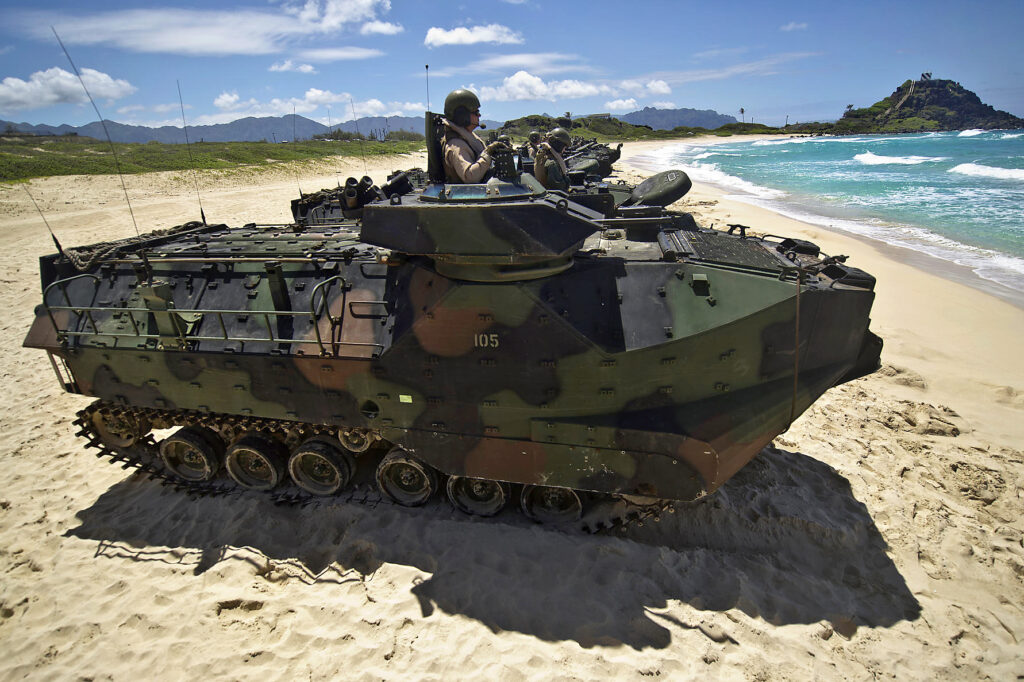
Two more are in development — a second Pacific-focused MDTF and a fifth based at Fort Bragg, North Carolina, designed to rapidly deploy wherever needed.
All five are expected to be operational by 2028.
These units are uniquely equipped to operate across all domains — land, air, sea, space, and cyberspace.
Their arsenal includes some of the Army’s most advanced weaponry, such as the Precision Strike Missile, Long-Range Hypersonic Weapon, and the Mid-Range Capability Missile.
MDTFs also include specialized intelligence-gathering units that enable rapid information sharing and targeting across the joint force.
In the Pacific, these MDTFs have already played a key deterrent role.
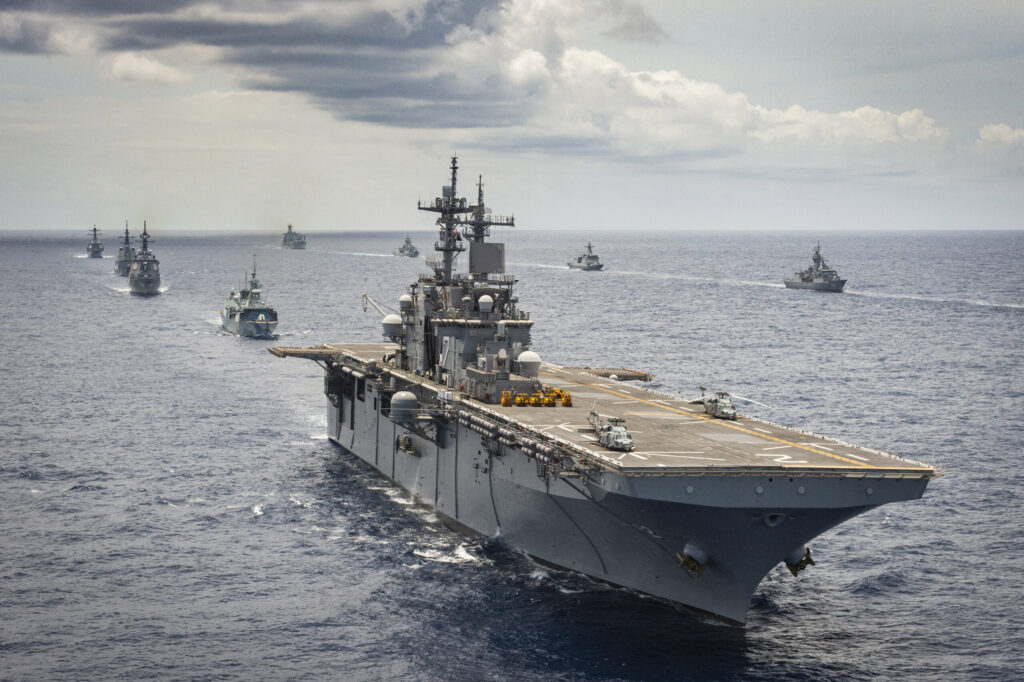
For example, the Mid-Range Capability (MRC) deployed with the 1st MDTF has drawn significant attention from Beijing after being stationed in the Philippines during recent U.S. Army exercises.
The presence of such systems close to China's sphere of influence signals the seriousness of the U.S. commitment to regional security.
To support the expanding mission set, the Army is increasing the command authority structure.
MDTFs, currently commanded by colonels, will now fall under newly created two-star headquarters. “We need to up-gun the level of staff and command,” Clark said.
“Which is great,” he added, referring to the existing leadership, “but adding they will now plug into a two-star command structure that can report to U.S. Army Pacific, for example.”
The new Multi-Domain Command–Pacific will integrate the 7th Infantry Division headquarters with the 1st and 3rd MDTFs.
Meanwhile, Multi-Domain Command–Japan will combine U.S. Army Japan’s headquarters with the 4th MDTF. The 5th MDTF, based in the continental U.S., will remain flexible for rapid deployment wherever needed.
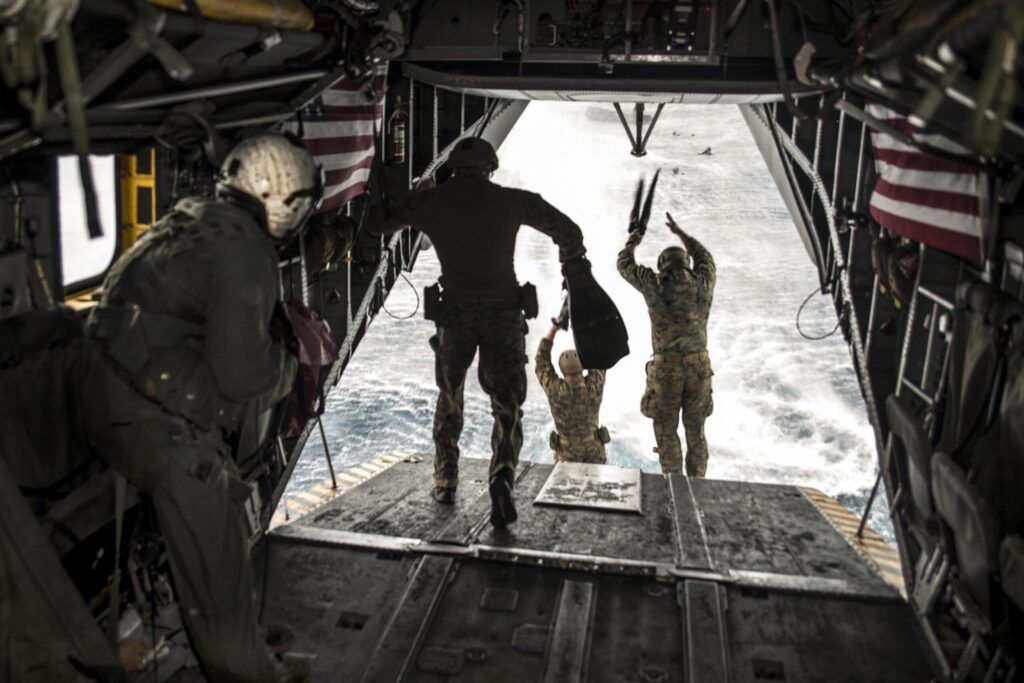
MORE NEWS: New Marine Scout MOS Officially Launches, Bringing Eyes and Ears to the Modern Battlefield
The creation of these new MDCs does not replace existing commands but builds on top of them.
“The new commands are additive to what we currently have in the Indo-Pacific and in U.S. Army Pacific, so with that comes additional tasks and funding,” Clark said.
The Army’s fiscal year 2026 budget request reflects new funding requirements to support these expanded structures.
With this reorganization, the Army aims to build a more agile, capable, and integrated force in the Pacific that can operate across multiple domains and respond quickly to evolving threats.
These changes reflect a recognition that future conflicts will not be confined to traditional battlegrounds but will span cyber, space, and the electromagnetic spectrum — areas where the MDTFs are specifically designed to excel.
As tensions in the Indo-Pacific continue to rise, the Army’s growing focus on command integration and domain convergence may be key to preserving stability and deterring adversarial moves.
The transformation marks a significant evolution in how the Army projects power in the 21st century.
Join the Discussion
COMMENTS POLICY: We have no tolerance for messages of violence, racism, vulgarity, obscenity or other such discourteous behavior. Thank you for contributing to a respectful and useful online dialogue.