The F-35 Joint Strike Fighter program has once again found itself at the center of scrutiny, as the Pentagon moves to scale back its long-planned slate of Block 4 upgrades.
The Government Accountability Office (GAO) revealed in its latest report, F-35 Program: Actions Needed to Address Late Deliveries and Improve Future Development, that program leaders are narrowing their ambitions because of persistent cost overruns, production delays, and supply chain troubles.
Despite these setbacks, the GAO underscored that “the F-35 remains critical to our national defense, as well as that of our partners and allies, and is expected to retain critical roles for decades to come.”
At the same time, the report issued a sharp reminder that “after nearly 20 years of aircraft production, however, the F-35 program continues to overpromise and underdeliver.”
Here's What They're Not Telling You About Your Retirement
Block 4 was conceived as a significant expansion of the Lockheed Martin-built jet’s capabilities.
The package was intended to bring major improvements to weapons systems, sensors, and sensor fusion, following the introduction of Technology Refresh 3 (TR-3).
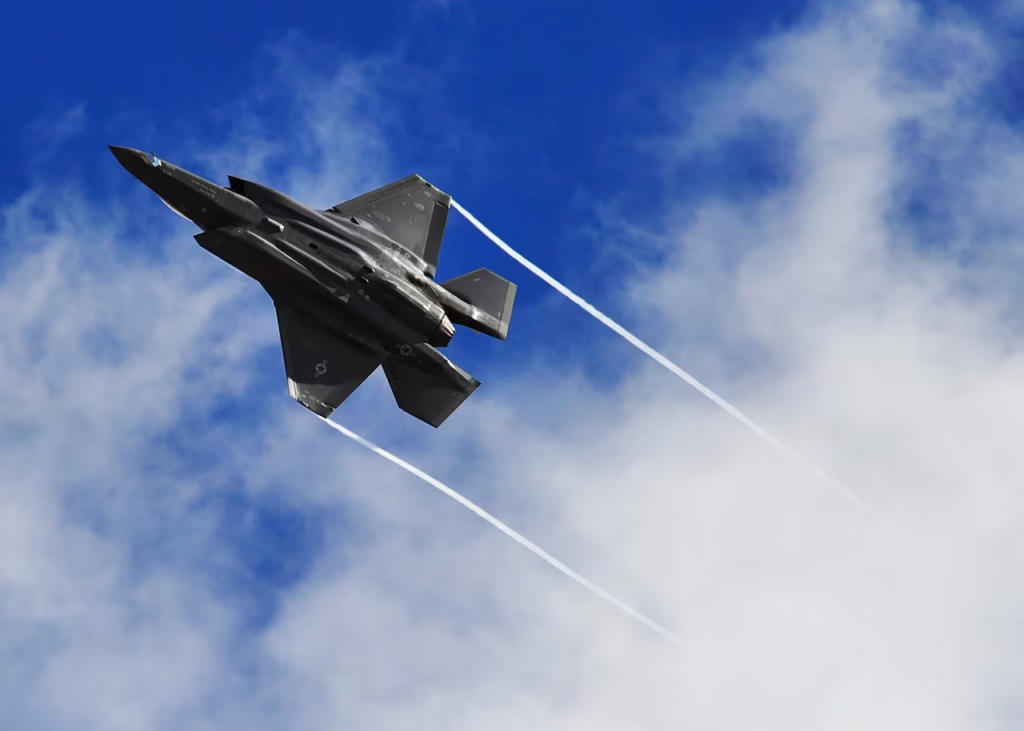
However, Block 4 is now at least $6 billion over budget and is years behind schedule, partly because TR-3 itself has faced serious technical hurdles.
This Could Be the Most Important Video Gun Owners Watch All Year
Initially, Block 4 aimed to deliver 66 new capabilities by 2026. Over time, that number grew by more than a dozen, but deadlines kept slipping.
First, the target moved to 2029, and a Defense Department review last year concluded that the bulk of upgrades might not arrive until the mid-2030s.
Faced with this reality, program officials have narrowed their focus to capabilities that could be delivered by 2031.
Even this adjusted timeline lags six years behind the original schedule.
The GAO noted that the updated plan means some features will be abandoned altogether, particularly those that require the added power and cooling capacity of a new engine upgrade.
Nonetheless, Block 4 is still expected to enhance electronic warfare, communications, navigation, and weapons systems.
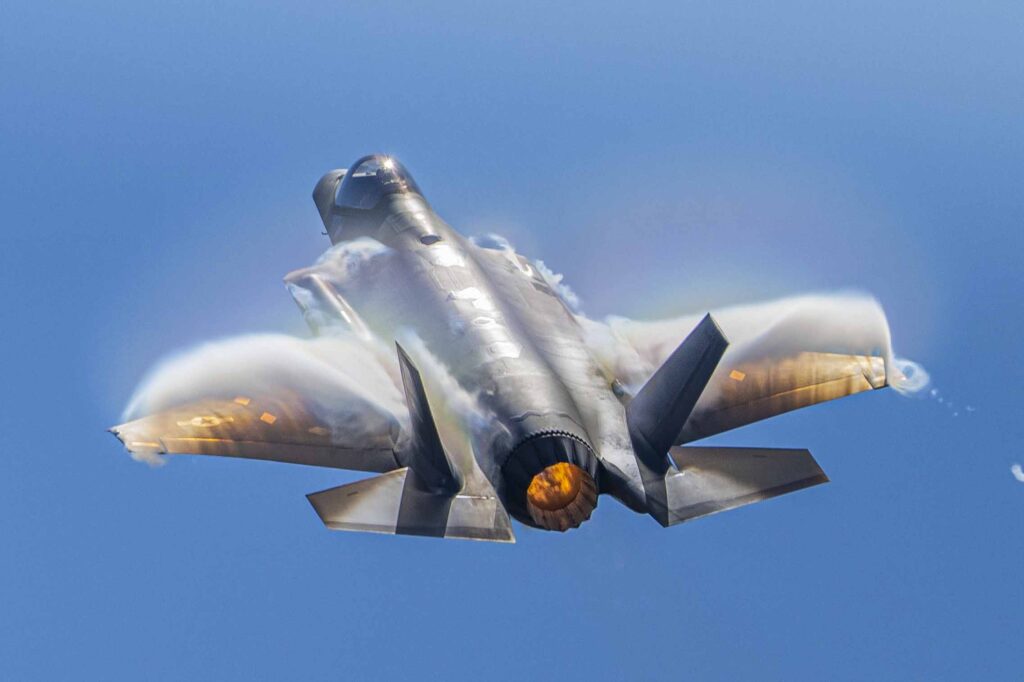
Program officials admitted the scaled-back plan no longer fulfills its original intent, but they believe it can realistically be achieved within revised cost and schedule limits.
The price tag for Block 4 has ballooned. A 2021 estimate placed the cost at $16.5 billion, compared with the original $10.6 billion.
An updated assessment will not be available until late 2025. More broadly, the overall acquisition cost of the F-35 program has surged to over $485 billion as of December 2023.
This figure represents nearly a 10 percent increase from the year before and more than double the original baseline estimate from 2001. Including sustainment, the program’s lifetime cost now exceeds $2 trillion.
Adding to the financial strain is the jet’s engine. Because Block 4 requires greater power and cooling, engines will experience more wear, contributing to an estimated $38 billion increase in lifecycle costs.
The problems with TR-3 have had cascading effects on the entire program.
Originally planned for delivery in 2023, TR-3 elements are now expected to be fielded no earlier than 2026. Lockheed Martin struggled with both the integrated core processor and the software stability required for TR-3.

These issues forced the Pentagon to halt F-35 deliveries for a year, during which dozens of aircraft sat in storage at Lockheed’s Fort Worth facility.
Eventually, Lockheed provided an interim software version that allowed the Pentagon to accept jets, though they could not yet fly in combat.
This temporary measure was seen as necessary to avoid the risk of more than 100 high-value aircraft being left idle.
Even so, the delays worsened Lockheed’s track record.
In 2024, all 110 F-35s delivered were late, averaging 238 days behind schedule, a steep decline from 2021 when only 22 of 142 jets were late by an average of 16 days.
The GAO also pointed to widespread parts shortages as another reason for the program’s struggles.
In February of this year, Lockheed had to temporarily store 52 aircraft because essential components failed to arrive on time.
At that point, more than 4,000 parts shortages plagued the final production line, more than twice the usual rate.
Nearly 1,600 of those were tied to TR-3 hardware. A persistent shortage of a key wing flap has been a particular bottleneck in the past two years.
Lockheed is working with suppliers to address these vulnerabilities, but GAO auditors expect shortages to continue causing delays well into 2025.
Meanwhile, the company has still received partial incentive fees for aircraft delivered up to 60 days late, a practice GAO recommended the Pentagon reconsider.
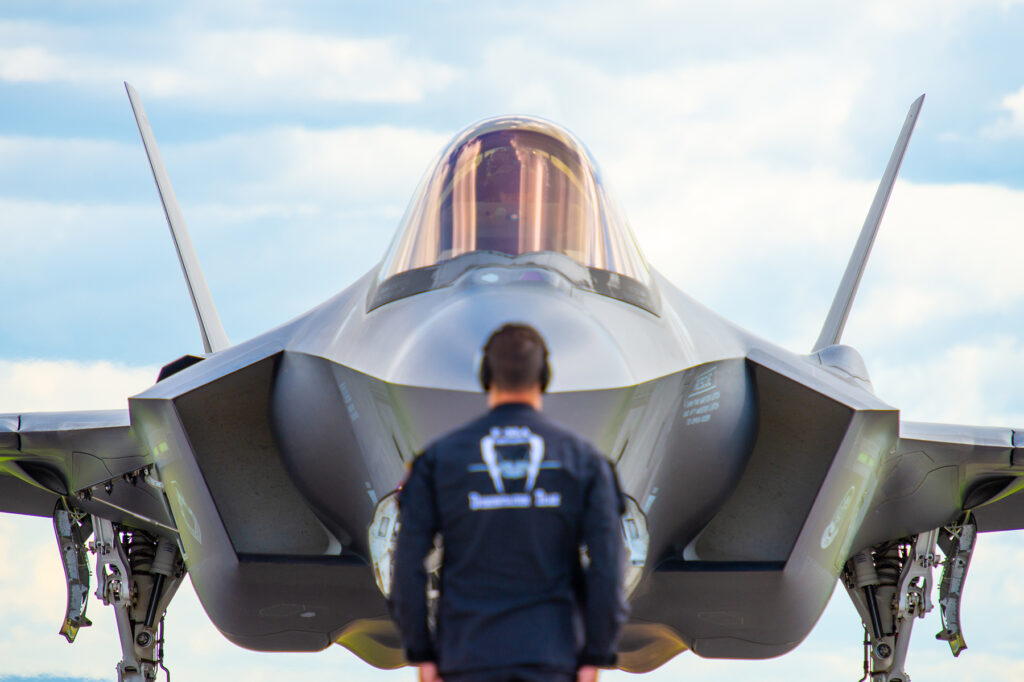
Engine maker Pratt & Whitney, a subsidiary of RTX, has faced its own problems. None of the company’s engines for the F-35 were delivered on time in 2023 or 2024, and delays averaged 155 days last year.
MORE NEWS: U.S. Hits Iran with Punishing New Strikes After Oil Sanctions Snapback Over Tanker Attacks
Despite repeated urging from the Defense Contract Management Agency, Pratt has yet to speed up deliveries. While these engine delays have not yet halted aircraft production, they remain a major concern.
Lockheed Martin, for its part, defended the F-35 in a statement.
“The F-35 is combat proven, offers the most advanced capability and technology, and is the most affordable option to ensure America and its allies remain ahead of emerging threats,” the company said.
“In partnership with the F-35 Joint Program Office, we will deliver 170 [to] 190 F-35s this year and continue fielding Block 4 capabilities to ensure the F-35 maintains its unmatched dominance in the skies.”
The statement reflects Lockheed’s determination to push ahead, even as the GAO and Pentagon grapple with how to bring the massive program under control.
Because of its importance to both U.S. defense and allied nations, the F-35 will remain central to strategic planning. However, the program’s history of missed deadlines and ballooning costs makes it clear that the road ahead will continue to be difficult.
Join the Discussion
COMMENTS POLICY: We have no tolerance for messages of violence, racism, vulgarity, obscenity or other such discourteous behavior. Thank you for contributing to a respectful and useful online dialogue.