The ongoing funding lapse affecting the Department of Homeland Security is now raising serious concerns about operational readiness, particularly for the United States Coast Guard.
Testimony from senior leadership suggests that the longer the shutdown continues, the greater the strain on both personnel and mission capabilities.
At the same time, many observers argue that the situation underscores the importance of maintaining strong national defense priorities and ensuring that essential services remain protected from political stalemates.
According to Vice Commandant Adm. Thomas Allan, the Coast Guard has accumulated more than $200 million in unpaid bills since the partial shutdown began on Feb. 14.
Civilian workers have not received paychecks, and the service has halted several administrative and operational functions.
These disruptions, while technical on paper, are beginning to ripple across real world operations and readiness.
The scope of the impact extends beyond accounting issues. The Coast Guard has stopped processing merchant mariner credentials, affecting roughly 16,000 applications.
In addition, the service has failed to pay 5,000 utility bills and has paused payments to vendors, including those responsible for feeding recruits at the training center in Cape May, New Jersey.
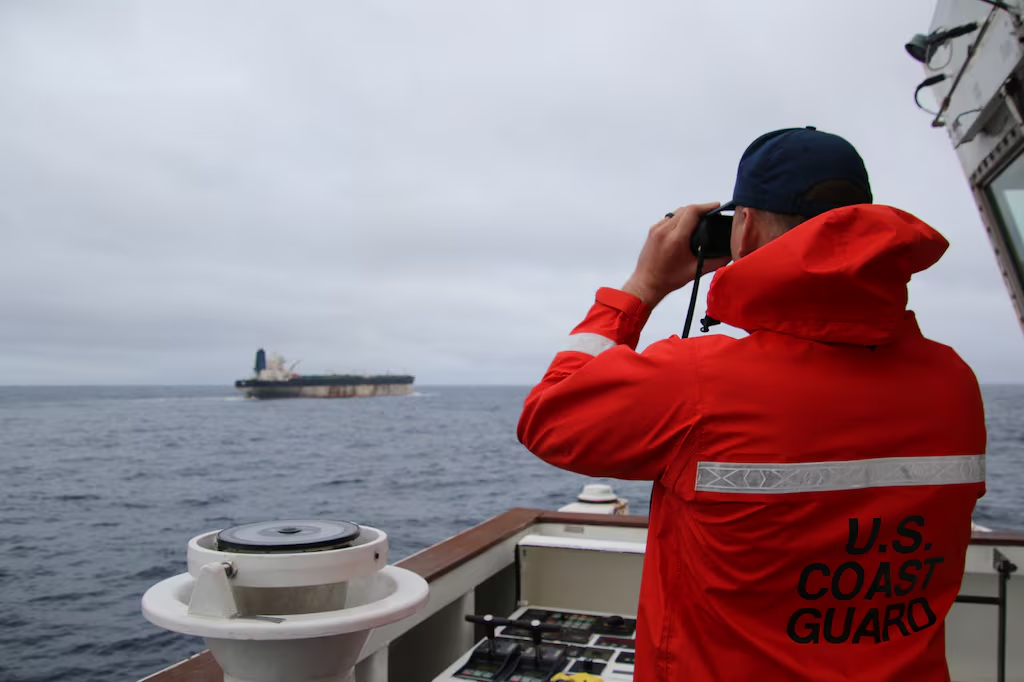
Operationally, the consequences are becoming more visible. Fisheries enforcement operations and routine maritime patrols have been halted. While essential missions continue, the reduction in routine activities can create gaps in maritime security and law enforcement presence.
These types of delays often compound over time, because missed patrols and postponed maintenance increase risk in ways that are not immediately visible but can affect long term readiness.
Allan emphasized the human dimension of the shutdown’s impact. “From our tactical boarding teams executing counter-narcotics missions to our rescue swimmers deploying from helicopters into rough seas, our crews should not have to worry about if their families will be able to pay rent or buy groceries,” Allan said.
That concern reflects a broader theme emerging from military and national security leaders. When service members and their families face financial uncertainty, morale can decline, and focus may shift away from mission execution.

Even though active duty personnel have continued receiving paychecks for now, uncertainty remains about future funding, including whether the April 1 paycheck will be delivered.
The recovery timeline also illustrates how shutdowns create lingering effects. Allan noted that even if funding were restored immediately, it would take until July 3 to fully catch up with payments and operations because it takes “two and a half days to recover every day we are in a shutdown.”
Beyond immediate disruptions, there are longer term implications for procurement and contractor relationships. “What we worry about is that’s not only a near-term impact, but as we bid for these contracts with these companies in the future, they’re not going to come to the Coast Guard. They’ll go to the Navy, they’ll go to the Marines, they’ll go to the others,” Allan said.
This warning highlights a critical concern. Defense readiness relies not only on personnel but also on private sector partnerships that supply maintenance, fuel, food, and technology. When contractors face uncertainty about payment, they may shift business toward more stable clients, which could weaken Coast Guard support infrastructure over time.
The funding impasse began when lawmakers reached a stalemate over broader Department of Homeland Security funding issues.
While some agencies continue to receive funding, others, including the Coast Guard, Transportation Security Administration, and Federal Emergency Management Agency, are operating under restrictions.
MORE NEWS: Pentagon Confirms First Military Execution in Over 60 Years Will Be Publicly Livestreamed

Supporters of a strong national defense posture argue that this situation reinforces the need for leadership that prioritizes military readiness and operational continuity.
Maintaining funding stability, they say, ensures that front line personnel can focus on protecting the nation’s borders, responding to emergencies, and conducting maritime security operations without distraction.
At the same time, the Coast Guard continues to carry out essential missions. Crews remain deployed, search and rescue operations continue, and counter narcotics efforts still move forward. However, the cumulative effect of halted administrative functions and unpaid obligations could reduce flexibility and readiness if the shutdown persists.
The Coast Guard has faced multiple funding lapses in recent months, which compounds the strain. Families and personnel are operating under what Allan described as a “grim uncertainty,” especially regarding future paychecks and operational funding.
Ultimately, the situation reflects a broader national security concern. Maritime safety, drug interdiction, border protection, and emergency response all depend on a fully supported Coast Guard.
When funding disruptions occur, the risks extend beyond the service itself to the communities and industries that rely on its presence.
As negotiations continue, the message from leadership remains clear. Operational readiness depends on stability, and prolonged uncertainty places both missions and morale at risk.
Ensuring consistent support for the Coast Guard, therefore, is not just a budgetary issue but a matter of national security.
Join the Discussion
COMMENTS POLICY: We have no tolerance for messages of violence, racism, vulgarity, obscenity or other such discourteous behavior. Thank you for contributing to a respectful and useful online dialogue.