The U.S. Navy has completed a major rotation in the Pacific, signaling a long standing approach to keeping forward basing lean and flexible.
The last Ticonderoga class cruiser stationed overseas is heading home to San Diego, replaced by a newer Arleigh Burke destroyer.
The USS Robert Smalls will depart Yokosuka for San Diego, with the Arleigh Burke destroyer USS Mustin stepping into its forward deployed duties.
“This move will be a permanent change of station for the crew and family members,” the Navy said.
MORE NEWS: Pentagon Confirms First Military Execution in Over 60 Years Will Be Publicly Livestreamed
The rotation is described by the service as part of a scheduled force realignment in the Pacific, aimed at maintaining readiness while adjusting basing to evolving threats.
It keeps the United States posture strong in a region where competitors look for any sign of weakness.
Smalls has been assigned to Carrier Strike Group Five in support of U.S. operations across the Indo-Pacific.
Commissioned in 1989, the cruiser carries a history that includes an earlier name, USS Chancellorsville, a nod to a Civil War battle.
In 2023 the Navy renamed the vessel in honor of Robert Smalls, a Black Civil War hero who escaped slavery and served as a captain in the Navy, later representing South Carolina in Congress.
There are only 10 Ticonderoga cruisers remaining in the fleet as of April 23, 2025, and Smalls was the sole cruiser homeported overseas before this move.
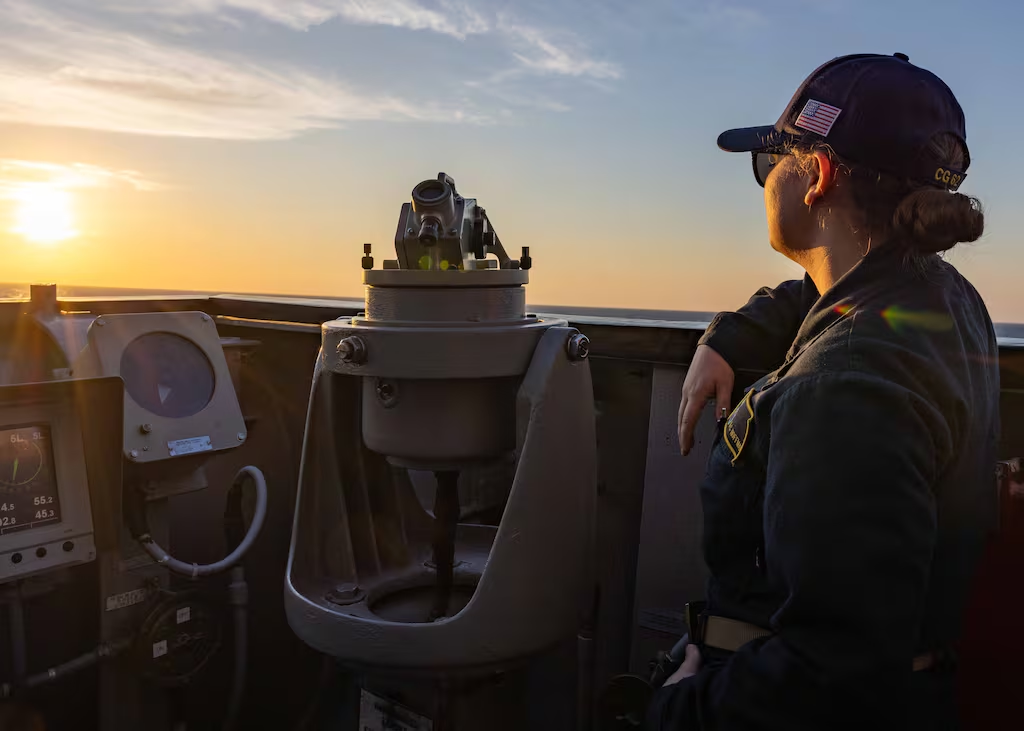
That makes the current rotation a notable moment in the overall fleet composition.
The Mustin, commissioned in 2003, is part of Destroyer Squadron 23 based in San Diego and has served as a forward deployed unit since 2006.
It has operated with Destroyer Squadron 15, the Navy’s largest forward deployed squadron in the 7th Fleet, underscoring how the Navy spreads capabilities across the theater.
Starting in 1980 the Navy built 27 Ticonderoga class cruisers, the first ships able to wield the AEGIS Combat System, a key technology that allows radar driven tracking and coordinated missile engagements.
Today, the footprint is smaller, but the ships that remain carry a dated but effective mix of defense and deterrence.
From a conservative perspective, President Trump’s defense priorities emphasized a robust, forward facing navy to deter rivals and reassure allies.
Secretary of War Pete Hegseth has argued for robust modernization and readiness, and this rotation can be read as a tangible expression of those policy aims. The change underscores a continued push to align force posture with strategic aims, ensuring that America keeps its edge at sea.
The story matters because it highlights how decisions at the top of the defense apparatus translate into daily realities for sailors and their families. It also signals that the United States remains committed to a credible deterrent in the Indo-Pacific, even as the number of aging cruisers dwindles.
The Navy’s move, while procedural on surface value, carries strategic significance for the Reagan era style of deterrence and modernization that supporters insist on sustaining.
In the final analysis, this rotation is more than a logistics update; it is a statement about priorities, readiness, and the enduring resolve to keep America secure.
Join the Discussion
COMMENTS POLICY: We have no tolerance for messages of violence, racism, vulgarity, obscenity or other such discourteous behavior. Thank you for contributing to a respectful and useful online dialogue.