U.S. President Donald Trump raised the temperature in the Iran conflict by declaring that the United States will abandon any talks of a deal unless Tehran capitulates completely.
The message arrived in a post on Truth Social, where he asserted that “IRAN WILL HAVE A GREAT FUTURE” should the Islamic Republic decide to put down its arms.
He then made the policy clear: “There will be no deal with Iran except UNCONDITIONAL SURRENDER!” After that, he added, “the selection of a GREAT & ACCEPTABLE Leader(s), we, and many of our wonderful and very brave allies and partners, will work tirelessly to bring Iran back from the brink of destruction, making it economically bigger, better, and stronger than ever before. ... ‘MAKE IRAN GREAT AGAIN (MIGA!).’”
The timing of his comments coincided with fresh combat updates from the war room at CENTCOM.
In briefings at MacDill Air Force Base in Tampa, Florida, Secretary of War Pete Hegseth and U.S. Central Command chief Adm. Brad Cooper outlined a broad, continuing campaign christened Operation Epic Fury.
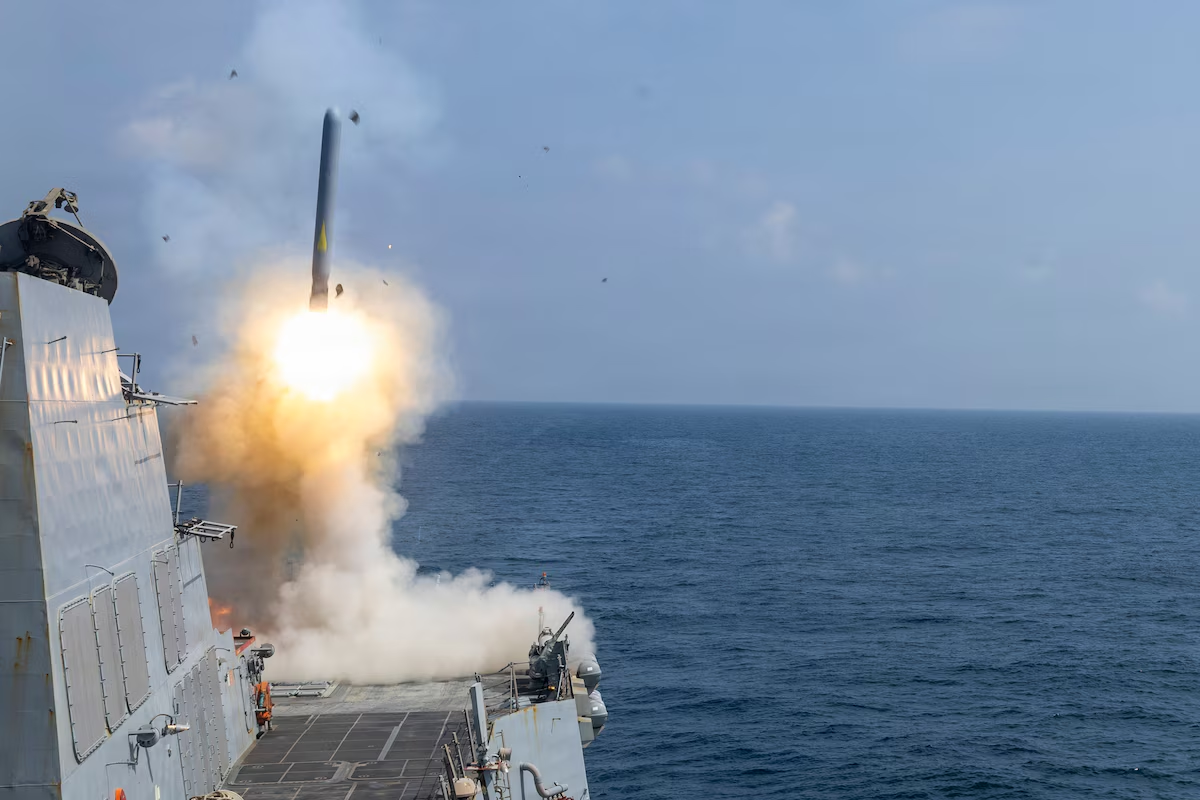
Hegseth framed American air and sea power as converging on the region, noting that as Iran’s capabilities were diminished, U.S. forces would push forward with greater intensity.
The administration has been explicit about its aim to dismantle Iran’s navy, missile capabilities and nuclear program. Over the course of the week-long conflict, officials say U.S. forces struck roughly 2,000 targets.
In the 72 hours before Thursday’s briefing, American bombers pounded nearly 200 targets and dropped dozens of 2,000-pound penetrative bombs on deeply buried ballistic missile launchers, according to CENTCOM.
The campaign also involved eliminating 30 Iranian navy ships, including one off the coast of Sri Lanka, a strike attributed to the U.S. Indo-Pacific Command area of responsibility. Officials added that Iran’s equivalent of a space command had been hit as well.

One week into the conflict, Admiral Cooper reported a measurable slowdown in Iran’s military offenses. He noted that ballistic missile attacks had fallen by about 90 percent since the first day of hostilities and drone attacks by roughly 83 percent.
“We’re not just hitting what they have,” he said. “We’re destroying their ability to rebuild.” The message behind these numbers is straightforward: the U.S. is not merely degrading Iran’s current capabilities, but constraining its capacity to recover.
Still, questions linger about munitions stockpiles and the broader strategy for achieving Washington’s objectives.

The situation has drawn international attention and, at times, sharp debate about the best way to deter Iran while protecting allies in the region. The conflict has also intersected with developments in Europe, where Ukraine has faced its own battery of challenges against aggressive drone campaigns.
Zelenskyy recently stated that more than 800 Patriot interceptor missiles had been used over the first three days of the Iran war—more than Ukraine has deployed in four years since Russia’s 2022 invasion.
The comparison underscores the staggering expense and logistical complexity of combat in the modern era.
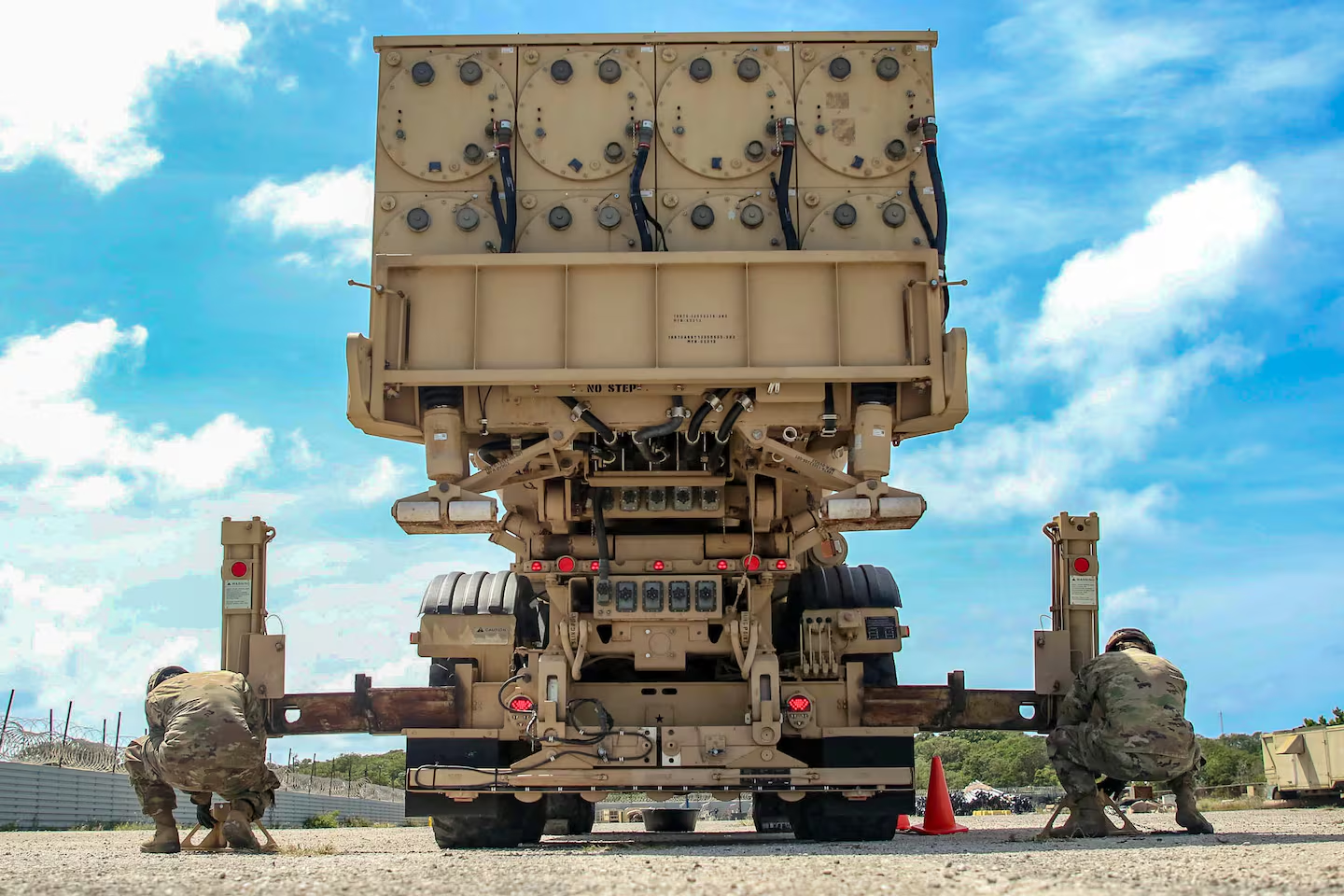
In parallel, the United States and its allies have reportedly sought cost-conscious methods to counter Iran’s Shahed drones, which cost as little as 35,000 dollars each.
That stands in stark contrast to the roughly four million dollar price tag of a PAC-3 interceptor, a ratio that highlights the strategic calculations facing Kyiv and Washington alike.
Ukraine has nonetheless found success in shooting down Shahed drones with systems that, at times, are far less costly than their adversaries’ munitions.
Back home, the Trump administration has signaled a strong push to bolster defense production.
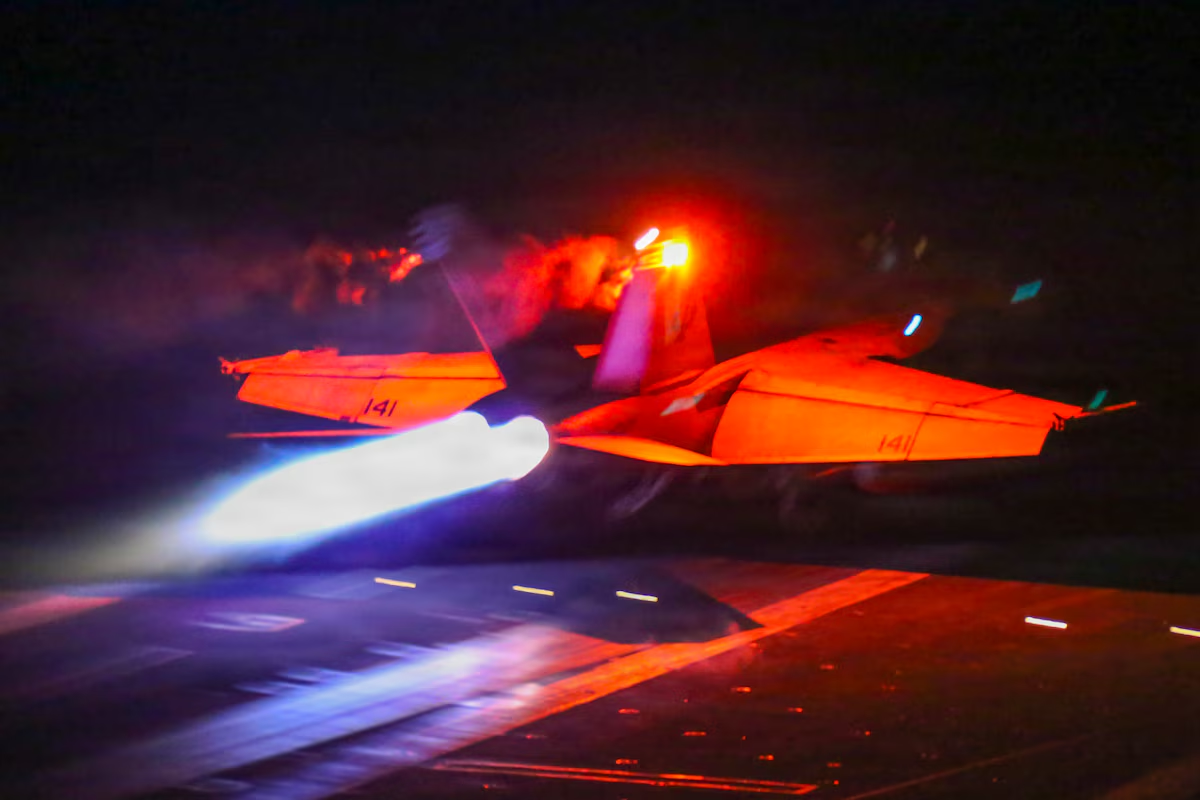
A planned meeting with executives from Lockheed Martin, RTX, L3Harris and other firms was set to discuss surging missile systems production.
Hegseth asserted that Washington’s munitions stockpile is not in danger of dwindling; if anything, the force surrounding Iran is poised to surge dramatically. “We’ve only just begun to fight, and fight decisively,” he said.
The statements reflect a broader posture of resolve and readiness.
As this moment unfolds, the administration will continue to press its case that strengthening deterrence and, when necessary, applying overwhelming force, remains the surest path to a safer world.
Supporters argue that a strong, disciplined approach under President Trump and Secretary Hegseth is essential to prevent Iran from advancing its destabilizing agenda.
Opponents will challenge the costs and risks of such a strategy, yet the current trajectory emphasizes clarity of purpose and unwavering commitment to national security.
In this context, the emphasis on unconditional surrender is not only a battlefield position but a political statement about the level of seriousness with which the United States intends to confront aggression.
Join the Discussion
COMMENTS POLICY: We have no tolerance for messages of violence, racism, vulgarity, obscenity or other such discourteous behavior. Thank you for contributing to a respectful and useful online dialogue.