The U.S. Air Force is moving to expand the F-15EX Eagle II fleet dramatically, aiming for 267 aircraft and far surpassing the earlier target of 129 as the fiscal 2027 budget is rolled out.
This shift signals a clear priority on boosting air power in a demanding security environment, and it comes as the service recalibrates to meet evolving regional challenges and long range strike needs.
“This will complete building existing F-15EX units and then begin to recapitalize the aging F-15E fleet,” a service spokesperson told Air & Space Forces Magazine.
The comment underscores the administration’s plan to extend the life of the fleet while bringing new capability into play, creating a bridge between legacy platforms and modern systems.
“There are fundamental differences in what we’re looking for in a platform like the F-15EX, as compared to other advanced fifth-generation and sixth-generation fighters,” an Air Force official told reporters at an April 21 Pentagon briefing, citing the jet’s weapons-rail capacity and “its role in the Pacific theater.”
The point is not simply quantity but strategic quality.
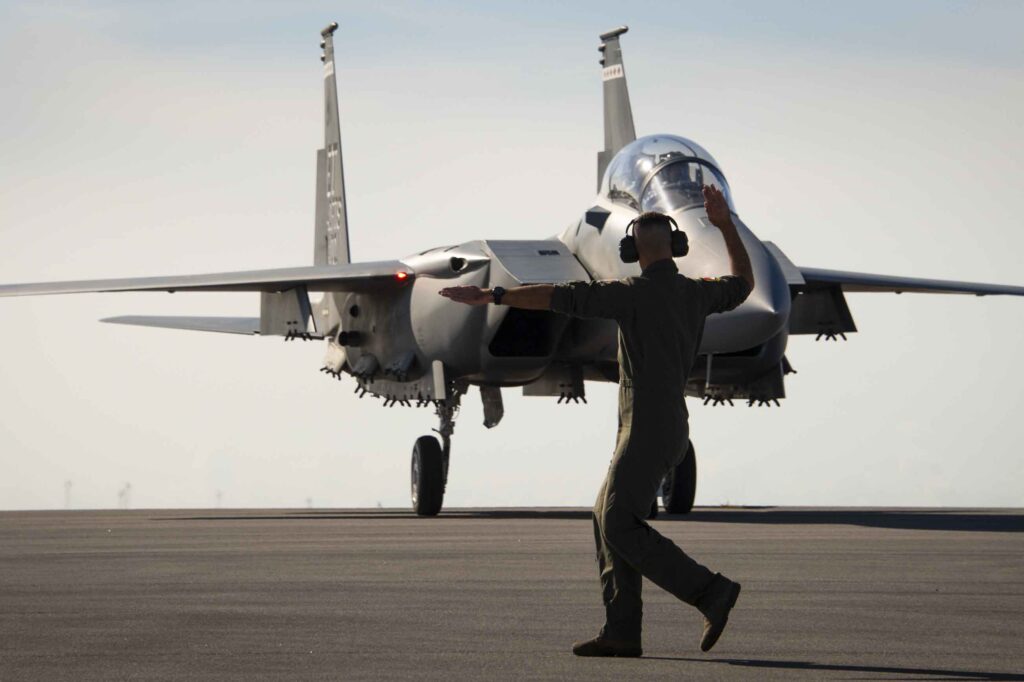
The F-15EX’s design emphasizes payload and range, allowing it to deliver a robust mix of munitions in vast, demanding theaters where newer stealth platforms must operate by different rules.
The F-15EX can carry up to 12 air-to-air missiles, more than any current U.S. fighter, along with larger external standoff munitions, capabilities the Air Force has tied to homeland cruise missile defense and long-range Pacific strike profiles.
This capacity matters because it gives commanders a flexible tool for layered defense and deterrence, while still enabling rapid escalation should tension rise.
Because the aircraft does not rely on stealth, it remains available for missions that require heavy firepower rather than penetration of contested airspace.
Its non-stealth design keeps it out of contested penetration missions reserved for the F-35A and Boeing’s F-47, still in development.
The distinction matters for force planning because it means the Air Force can deploy a diversified mix of platforms that complement stealth assets rather than compete with them.
The strategy is to maximize the strengths of each aircraft in the right mission sets, not to force a single platform to do everything at once.
The Air Force has not publicly specified when it expects to reach the 267 F-15EX target. At current procurement rates of roughly two dozen jets per year, the timeframe would extend into the mid-2030s.
This stretch reflects the careful balancing of budget realities with the need to modernize the fleet and keep pressure on adversaries in multiple theaters.
The increased F-15EX purchase plan arrives as the roughly 215-aircraft Strike Eagle fleet absorbs recent combat losses.
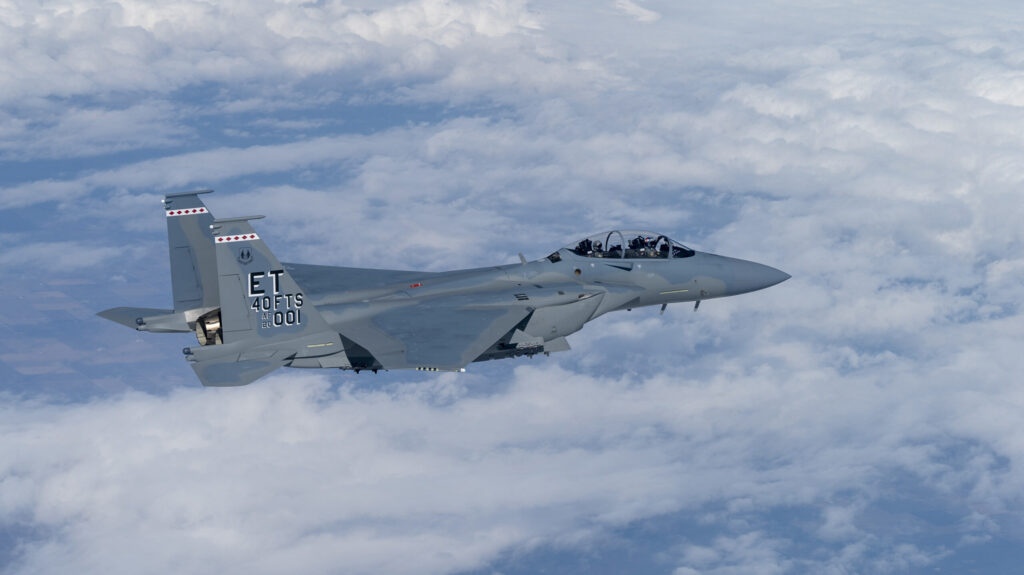
Four F-15Es have been lost in Operation Epic Fury, three to Kuwaiti friendly fire on March 2, and a fourth shot down over southern Iran by a shoulder-fired missile on April 3.
The air service is pressing ahead, while acknowledging the human and material costs of recent operations.
MORE NEWS: Pentagon Confirms First Military Execution in Over 60 Years Will Be Publicly Livestreamed
The Air Force had already proposed retiring 20 older-engine F-15Es in FY27, and F-15E squadrons have been rotated through CENTCOM throughout Operation Epic Fury.
This is not mere reorganization; it is a strategic shift to ensure the United States maintains clear air superiority and credible deterrence while staying within budgetary constraints.
Congress, which has repeatedly blocked F-15E retirements and approved F-15EX funding in recent budget cycles, will have the final say on the 267-aircraft target.
In a political environment where defense priorities are debated daily, the Trump administration allied with the War Secretary to push for a robust, ready force.
The plan reflects a belief that a strong, modernized air wing is critical to national security and to safeguarding American interests abroad.
The strategy is clear: keep pressure on rivals, modernize the fleet, and ensure the United States can respond decisively when called upon.
Join the Discussion
COMMENTS POLICY: We have no tolerance for messages of violence, racism, vulgarity, obscenity or other such discourteous behavior. Thank you for contributing to a respectful and useful online dialogue.