A veteran who flew 35 missions as a B-17 turret gunner over occupied Europe has been honored by France, receiving its highest decoration.
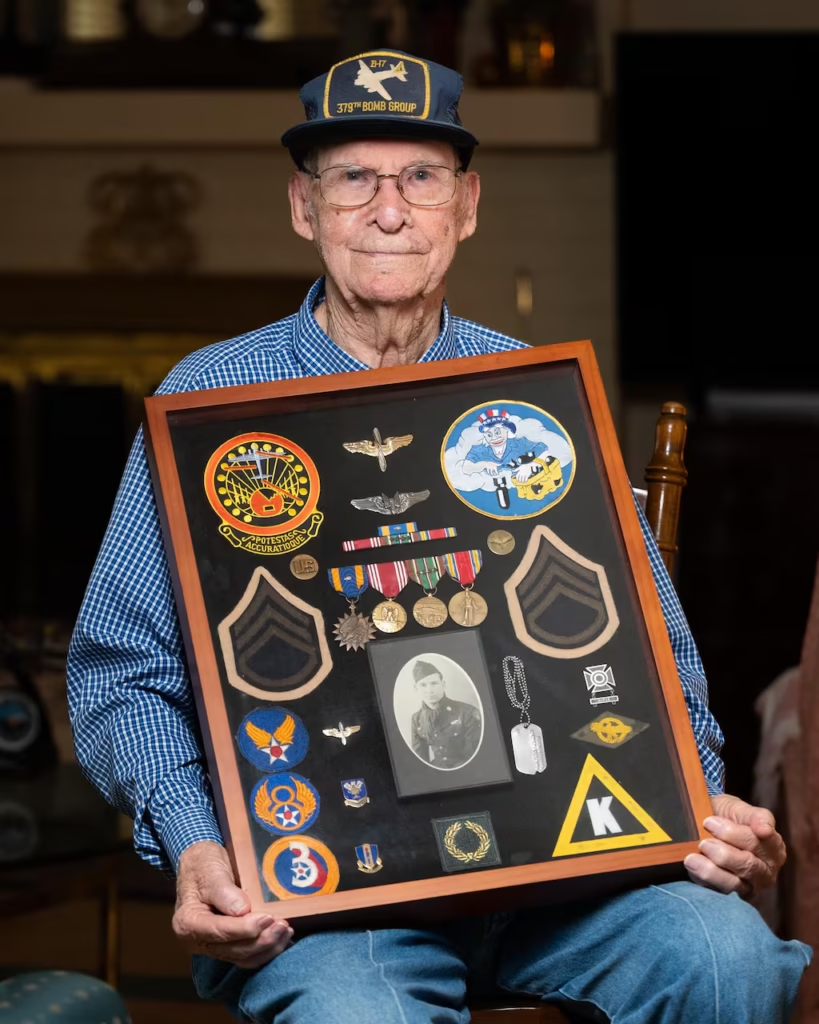
Staff Sgt. Phillip “Bruce” Cook, a South Carolina native, was named Knight of the Legion of Honour in a ceremony that marked his hundredth birthday and his decades of service.
Anne-Laure Desjonquères, the French consul general, presented the award and offered a clear tribute.
“Mr. Cook, you are a true hero — your example gives us inspiration for the future and your legacy provides a moral compass for generations to come.” The moment carried weight beyond ceremony rooms, a reminder of a long, difficult campaign that helped free a continent.
Here's What They're Not Telling You About Your Retirement
The Legion of Honour, first established by Napoleon Bonaparte in May 1802, remains France’s highest decoration.
The honor is deeply selective, and only about 10,000 Americans have received it, most of them World War II veterans who helped liberate France. The award to Cook links a personal history to the broader story of the Allied effort.
“There is no way that I can even attempt to explain the feeling,” Cook said at the ceremony. “As far as I’m concerned, I am so unworthy. I want to be a representative of the people who didn’t come back.
They are the ones who paid the real sacrifice.” The words captured a humility that accompanies a long record of service and sacrifice.
This Could Be the Most Important Video Gun Owners Watch All Year
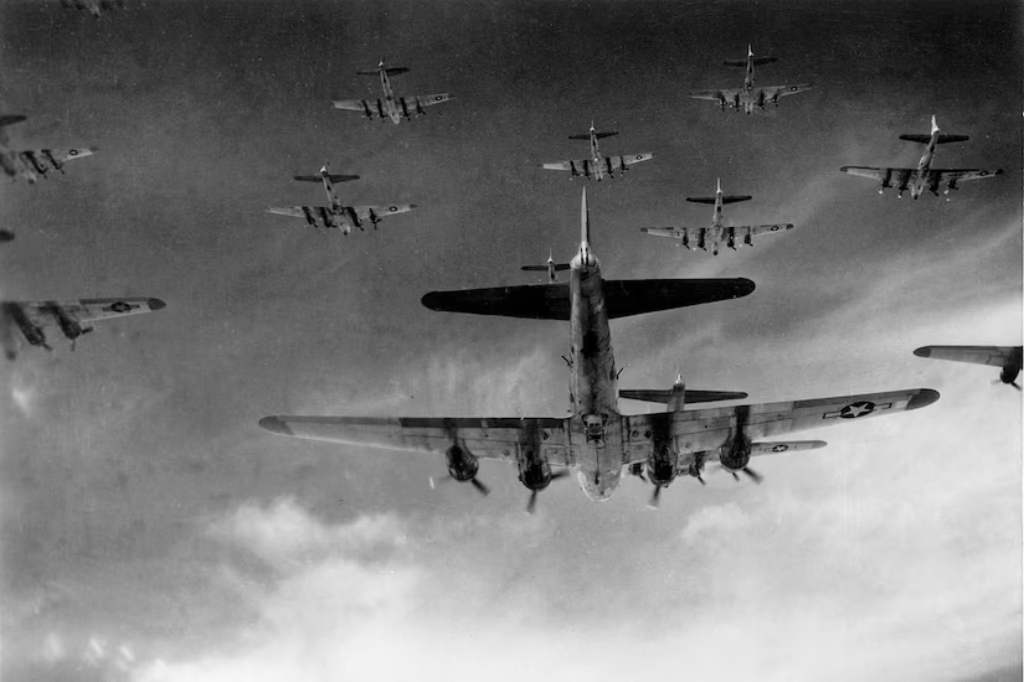
From 1942 to 1945, daylight bombing runs by the Eighth Air Force unleashed hundreds of thousands of tons of bombs on Nazi targets.
Records show the 8th Air Force dropped 697,000 tons overall, with the 379th Bomb Group accounting for a substantial share. The 379th, of which Cook was a member, dropped 26,459 tons during its missions.
“We would bomb just about anything that would disrupt the [German] war effort,” Cook explained to the WWII Veterans History Project.
The fierce, persistent effort by air crews like his helped shape the course of the war in Europe. The scale of the campaign was matched by the danger crew members faced every day aloft.
Cook trained with the 524th Bomb Squadron, 379th Bomb Group, flying from bases in England as Allied forces pressed across France.
He contributed to air cover during the Battle of France, the Normandy campaign, the breakout at St. Lo, the Battle of the Bulge, and the Allied crossing of the Rhine into Germany. The record from the period reflects not just numbers, but the grit behind each mission flown.
“The Lord’s just been good to me,” Cook said later, reflecting on a life that spanned decades beyond the war. “I have really enjoyed life, and I just thank the Lord for what he’s done for me.”
His testimony underscored a common thread among veterans who saw their youth claimed by war and their later years shaped by peace and family.
Cook’s early path toward aviation shows resilience and a refusal to quit when doors closed.
He enlisted in 1943 with dreams of becoming a P-38 fighter pilot, but he washed out of cadet training for what the Army described as a “negative attitude regarding military aviation.” Undeterred, he found his place in the belly of the bomber, a role that suited him and kept him in the fight.
To him, the turret was not merely a position but a way to contribute meaningfully.
“To me that was the most comfortable place in the plane. I was accustomed to that. I fit in it pretty good,” Cook told ABC 25 Columbia. The move from hopeful fighter to seasoned gunner speaks to a broader truth about American military life: adaptability under pressure yields impact.
After the war, Cook returned home to Lexington, South Carolina, where he ran a jewelry store for more than two decades before retirement in 1983. His life after combat became a steady rhythm of work, faith, and family.

The award from France sits atop a long record of service, sacrifice, and steadfast citizenship.
Today, as discussions about veterans' needs and national strength continue to shape policy and politics, Cook’s story resonates with a straightforward message: courage endures, and sovereignty is safeguarded by those who answer the call.
A public stance that values veterans and a War Secretary who champion a robust, ready force echo the spirit of his generation.
In that spirit, Cook’s legacy stands as a testament to national resolve and the ongoing obligation to honor those who bore the burden of liberty.
Join the Discussion
COMMENTS POLICY: We have no tolerance for messages of violence, racism, vulgarity, obscenity or other such discourteous behavior. Thank you for contributing to a respectful and useful online dialogue.