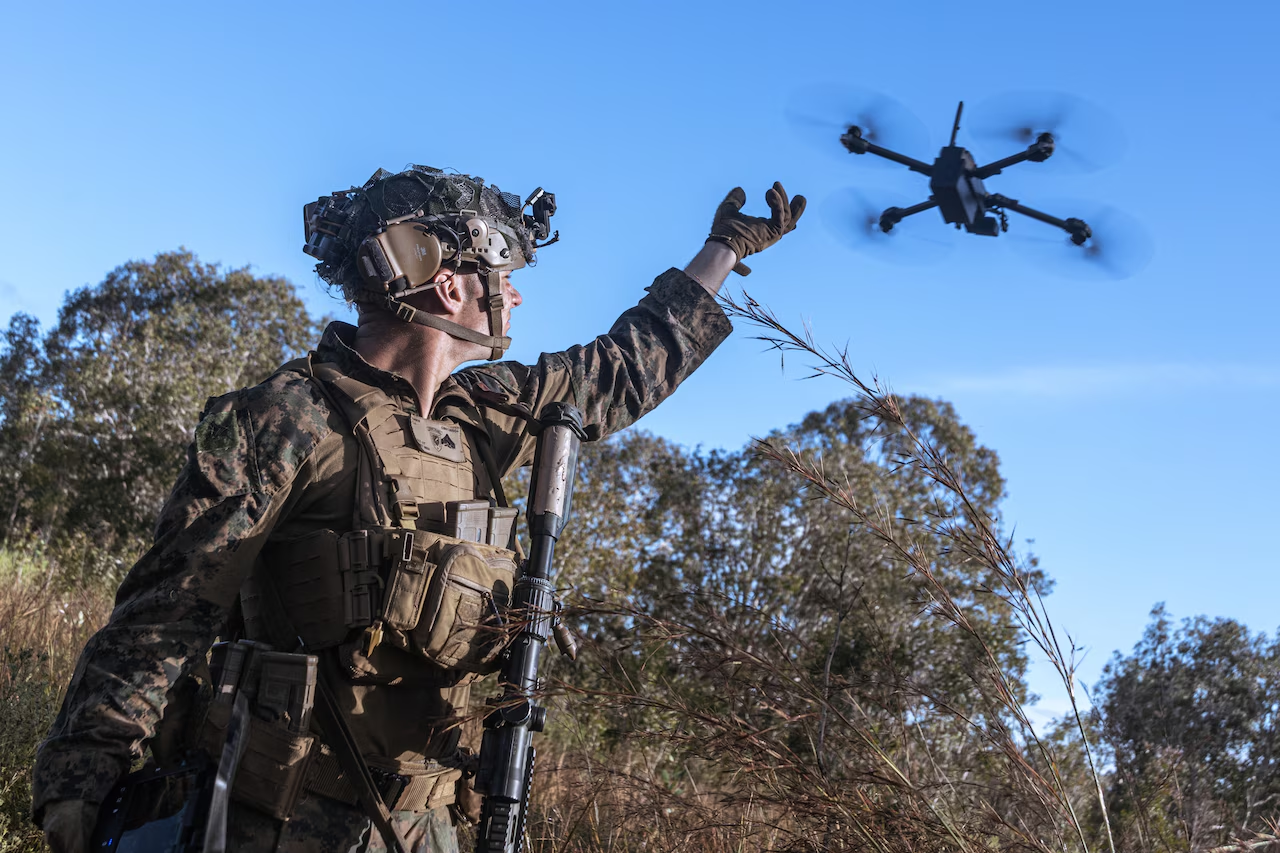
The U.S. Southern Command on Tuesday announced the creation of a new element designed to connect tactical missions to long term outcomes through unmanned systems.
The move marks a decisive step in leveraging cutting edge technology to shape security in the Western Hemisphere.
The development of the Autonomous Warfare Command was mandated by SOUTHCOM Commander Gen. Francis L. Donovan in an effort to further support the Trump administration’s national security objectives and SOUTHCOM’s operational dominance.
The plan emphasizes turning intelligence and maneuver into sustained advantage by using unmanned and semi autonomous platforms across domains.
MORE NEWS: Pentagon Confirms First Military Execution in Over 60 Years Will Be Publicly Livestreamed
Once fully operational, the new command will be tasked with engaging autonomous, semi autonomous and unmanned platforms to “counter threats across domains.”
The release did not specify when SAWC would reach operational status, but the intent is clear: bring speed, precision and persistence to a range of challenges from the sea floor to cyberspace.
“From the seafloor to space and across the cyber domain, we fully intend to leverage the clear superiority of the American defense ecosystem by deploying cutting-edge innovation and working ever closer with our enduring partners in the region to outmatch those who threaten our collective peace and security,” Donovan said in the release.
This bold statement frames the mission as a test of national resolve and technological leadership, a view shared by commanders who see unmanned systems as force multipliers in difficult environments.
The announcement stressed a practical purpose beyond demonstrations. The SAWC will work toward shared aims with allies and partners in the region, including missions focused on “degrading” narcoterrorist and cartel networks and responding to national disasters.
That wording signals a broader strategy that links counterterrorism and disaster response to long term regional stability.
SOUTHCOM’s area of responsibility includes the Caribbean, South America and Central America. The statement emphasizes opportunity and threat in this vast zone, where terrain and climate create a laboratory for innovation and a proving ground for new methods of joint operation.
“Our geographic area of responsibility has a wide range of conditions, varied terrain and diverse operational environments that make it an ideal setting in which to innovate,” Donovan said in the statement.
The region’s complexity, he noted, also makes it a place where capable partners are ready to embrace new technologies and work with the United States to push regional stability forward.
“It is also a region with very capable and committed security partners who lean forward, embrace technologies and are very eager to work collaboratively with us to support regional stability in new and effective ways,” Donovan continued.
The emphasis on collaboration reflects a shared sense of purpose that conservatives see as essential to deter aggression and reinforce peace.
The SAWC will not operate in isolation. SOUTHCOM, military services and the War Secretary’s Defense Autonomous Warfare Group will collaborate ahead of SAWC’s full launch, the release noted.

The goal is seamless integration so SOUTHCOM can maximize the command’s impact on ongoing missions and future contingencies.
The move aligns with a broader pattern of renewed U.S. emphasis in the region. In January, the Space Force activated its southern component, formalizing Space Forces Southern’s role in space capabilities across the Western Hemisphere.
Space Command has already supported joint operations with space based communications and timing in other high risk missions including operations in the region.
Donovan’s leadership follows a controversial but decisive raid linked to Venezuelan leadership targets, a development that renewed debate about American power in Latin America.
He took command after the Maduro operation, succeeding Navy Adm. Alvin Holsey, who retired amid scrutiny in the wake of earlier strikes on alleged drug trafficking vessels.
The push for unmanned dominance comes as Washington seeks to blend technology with doctrine, strengthening deterrence while building durable partnerships with regional allies.
The initiative signals a broader belief in the strategic value of speed, automation and interoperability in complex theaters where regional stability matters to U.S. interests and to global security.
Join the Discussion
COMMENTS POLICY: We have no tolerance for messages of violence, racism, vulgarity, obscenity or other such discourteous behavior. Thank you for contributing to a respectful and useful online dialogue.