The U.S. Air Force is facing a hard truth in its latest war campaign: the service’s once-dominant MQ-9 Reaper fleet is now down to roughly 135 aircraft after taking serious losses during Operation Epic Fury against Iranian-backed forces.
The attrition rate is biting deeply into America’s most relied-upon combat drone, revealing what happens when two decades of air superiority assumptions collide with modern, contested airspace.
Lt. Gen. David Tabor, the Air Force’s deputy chief of staff for plans and programs, confirmed during Tuesday’s Senate Armed Services Subcommittee on Airland hearing that despite the shrinking fleet, the service still maintains 56 “combat lines” across the globe.
These represent the Reaper’s 24-hour intelligence, surveillance, and reconnaissance (ISR) coverage that combatant commanders have come to depend on. Tabor admitted, however, that the Air Force is scrambling to replenish both capacity and capability.
Here's What They're Not Telling You About Your Retirement
North Dakota Republican Sen. Kevin Cramer wasted no time highlighting the long-held “189-aircraft floor” that once defined the fleet’s minimum strength.
With 54 aircraft now gone, Cramer pressed for answers about how the Air Force would restore its drone power in the face of mounting Middle East losses and heavy demands elsewhere.
In vintage Pentagon fashion, Tabor avoided directly confirming the 189-aircraft benchmark but conceded that attrition has “really demonstrated the value of the MQ-9.”
He admitted, “We are concerned about how they’ve attrited, and we’re looking at options to buy back as many of the MQ-9As as we possibly can right now.” According to Tabor, the War Department is already working on budget adjustments to make that happen in the current fiscal year.
This Could Be the Most Important Video Gun Owners Watch All Year
But buying back drones is a short-term bandage, and the Air Force knows it. Maj. Gen. Christopher Niemi, who oversees Air Force Futures and is slated to become the service’s first chief modernization officer, explained that the real fix lies in a next-generation replacement.
On May 11, Niemi approved the baseline requirements for that successor system, signaling the most serious commitment to replacing the Reaper in more than half a decade.
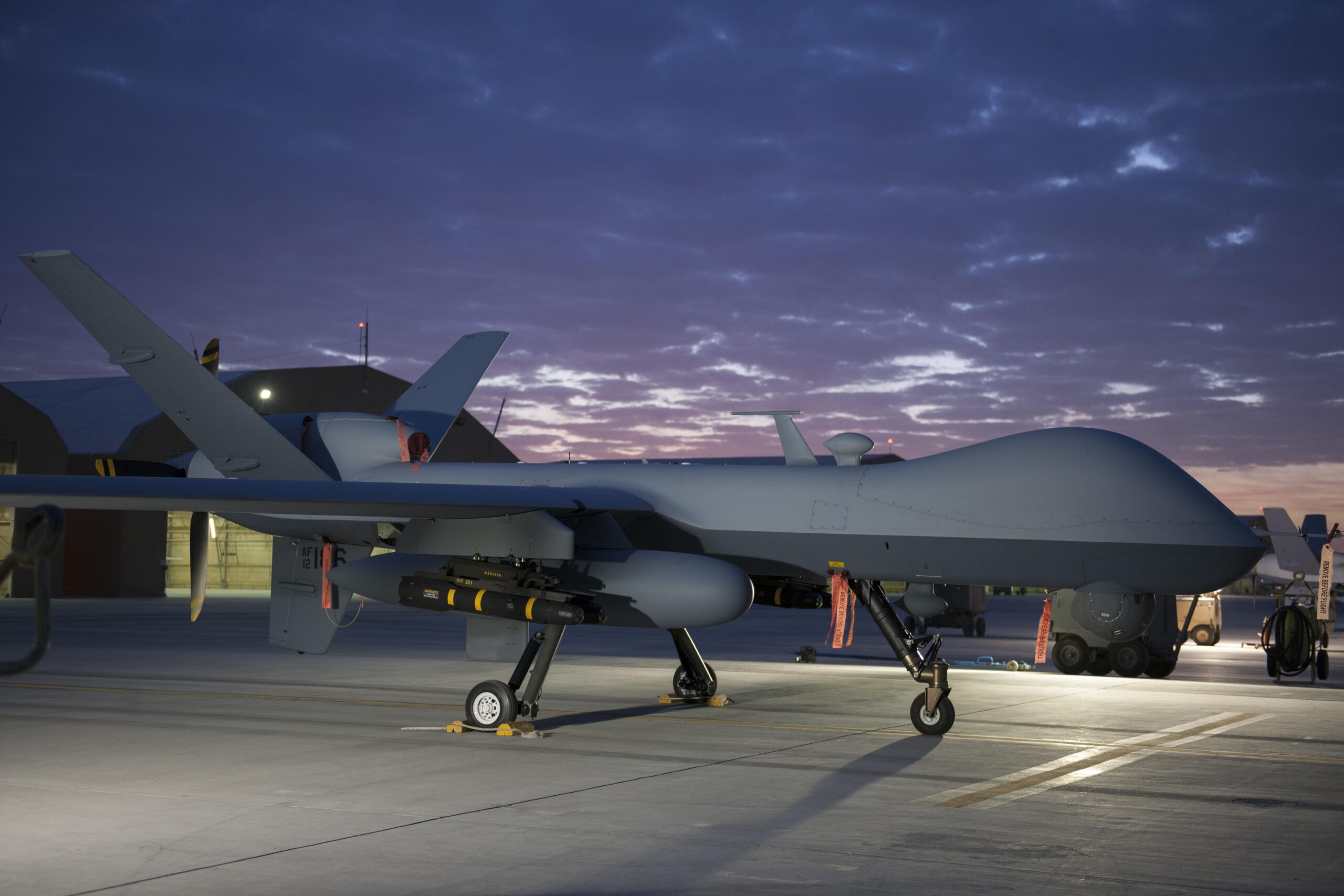
Unlike the aging MQ-9, the future platform will be designed to survive in contested skies, the kind that took down several Reapers during Epic Fury. Niemi said the Air Force wants a drone that’s built from modern, modular manufacturing that can be mass-produced quickly.
The idea is to create something cheaper, more flexible, and easy to replace, “attritable,” in Pentagon-speak.
That need for attritability is driven by cost. Niemi explained that a fully equipped MQ-9, loaded with its high-end sensor suite, can reach a staggering $50 million per copy.
In a fight against Iran or any near-peer adversary, that sort of price tag makes each loss financially painful. The goal now is a modular drone that can fly stripped-down missions in dangerous zones, using affordable components that can be replaced easily if destroyed.
Air Force acquisition officials have already launched what they’re calling the “Attritable ISR Aircraft” program, seeking proposals for a lower-cost, quicker-to-field ISR drone. Lt. Gen. Luke Cropsey, the service’s acquisition deputy, said the response has been overwhelming: over 50 companies have submitted concepts.

He said, “There is a burgeoning interest across the broader defense industrial base on what comes next.”
That April 14 solicitation pushes for a lighter, simpler craft — one that trades the Reaper’s elite sensor system and long endurance for affordability and production scale.
The baseline specs set a 200-kilometer range and four-hour loiter time, with objectives stretching to 1,500 kilometers and 20 hours for advanced designs.
The most important demand: industry must “be able to scale within months.” In other words, the United States wants combat drones that can roll off the production line like pickup trucks, not Ferraris.
For nearly two decades, the MQ-9 has anchored U.S. counterterrorism and global surveillance from the skies of Afghanistan to Syria. But as adversaries acquire better air defenses, the Reaper’s vulnerabilities are becoming undeniable.
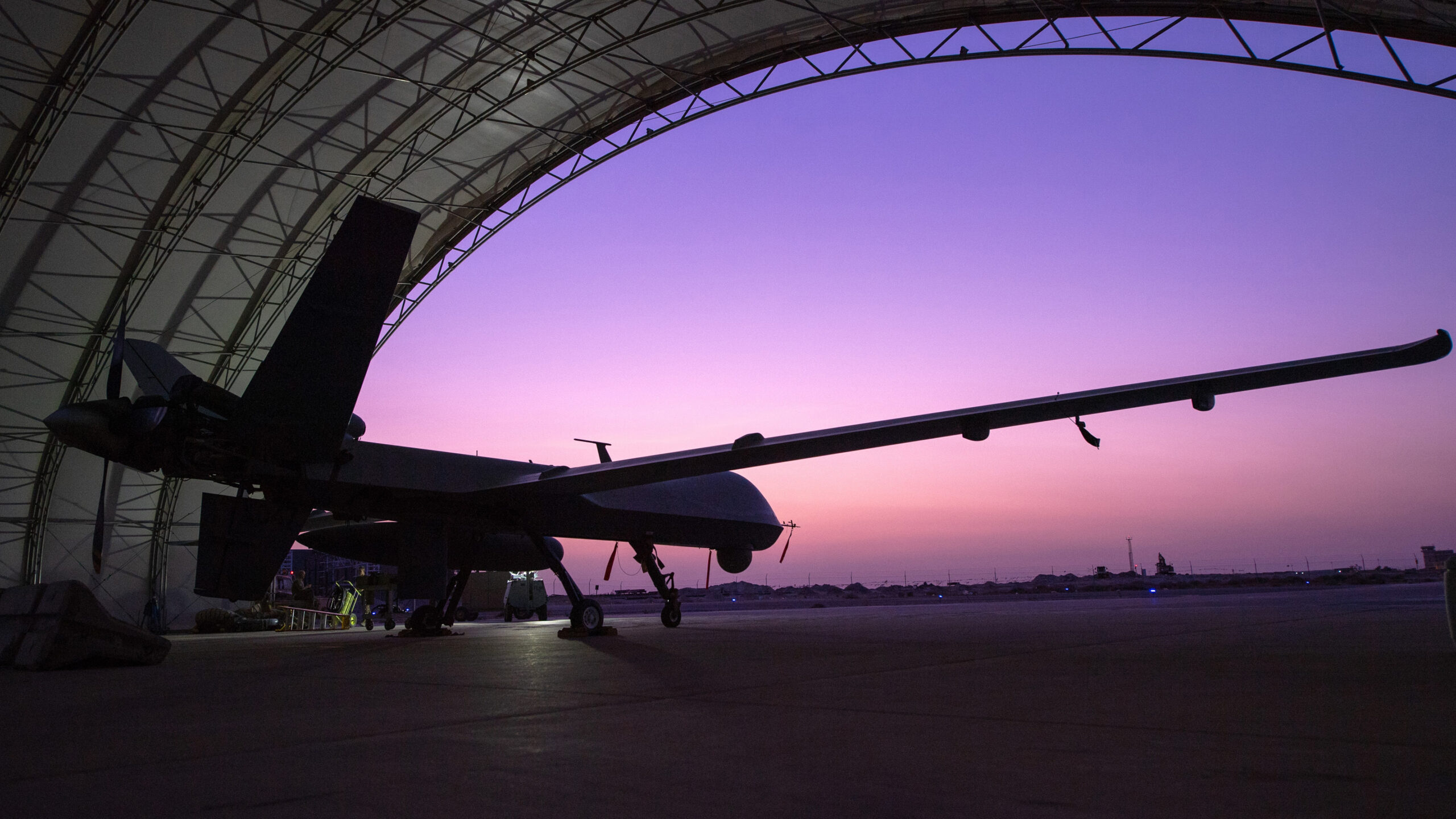
Its design grew out of the post-9/11 era when the Pentagon assumed total air dominance — an assumption that is no longer valid in regions where Iran and its proxies are firing back.
The last serious attempt to replace the Reaper died over a decade ago. The MQ-X program was canceled in 2012, leaving the Air Force to stretch the Reaper far past its design limits. A 2020 market survey led nowhere.
Only now, after loss after loss in a real-world modern engagement, is the Air Force moving decisively toward a new generation of autonomous, open-architecture aircraft inspired by the Collaborative Combat Aircraft model.
Cropsey said the enthusiasm from American industry has been strong, with multiple promising proposals.
He suggested that for once, the Air Force might actually move quickly enough to field the next evolution of combat drones before another crisis thins its arsenal further.
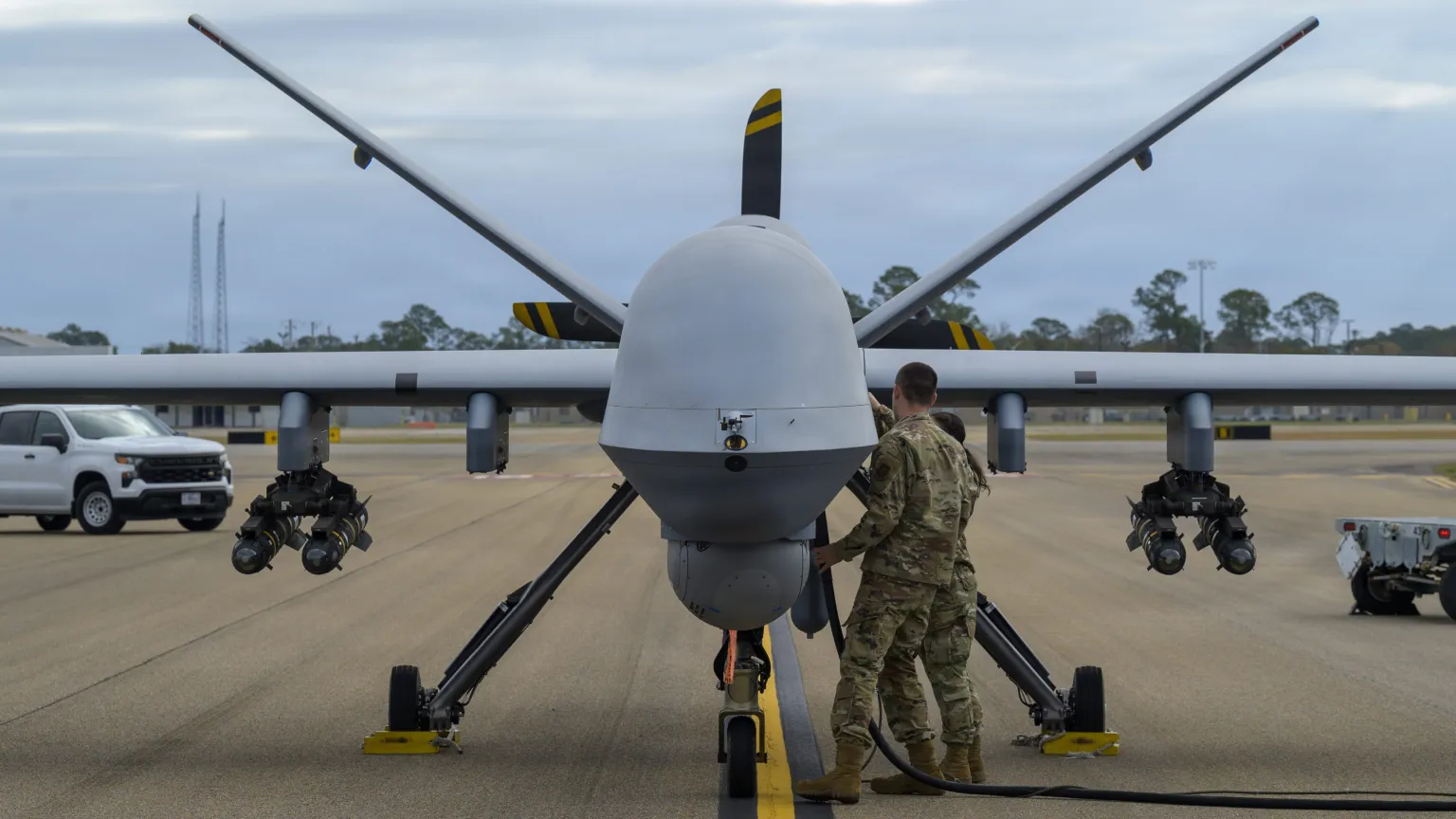
“We have enough interest to really get some, I think, interesting proposals back,” he said.
In other words, American airpower is adapting on the fly, but the price of delay has already been paid in combat hardware.
Against the backdrop of global unrest and renewed great power competition, the U.S. can no longer count on yesterday’s drones to fight tomorrow’s wars.
Washington’s challenge is now straightforward: rebuild the fleet, reimagine the mission, and get ahead of the next fight before America’s enemies do.
Join the Discussion
COMMENTS POLICY: We have no tolerance for messages of violence, racism, vulgarity, obscenity or other such discourteous behavior. Thank you for contributing to a respectful and useful online dialogue.