Four U.S. Navy aviators walked away from what could have been one of the darkest days in naval aviation—an astonishing survival that even seasoned fighter pilots are calling nothing short of miraculous.
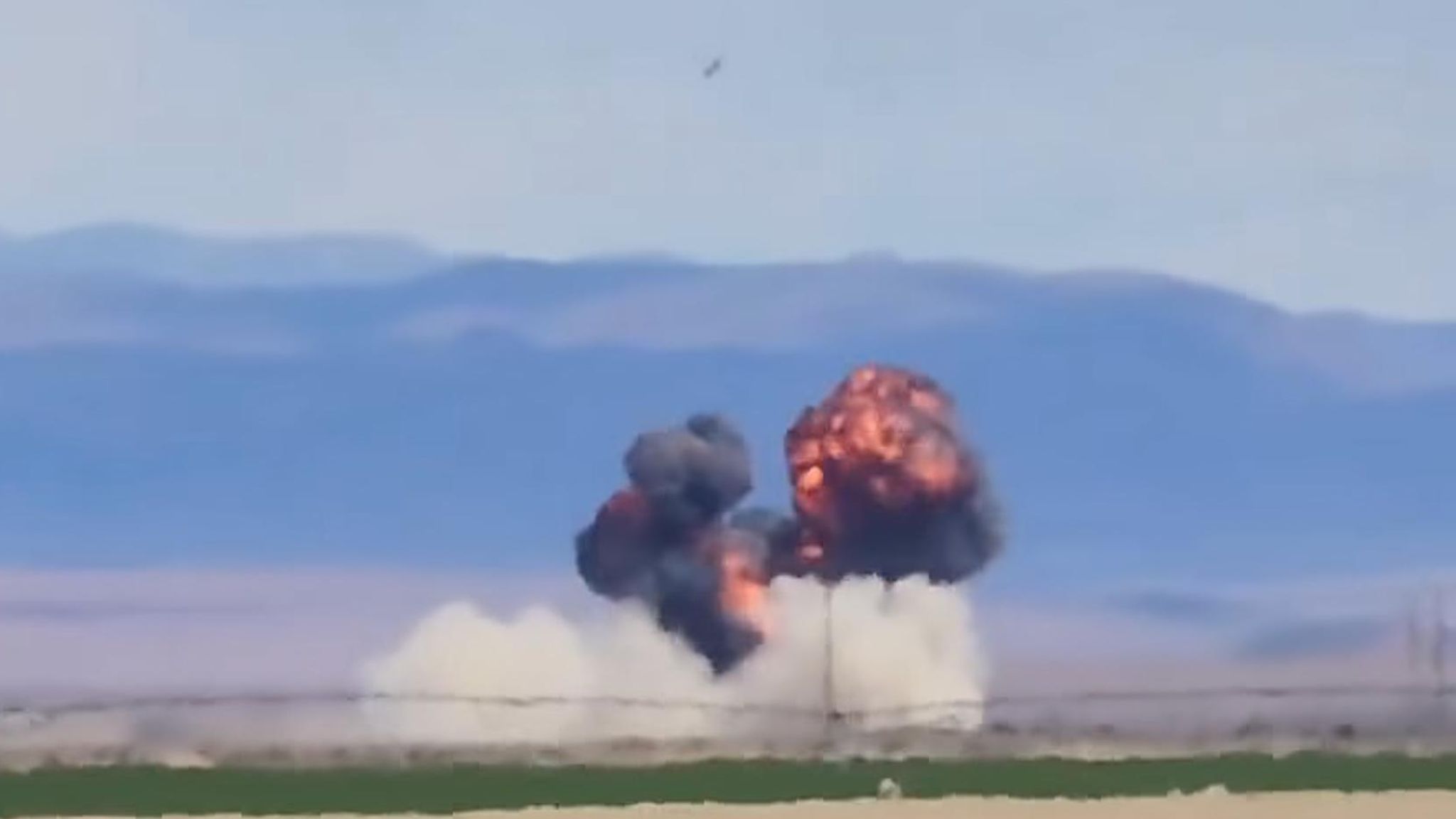
The shocking midair collision over Mountain Home Air Force Base in Idaho left two E/A-18G Growlers mangled and aflame, yet all four crew members managed to eject and survive.
According to Navy officials, the mishap occurred Sunday during an airshow demonstration when the two Growlers appeared to make contact and became fused together midflight.
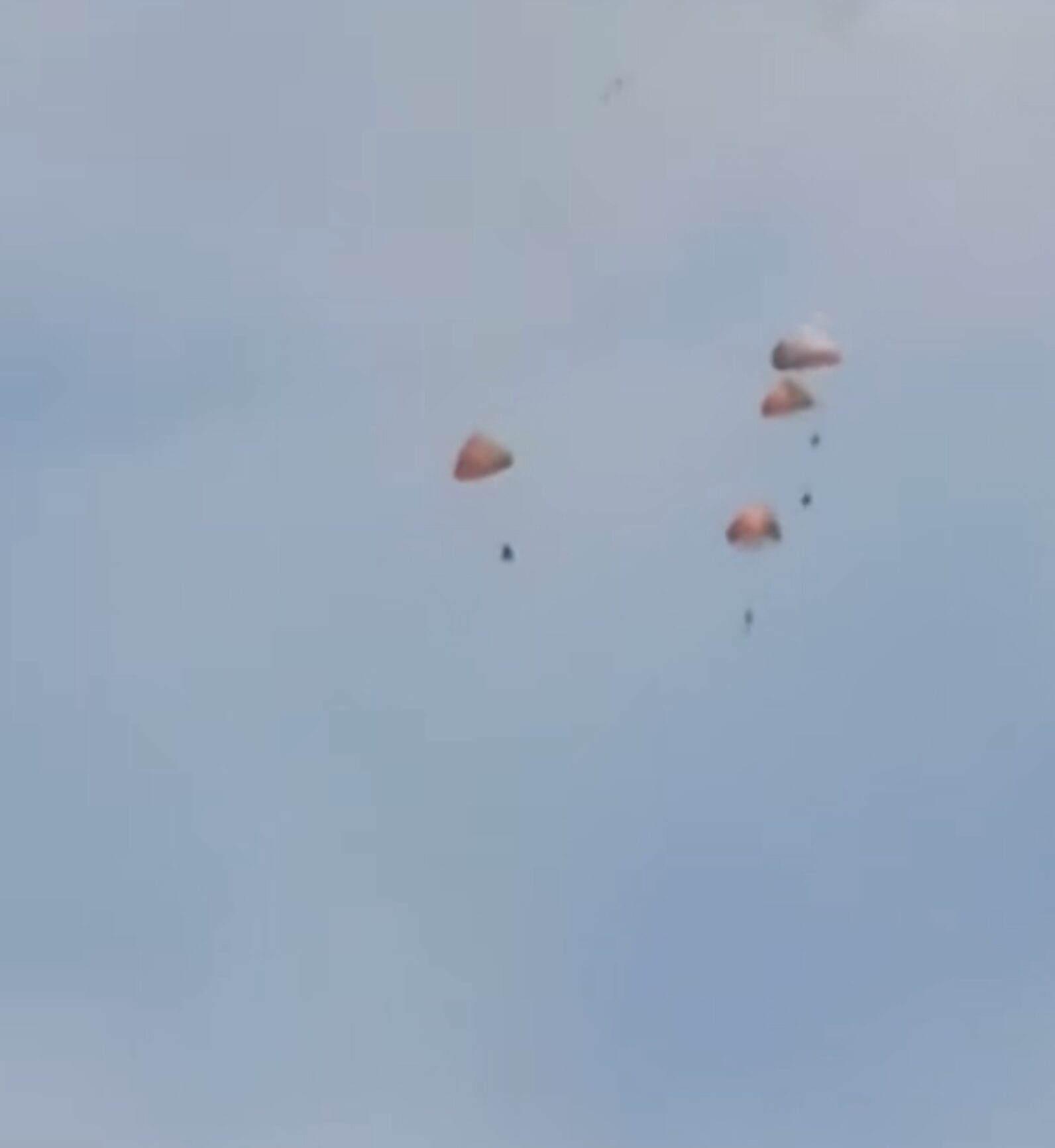
Within seconds, both two-person crews reacted with incredible speed, ejecting from their doomed aircraft as the jets spiraled out of control.
The four crew members parachuted safely to the ground as the aircraft tumbled into a burning heap. Three of them escaped injury entirely, while one was treated for a non-life-threatening wound.
Considering the chaos engulfing the sky at that moment, many are calling it a miracle of training, instinct, and technical precision.
Retired Navy Capt. Sterling Gilliam, now director of the National Naval Aviation Museum, marveled at the outcome.
“Ejections are a string of consecutive miracles on a good day,” Gilliam said.
“It’s a miracle there were four good parachutes. It’s another miracle that the trajectories of those ejection seats didn’t cross each other’s path or hit a fuselage.”
The E/A-18G Growler, a modified version of the F/A-18 Super Hornet, is purpose-built for electronic warfare and suppression of enemy air defenses.
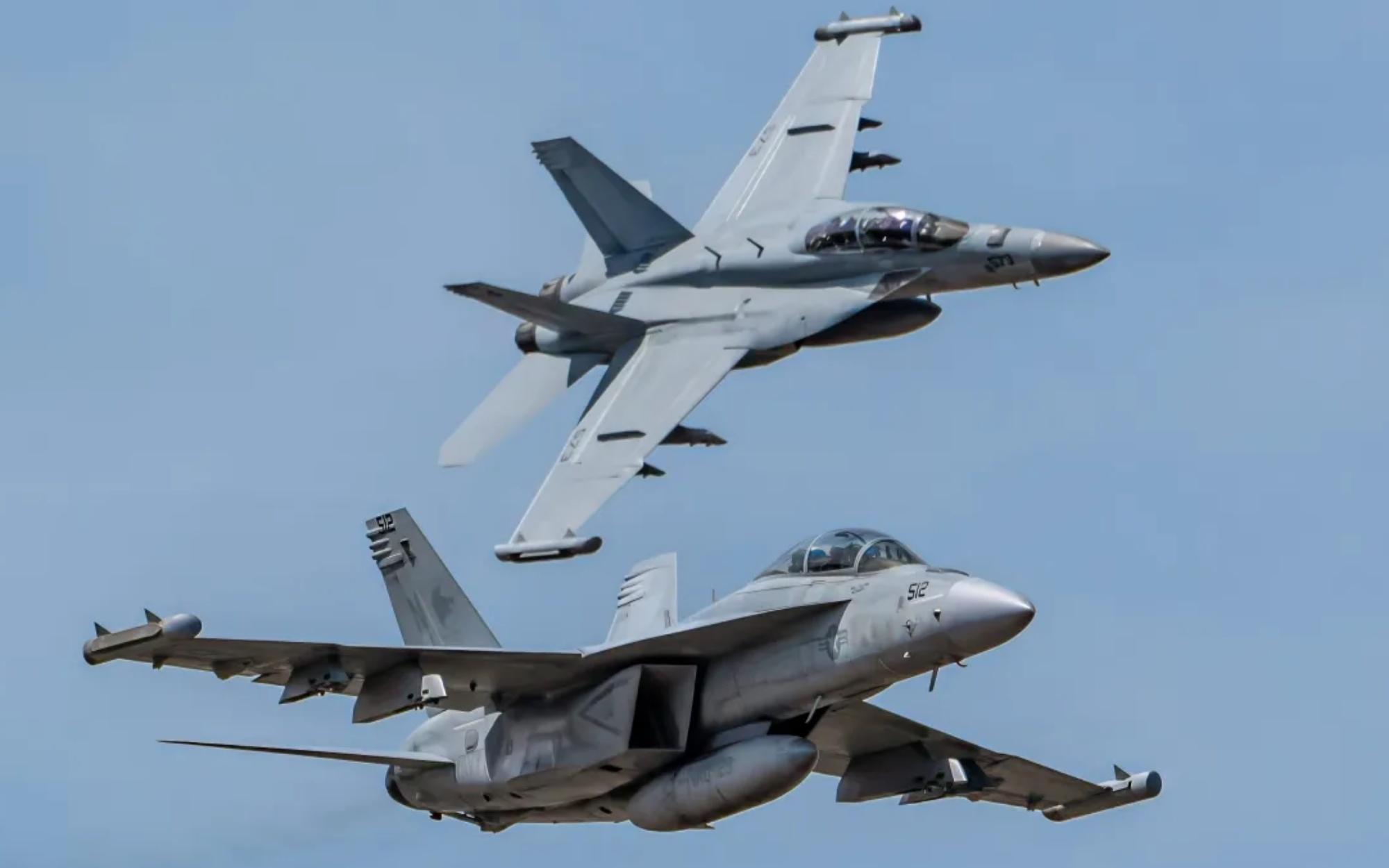
These aircraft typically carry a pilot and an Electronic Warfare Officer, working in tandem for precision execution.
The Growlers in the incident were part of the Navy’s elite Growler Demonstration Team assigned to Electronic Attack Squadron 129, based at Naval Air Station Whidbey Island in Washington state.
Video captured by spectators shows how dire the situation truly was—a shocking snapshot of one Growler practically riding atop another, with its fuselage pressed hard against the cockpit of the lower jet. Such a scenario was virtually unimaginable outside of combat or computer simulation training.
Former Navy pilot Guy Snodgrass called the event “beyond anything most pilots train for.” He explained that in normal flight, pilots rehearse ejections under predictable conditions—where canopy clearance, orientation, and body position dictate success.
“But, man, all that likely goes out the window in a scenario like this,” he said. “In a real-time crisis, you might just go with what you see—if it’s open sky, you punch out. If you look up and see a jet on your canopy, you probably hold for your life.”
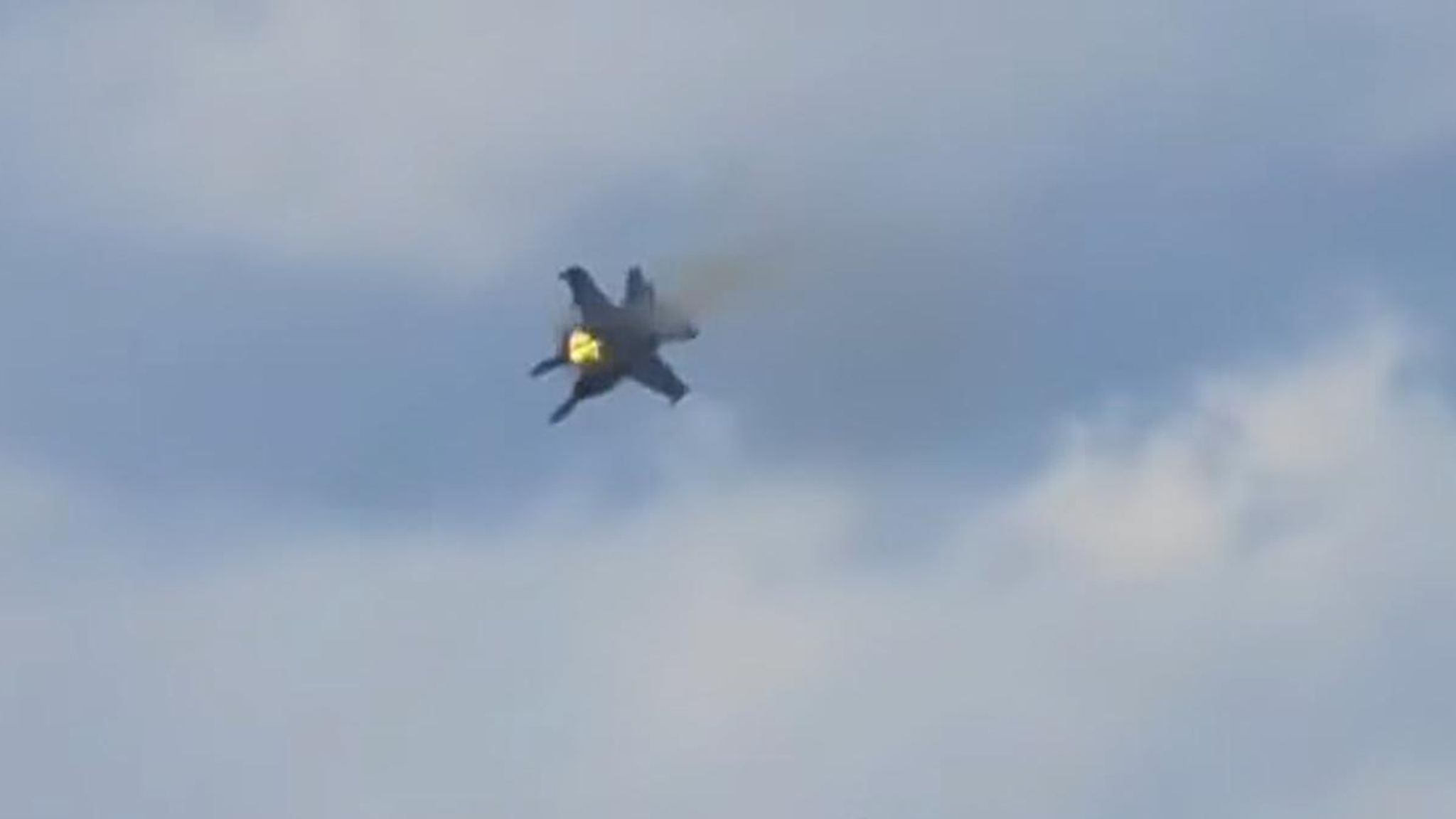
Footage from the accident shows the aircraft initially connecting nose-to-tail, a configuration that offered the lower crew nearly zero chance of visibility or reaction time.
As the entwined planes began to tumble, there appeared to be a brief separation of their cockpits—and that split-second window is when the lower crew triggered their ejection sequence.
Whether their timing was intentional or sheer fate remains under investigation, but experts say the quick reaction and composure will be studied by naval aviators for years.
Retired Air Force Maj. Gen. Ronald Bath, who survived a harrowing inadvertent ejection in 1988, said this incident will certainly become a case study. “Both crews were incredibly fortunate to get full ejection sequences,” he explained.
“This will be analyzed and taught rigorously.”
Plane collisions during formation flight are not unheard of. The Air Force experienced deadly crashes during training in 2019 and 2021 when T-38 jet trainers collided during formation landings, killing three pilots.
The Navy will investigate its own flight safety procedures as part of its review, but early indications point to an unpredictable sequence of events rather than pilot recklessness.
What makes this outcome so extraordinary is not only that four men survived but how flawlessly the ejection systems and their training performed under instant pressure.
Pilots emphasize that even one malfunction—a faulty seat trajectory, a tangled chute, or delayed response—could have led to tragedy.
Snodgrass summed it up bluntly: “We don’t know exactly what went through the crews’ minds, but it was probably a ‘holy shit’ moment. The time from collision to losing control was lightning fast.”
For the families of these aviators, the word “miracle” is no exaggeration. Two state-of-the-art Navy jets are destroyed, but four American warriors lived to see another day—a trade every branch of service would take in an instant.
As the Navy’s War Department begins its formal investigation, pilots across the fleet are studying the footage and shaking their heads in respect. Sometimes, survival in the skies is more than skill—it’s divine timing.
Even in catastrophe, the precision and professionalism of American naval aviation shine through.
The Growler crews’ survival is testament to elite training, world-class engineering, and warrior instinct when the unthinkable happens above the clouds.
WATCH BELOW:
@cbsnews Two fighter jets collided in midair during the Gunfighter Skies Air Show at the Mountain Home Air Force Base in Idaho on Sunday. Officials at the air base announced the aircrew involved in the crash were able to parachute to safety, CBS affiliate KBOI reported. #fighterjet #airforce #idaho #military #airshow ♬ original sound - cbsnews
Join the Discussion
COMMENTS POLICY: We have no tolerance for messages of violence, racism, vulgarity, obscenity or other such discourteous behavior. Thank you for contributing to a respectful and useful online dialogue.