When Iranian-backed militants sent a killer drone into the Tower 22 outpost in Jordan, Army National Guard doctor Maj. Erika Page didn’t have the luxury of panic.
As the blast shook the small forward base and chaos erupted, Page found herself instantly thrust into command of a handful of doctors and medics trying to save dozens of American soldiers.
The January 24, 2024 strike left three reservists from Georgia dead and scores of others wounded, many with traumatic brain injuries.
In a scene that would test even the most seasoned combat medic, Page and her team transformed a base chapel into a makeshift hospital and began triaging the injured under direct threat of further attack.
MORE NEWS: Pentagon Confirms First Military Execution in Over 60 Years Will Be Publicly Livestreamed
Her unit had trained for mass casualty events, but this was different. “You’re on autopilot,” Page recalled.
“The call for the mass casualty happened, and I went to the MASCAL site where we had practiced.
No one else showed up, which was unusual, because in practice, everybody had always come.” Only later did she learn that her entire enlisted medical team had also been knocked out by traumatic brain injuries.
Page, who works as an emergency medicine doctor in Arizona when not serving in uniform, quickly realized that she was dealing with a battlefield far more complex than the ones her training had prepared her for.
The attack, carried out by a hostile drone, turned the containerized barracks into a death trap and exposed deep vulnerabilities in U.S. force protection across the Middle East.
While the War Department scrambled for answers and Washington politicians debated force posture, Page focused on the wounded.
She began diagnosing TBIs in the field—without scans, without certainty, and without sleep. “I couldn’t transfer all these people out without the base collapsing,” she explained.
“We’re not in a safe situation. We couldn’t just say, ‘Alright, all 100 people need to get out of here and get CT scanned.’”
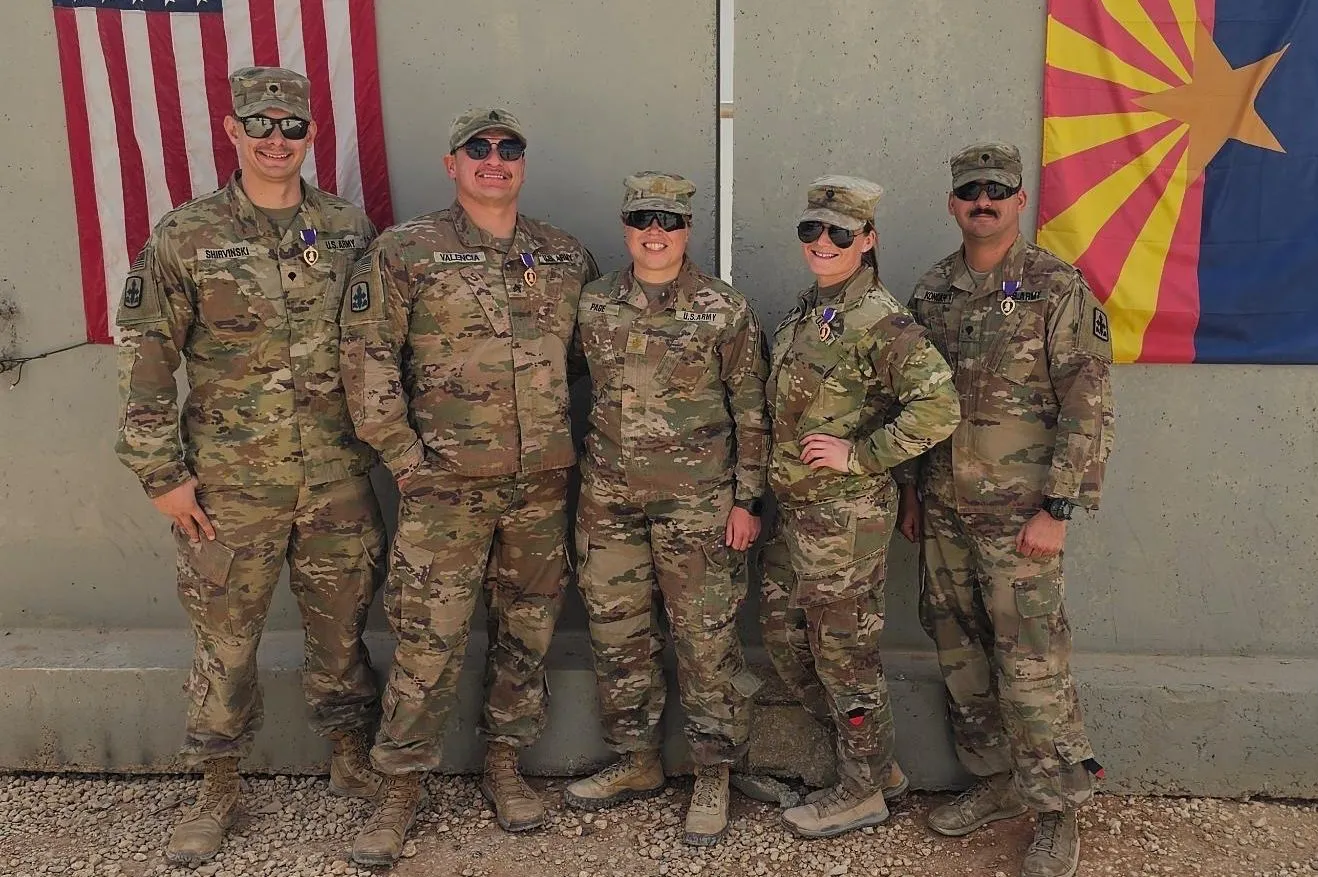
Medical care on the modern drone battlefield demanded quick judgment calls, and Maj. Page made them. She cataloged injuries meticulously, understanding that her field notes could later determine whether soldiers qualified for Purple Heart eligibility—an award that carries not only honor but lifelong benefits for service members and their families.
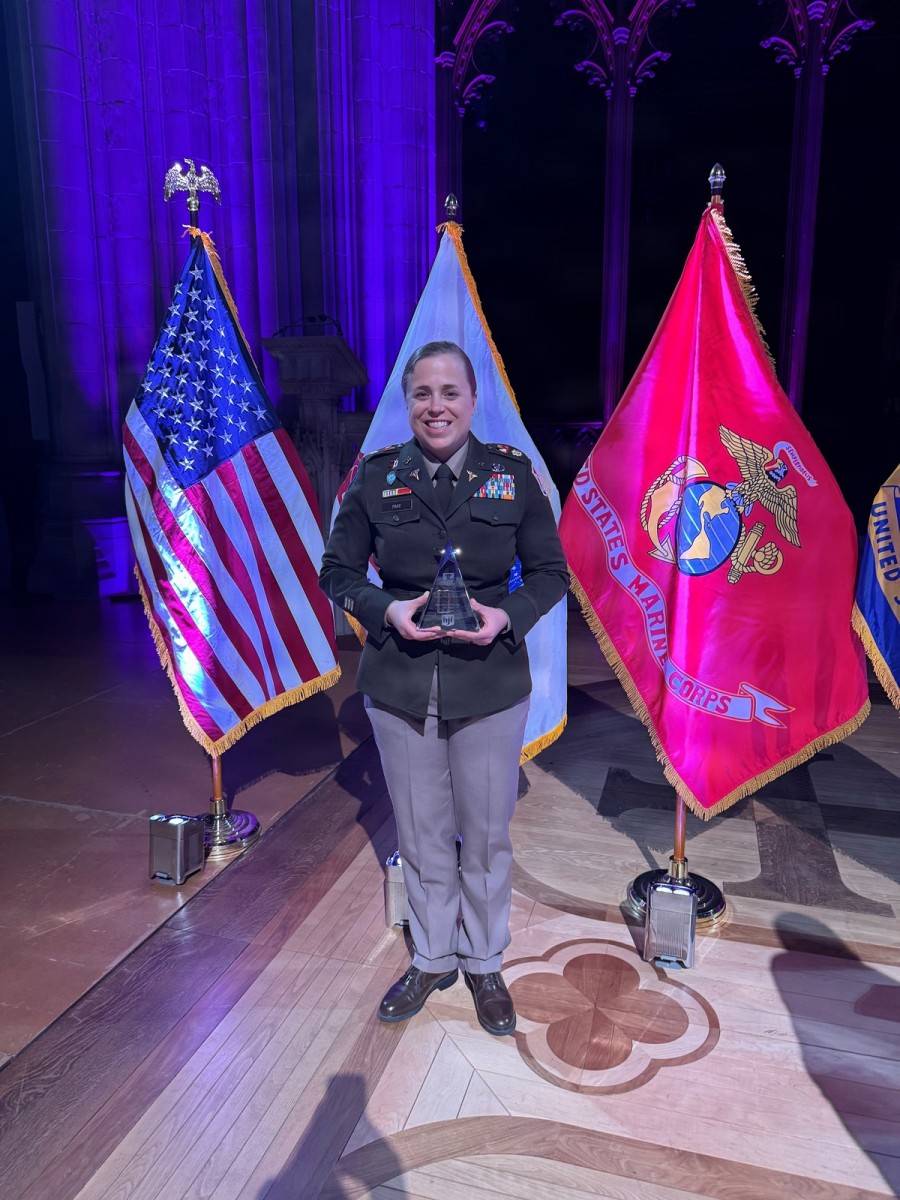
Her decisions saved lives, earned her the Army Honoree distinction at the 2026 Hero of Military Medicine Award ceremony in Washington, and led to a Bronze Star for exceptional leadership.
Brig. Gen. Matthew Brown praised her “unwavering courage, medical expertise, and superior leadership under direct enemy fire.”
According to her Bronze Star citation, Page treated more than 70 soldiers and airmen during those initial 48 hours, personally performing life-saving procedures despite being surrounded by chaos, fear, and uncertainty.
“Despite the extreme circumstances,” it read, “she remained calm and composed, immediately establishing casualty collection points and providing lifesaving medical procedures to over 70 wounded in action.”
The attack on Tower 22 revealed glaring weaknesses in how small U.S. bases detect and respond to drone threats.
The War Department later launched a review of force protection at forward positions throughout the region—a review that, critics say, came years too late.
Even now, as the war with Iran drags on, lawmakers continue pressing the Pentagon’s top brass about why American service members remain so exposed.
Maj. Page’s actions not only saved lives that night but also shed light on how the military handles cases of traumatic brain injury—often invisible wounds that can go unrecognized.
She noted the inconsistencies in awarding Purple Hearts for TBI-related injuries and the sluggish bureaucracy that stalls recognition.
“I felt like I received some pushback,” she said. “There were a couple retroactive Purple Hearts that I helped people start getting set up for.”
Since that night, Purple Heart awards connected to Tower 22 have slowly been issued to members across several National Guard units and Air Force rescue wings, including soldiers from New York, Kentucky, and Arizona. Each recognition represents a small step forward in acknowledging the true nature of modern warfare.
For Maj. Page, the stakes go beyond medals. “I knew Purple Hearts [were] going to have ramifications for generations,” she said.
She viewed her documentation as a moral duty, understanding that one signature could change the financial security of an entire family. “People can get free college, decreased taxation. The entitlements for life can really change, and rightfully so. I just knew I had to get it right.”
Two years later, the Tower 22 attack stands as a stark reminder that America’s enemies have changed tactics. Drones are cheap, deadly, and relentless, and small forward bases are in the crosshairs.
Yet amid the tragedy, soldiers like Maj. Erika Page remind the nation that courage, faith, and grit remain our greatest defense.
Join the Discussion
COMMENTS POLICY: We have no tolerance for messages of violence, racism, vulgarity, obscenity or other such discourteous behavior. Thank you for contributing to a respectful and useful online dialogue.