The branches of the U.S. military are preparing to request exceptions to War Secretary Pete Hegseth’s recent decision to make the flu vaccine voluntary for troops, a move that has reignited an old debate between bureaucratic control and individual freedom.
Under Secretary of War for Personnel and Readiness Anthony Tata told senators this week that each branch is submitting its own list of “robust exceptions” where commanders believe mandatory flu vaccinations should remain in place.
The requests, still in draft form, will be reviewed and then forwarded to Hegseth for a final call.
Tata explained the types of scenarios the services are worried about: submarines, naval ships, basic training camps, and schools like the Army Rangers—environments where troops live and work in tight quarters.
MORE NEWS: Pentagon Confirms First Military Execution in Over 60 Years Will Be Publicly Livestreamed
It’s the same reasoning used for decades to justify blanket requirements.
The issue came up during a Senate Armed Services Committee hearing, where predictably, Democratic Senator Mazie Hirono of Hawaii criticized the change.
She warned that readiness could suffer and pressed Tata about whether the department had reviewed any new scientific data before Hegseth acted.
Hirono claimed, “There’s such a thing as leadership that would say to the service members, ‘This is for your health protection. It’s science based.’” That line struck a familiar tone: the same bureaucratic paternalism that pushed mandatory masking and lockdowns under the Biden administration.
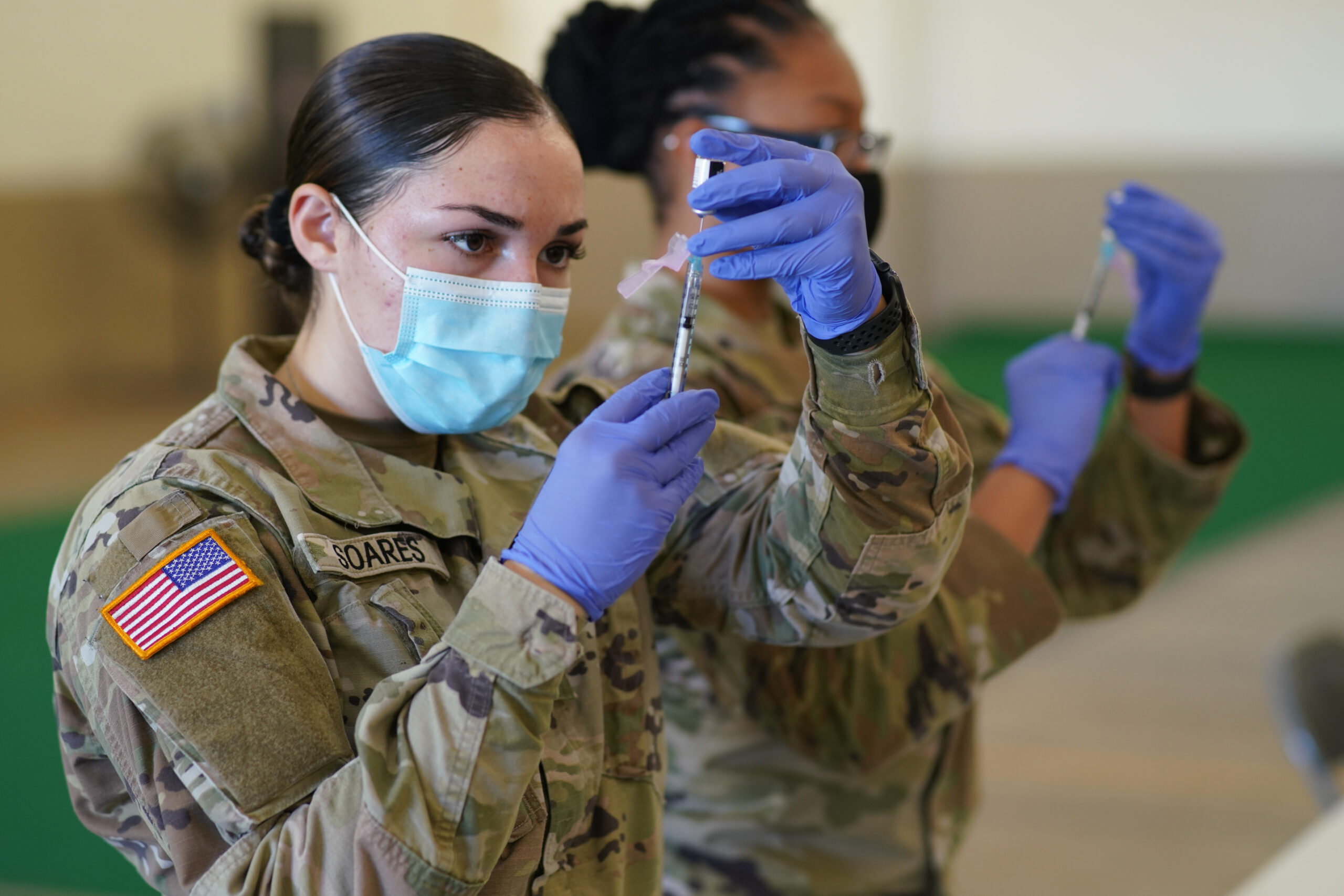
Tata, standing firm, said the decision reflected something deeper than laboratory data—it was about restoring faith in leadership after the disastrous vaccine crackdown of recent years.
“What I’m aware of is troop morale and the significant backlash from the imposition from the Biden era of the COVID vaccine,” Tata said. “The mandatory COVID vaccine and the expulsion of lots of talent for refusing to take that vaccine.”
In short, Hegseth’s order is about freedom, not medicine. He made the announcement back on April 21, writing on X that “the War Department is once again restoring freedom to our Joint Force.”
True to form, Hegseth framed the move as a cultural correction—returning trust to the troops after an era when the Pentagon acted more like a public health lab than a warfighting organization.
The annual flu vaccination has been on the books since the 1950s, and traditionally the Department of War pushed for a 90 percent inoculation rate among personnel.
It made sense in the days before modern medicine, but mandatory flu shots became just one of many areas where bureaucrats put paperwork over principle.
Some in the military health bureaucracy aren’t thrilled with Hegseth’s decision. An Armed Forces Health Surveillance Division report last October claimed the flu vaccine helped lower hospitalizations among troops, especially in close quarters like recruiting stations.
Between 2010 and 2014, it found that recruits saw flu-related hospitalization rates of 70 per 100,000 compared to just 7.4 per 100,000 for the military overall.
Still, the big picture shows something else: America’s professional warriors are healthier, stronger, and more resilient than the general population—even without Washington micromanaging every shot.
And Hegseth’s move doesn’t ban vaccination; it simply restores personal choice to those willing to serve and risk their lives for the Republic.
It’s no surprise that this pushback comes from the same bureaucratic elements that enforced the COVID jab with an iron fist.
From August 2021 until Congress forced a reversal in early 2023, the mandatory COVID vaccine rule led to over 8,400 service members being discharged. Many were seasoned, highly skilled troops who simply refused on religious or health grounds to take an experimental shot.
By the time that vaccine mandate took effect, more than 70 percent of active-duty personnel had already voluntarily received a dose.
That didn’t stop the Biden-controlled Pentagon from purging those who didn’t cave. For many in the ranks, the bitterness never went away—and that’s what Hegseth and Tata are trying to heal.
The same congressional critics who cheered on those purges are now feigning concern about “readiness” because Hegseth allowed the flu shot to be optional. The contrast is striking.
When mandates destroy morale and drive out combat-tested warriors, the Left calls it “following the science.” But when a conservative leader restores liberty, it suddenly becomes a “readiness crisis.”
Hegseth’s move fits squarely into President Trump’s larger approach to rebuilding the military—trusting the troops more, micromanaging them less, and focusing the War Department on what it’s designed to do: deter enemies, win wars, and defend America’s interests.
The service branches may still lobby for narrow exceptions, and Hegseth will review them fairly.
But one thing is certain: the age of forced compliance in the U.S. military is coming to an end. And for the first time in a long time, the troops are being treated like the adults—and patriots—they are.
Join the Discussion
COMMENTS POLICY: We have no tolerance for messages of violence, racism, vulgarity, obscenity or other such discourteous behavior. Thank you for contributing to a respectful and useful online dialogue.