The Pentagon has canceled a long-planned deployment of an Army long-range missile battalion to Germany, leaving hundreds of soldiers in operational limbo and raising serious questions about the Biden-era foreign policy priorities that continue to shift the U.S. posture in Europe.
The 3rd Battalion, 12th Field Artillery Regiment, based out of Fort Drum, New York, was slated to head to Germany later this year as part of a structured plan between Washington and Berlin to enhance long-range fires across NATO’s eastern flank.
That agreement, announced in July 2024, has now been scrapped with little explanation, and soldiers who spent months preparing for Europe are suddenly sidelined.
The move follows another abrupt cancellation regarding the rotation of about 4,000 soldiers from the 2nd Armored Brigade Combat Team, 1st Cavalry Division to Poland.
MORE NEWS: Pentagon Confirms First Military Execution in Over 60 Years Will Be Publicly Livestreamed
According to a May 1 memo first obtained by CNN, the Pentagon ordered that deployment halted mid-handoff — while hundreds of troops were already en route to Europe.
Together, these cancellations are part of a growing pattern of strategic hesitation and political recalculations sweeping through the War Department.
What had once been described as “episodic deployments of long-range fires” now appears mired in bureaucratic backpedaling as the Biden administration reassesses U.S. troop levels overseas.
For the 500-plus soldiers of the 3rd Battalion, 12th Field Artillery Regiment, the mission that was supposed to strengthen NATO capabilities against Russia’s aggression is effectively in limbo.
The battalion operates some of the Army’s most advanced missile systems, including Tomahawk cruise missiles and SM-6 interceptors designed for both offensive and defensive operations.
The deployment had been hailed as a milestone in the Army’s push for multi-domain readiness.
The unit, under the 2nd Multi-Domain Task Force, was to become a cornerstone of Operation Atlantic Resolve — the U.S. commitment to reinforce eastern Europe following Russia’s 2022 invasion of Ukraine. Now, that vision has evaporated amid new “reviews” of U.S. forces in Europe.
On May 1, the Pentagon also announced a plan to withdraw 5,000 troops from Germany within the next 6 to 12 months.
This comes at a time when tensions are growing between President Donald Trump’s administration and the German government, particularly after Chancellor Scholz publicly criticized the U.S. and Israeli conduct in the war with Iran. It’s a clear signal that Berlin’s wavering loyalties have not gone unnoticed.
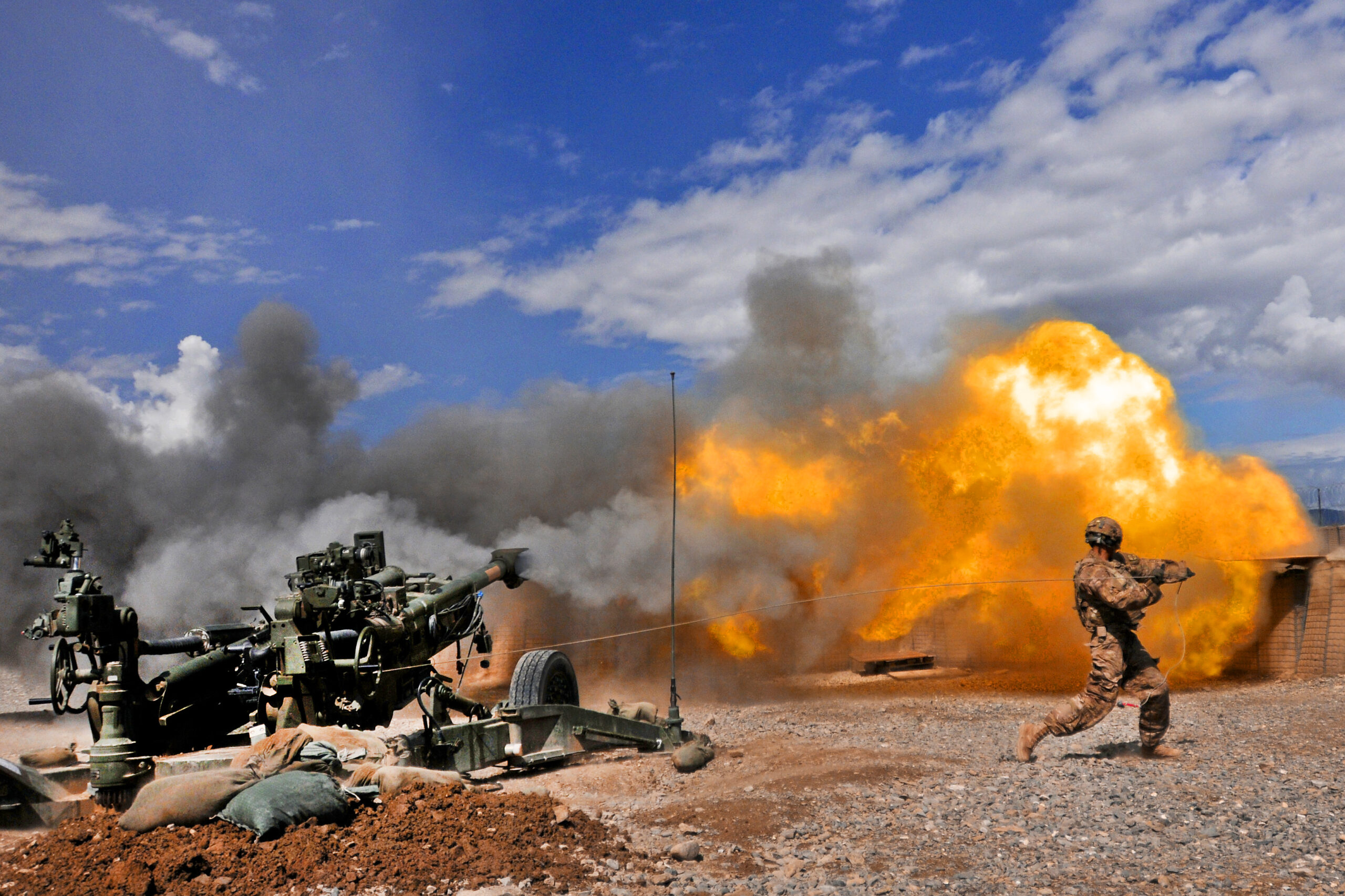
Officials within the War Department insist that the cancellations are part of a broader “posture adjustment,” though no clear alternative timeline or mission has been offered.
For many in uniform, the sudden reversal looks less like strategy and more like second-guessing — a symptom of policymakers prioritizing political optics over deterrence.
The German defense ministry had initially denied that the missile unit’s deployment was off the table, claiming there was no “definitive cancellation.”
That statement, however, now rings hollow given the Pentagon’s confirmed withdrawal order and shifting public statements from U.S. officials in Europe. What Germany viewed as uncertainty has now become official policy.
The 3rd Battalion was stood up in October 2025 as part of the Army Transformation Initiative, a program pushed to modernize the force with long-range, hypersonic, and integrated fires.
At its activation ceremony, the battalion’s commander told troops they would “set the tone, define the culture, and turn a concept into a combat-ready force.” Less than a year later, the very mission meant to showcase that capability is being shelved.
Military analysts note that canceling deployments of this magnitude doesn’t happen overnight. These are multi-layered joint operations with logistics stretching from airlift assets to host-nation support.
A reversal suggests a sea change either in Europe’s willingness to host these systems or Washington’s appetite to maintain them abroad — both possibilities that highlight fading confidence in American deterrence.
For years, U.S. force presence across Europe was ramping up to reassure NATO partners unnerved by Russia’s aggression and China’s growing influence.
But with each rollback, the credibility of America’s forward defense erodes, and adversaries are quick to notice. Already, Kremlin-linked voices in Moscow media are championing the cancellation as proof that “the Americans are retreating.” That’s propaganda the Biden administration just handed them on a silver platter.
If the U.S. wants to maintain strategic leverage in Europe, it cannot afford to play political games with readiness.
The soldiers of 3rd Battalion, 12th Field Artillery Regiment trained to deploy, operate, and defend allied ground — not sit on standby while leaders argue about diplomatic niceties. For their part, the troops are ready. It’s Washington that isn’t.
As the War Department keeps “reviewing” America’s troop posture abroad, the message to our allies and adversaries alike is becoming uncomfortably clear: under weak leadership, strength gets sidelined. What was once a display of U.S. precision and might has turned into another cancellation notice buried in a government memo.
And for the hundreds of men and women who signed up to defend freedom on the ground — it’s another reminder that America’s warriors remain ready, even if Washington’s politicians are not.
Join the Discussion
COMMENTS POLICY: We have no tolerance for messages of violence, racism, vulgarity, obscenity or other such discourteous behavior. Thank you for contributing to a respectful and useful online dialogue.