When an Apache attack helicopter went down off the coast of Oman after an encounter with an Iranian-made Shahed drone, it wasn’t just a tragic close call for the crew—it was a moment that revealed how modern warfare is rapidly changing.
Analysts say the incident marks a turning point in the skies, where even America’s toughest rotary-wing aircraft are finding themselves vulnerable to swarms of cheap, weaponized drones built by U.S. adversaries.
The Army confirmed that the two crew members aboard the Apache were rescued by a passing vessel hours after the crash, and thankfully both survived.
What caused the helicopter to go into the water remains unclear, but experts suspect a Shahed drone—the same type Iran has shipped in droves to Russia for use in Ukraine—may have either impacted or detonated near the aircraft.
That possibility has analysts across the military community rethinking what it means to dominate the air.
Iran’s Shahed-136 drones are not sophisticated by American standards.
They’re relatively inexpensive, often pre-programmed to fly toward fixed coordinates, and typically used to strike stationary targets. Kelly Campa from the Institute for the Study of War explained that such drones aren’t designed to take down helicopters mid-flight.

“A Shahed hitting a helicopter is highly unusual,” she said, noting that Russia’s experimentation with guided variants makes that capability more likely there than anywhere else.
Still, suspicions that Iran—or one of its proxy groups—may be testing or modifying Shahed models to perform this kind of attack raises serious red flags for pilots in hostile airspace.
If even a rudimentary drone can jeopardize an Apache, the battlefield calculus shifts dramatically, especially in a region where Tehran is constantly probing for weakness.
Kelly Grieco, a senior fellow with the Stimson Center, suggests multiple possible scenarios for the downing.
MORE NEWS: Congressional Report Puts Marine Corps ACV Costs and Battlefield Survival Under Harsh Scrutiny
The Apache might have collided with the drone while maneuvering for an intercept, or it could have encountered a variant rigged with a proximity fuse that exploded nearby. “The fact that both crew members survived and appear to have made a controlled water landing argues against a direct impact with the warhead,” she said.
That detail may indicate the Apache crew fought the aircraft all the way down, buying precious seconds before escape.
But beyond the specifics of how the incident unfolded, the larger question gripping military analysts is what this event reveals about the evolving nature of air power. For decades, Apaches represented the pinnacle of close air support—a flying tank capable of hunting ground targets with precision and agility.
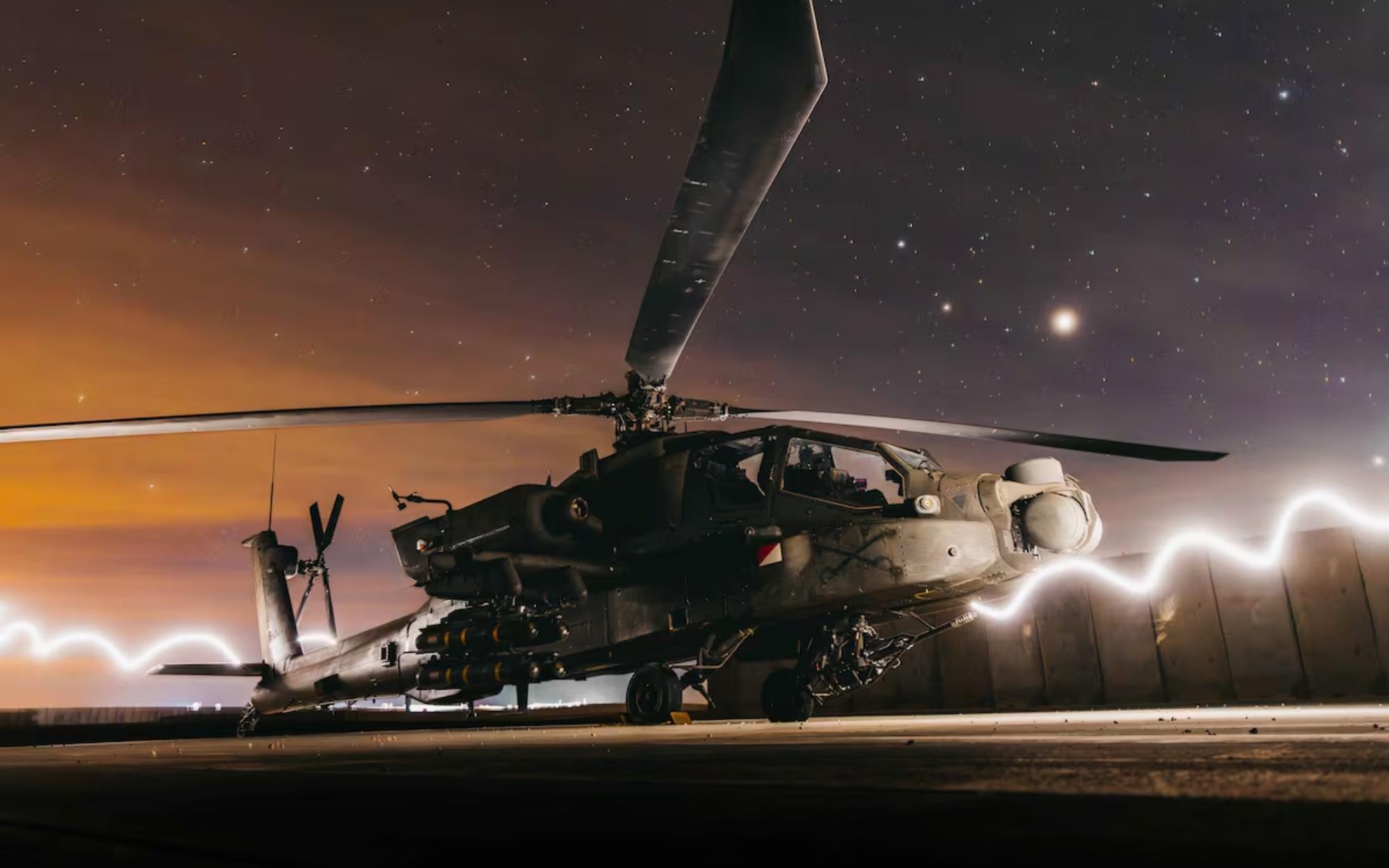
Now they’re flying into a sky where cheap, unmanned weapons can punch far above their cost and threaten even the best U.S. machines.
Doug Birkey, executive director of the Mitchell Institute for Aerospace Studies, called the crash a wake-up call. “This should be the last fight where we use a lot of legacy constructs and technologies,” Birkey said.
After two decades of flying relatively unchallenged during counterinsurgency campaigns in Iraq and Afghanistan, American pilots are suddenly facing skies crammed with drones, electronic warfare, and advanced air defenses.
He argues the military must move fast to adapt, pairing manned aircraft like the Apache with autonomous wingmen—uncrewed assets that can scout ahead, jam threats, or even absorb enemy fire.
“Could you partner that Apache with an uncrewed asset to net similar effect?” Birkey asked. In this vision, human pilots stay close enough to guide the fight but far enough to remain alive.
The Army is already taking steps in that direction, testing a pilot-optional version of the Black Hawk helicopter this year. The next evolution might combine human ingenuity with mechanical endurance—a pairing that could redefine battlefield dominance under Secretary of War Pete Hegseth’s push for readiness, lethality, and innovation.
Mark Cancian, a retired Marine colonel and senior adviser at the Center for Strategic and International Studies, sees the Oman incident as an extension of drone tactics tested in Ukraine.
“It was the Shahed being used as anti-helicopter,” he said. “That had happened in Ukraine. It had not happened in the Gulf.” That expansion beyond Europe shows just how rapidly adversaries are sharing technology and adapting new threat profiles.
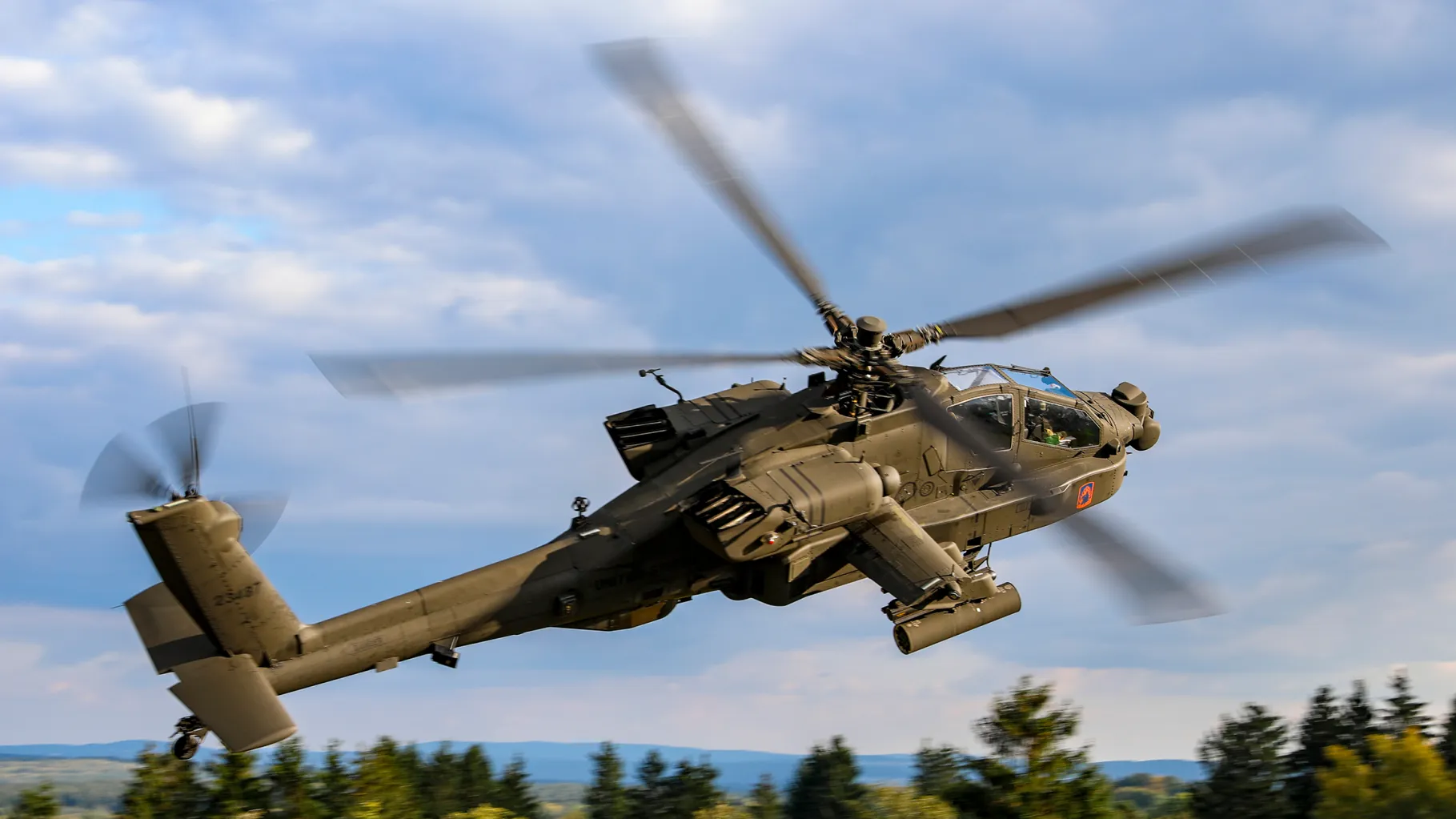
Apaches flying around the Strait of Hormuz have long operated as the tip of the spear against Iranian forces, often engaging small boats or intercepting drones.
Now, they may have to fly in formations, coordinate more closely with uncrewed scouts, and limit their exposure to hostile skies. In short, the rules of engagement are changing in real time.
Veteran pilots understand the stakes better than anyone. One recalled his underwater escape training, designed to prepare aircrews for crashes over water. “It was my biggest fear,” he admitted.
Darkness, disorientation, and panic are the first enemies a downed crew must fight. Still, training kicks in—and in every case, one rule remains the same: bubbles always rise.
That principle, both literal and symbolic, fits the new air war ahead. America’s warfighters will adapt, rise, and overcome.
The tools of conflict may change, but as history proves, American pilots still define courage—and even in the darkest waters off hostile shores, that spirit never sinks.
Are you feeling overwhelmed or hopeless right now? Have you been withdrawing from people or activities you usually enjoy? Are you having thoughts about hurting yourself, or feeling like things will never improve?
You do not have to handle those feelings alone. Support is available, and talking to someone can make a difference. You can reach out to the 988 Suicide & Crisis Lifeline by calling or texting 988, or by chatting online at 988lifeline.org. Trained counselors are available 24 hours a day to listen and help.
If you believe someone is in immediate danger, call emergency services right away. Even a small step, like reaching out to a trusted friend, family member, or professional, can help create a path forward.
Join the Discussion
COMMENTS POLICY: We have no tolerance for messages of violence, racism, vulgarity, obscenity or other such discourteous behavior. Thank you for contributing to a respectful and useful online dialogue.