The modern battlefield isn’t just changing, it’s mutating into something unrecognizable. The relentless rise of drone warfare has turned the old playbook of medicine on the front lines into a relic of the past.
While U.S. troops and airmen train for the next deployment, questions are mounting about whether America’s medical corps is truly prepared to save lives when the sky itself becomes the enemy.
On a Saturday in California, guardsmen from the Air National Guard crouch over simulated casualties, applying tourniquets and checking airways under the supervision of Dr. Dean Winslow of Stanford University.
The training, updated to include “Modern Warfare Concepts” and “POV Unmanned Aircraft System Explosives,” reflects a reality that the U.S. can no longer ignore: drone-delivered death hits harder, faster, and with greater unpredictability than any traditional weapon.
MORE NEWS: Pentagon Confirms First Military Execution in Over 60 Years Will Be Publicly Livestreamed
“This is a new world,” Winslow admitted. “We’re dealing with wounds we’ve never had to understand before.”
The hard truth is that modern war has shifted under our feet. Drone swarms now hover above, hunting for soldiers and striking with precision-borne explosives.
In Ukraine, the results have been horrific — drone blasts inflicting catastrophic burns, multiple amputations, and head trauma that rival the worst nightmares of Iraq and Afghanistan.
Russian and Iranian designs are effectively rewriting how medicine must be practiced in combat zones.
Dr. Michael Samotowka, a volunteer trauma surgeon operating in Ukraine, didn’t mince words.
“Drone warfare has drastically changed the complexity of the trauma we see. It’s changed our whole mentality.”
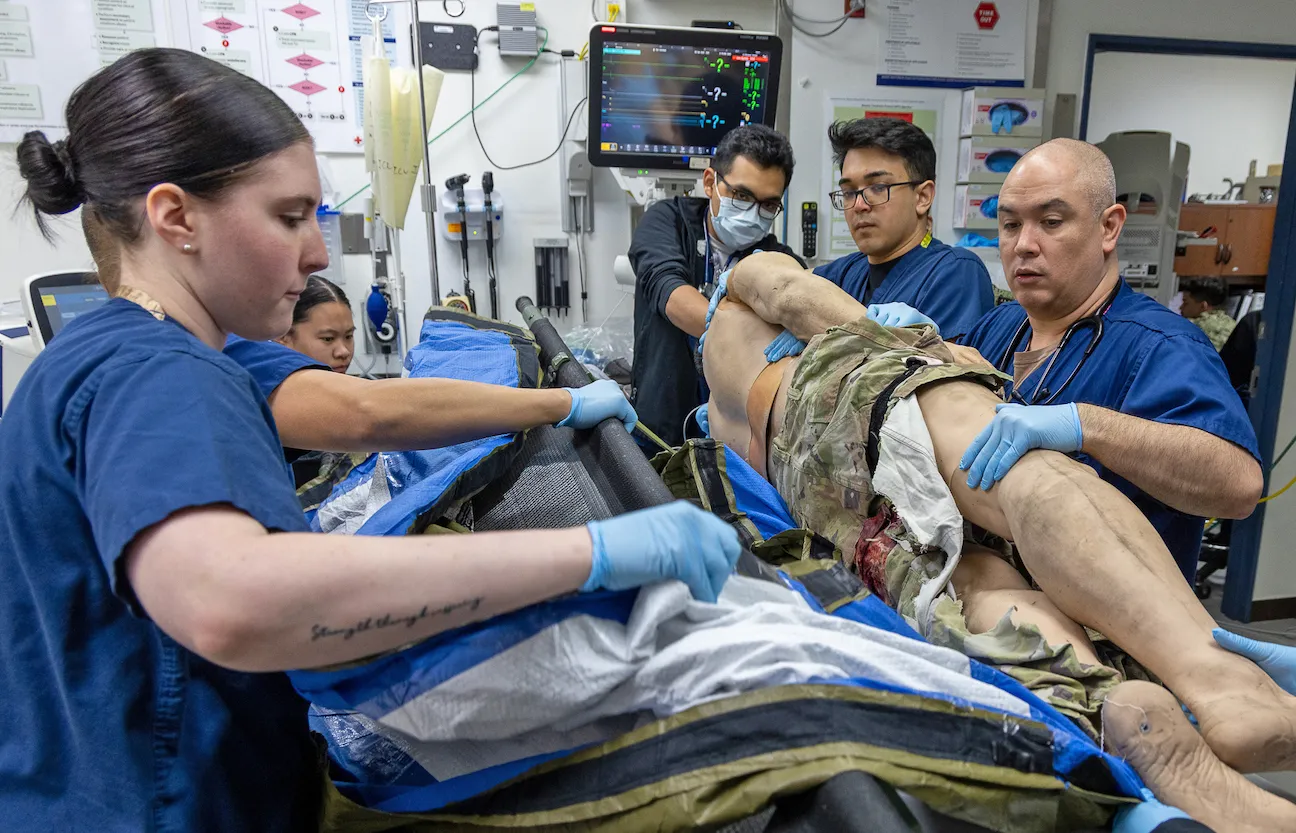
Every new attack brings clusters of victims instead of a single casualty, overwhelming medics who used to have secure evacuation routes and predictable patterns of injury.
That assumption, that rear positions are safe, is gone. The old military adage that distance from the fight equals protection no longer applies.
Iranian-designed drones can fly over a thousand miles, loiter invisibly, and rain devastation anywhere American forces gather. The March drone strike in Kuwait that killed six U.S. service members made this deadly clear.
Even dispersing into civilian areas cannot guarantee safety against cheap aerial killers.
The U.S. response has been training, testing, and talking reform. But while field medics are learning how to handle blast victims under fire, the higher levels of military medicine are dangerously lagging.
Years of hospital downsizing and bureaucratic restructuring at the Department of War have reduced hands-on trauma experience.
Many Army and Navy doctors, according to a 2025 inspector general’s report, are losing their edge simply because they don’t see enough real combat injuries to stay sharp.
Colonel Jennifer Gurney, chief of the Joint Trauma System, has warned that tomorrow’s drone war will force care to move down the ranks.
Brigade-level teams will have to perform lifesaving surgeries in the dirt because drones will make medical evacuation a luxury, not a given. The treasured “golden hour”, the crucial 60 minutes where lives hang in balance, is in danger of becoming a fond memory.
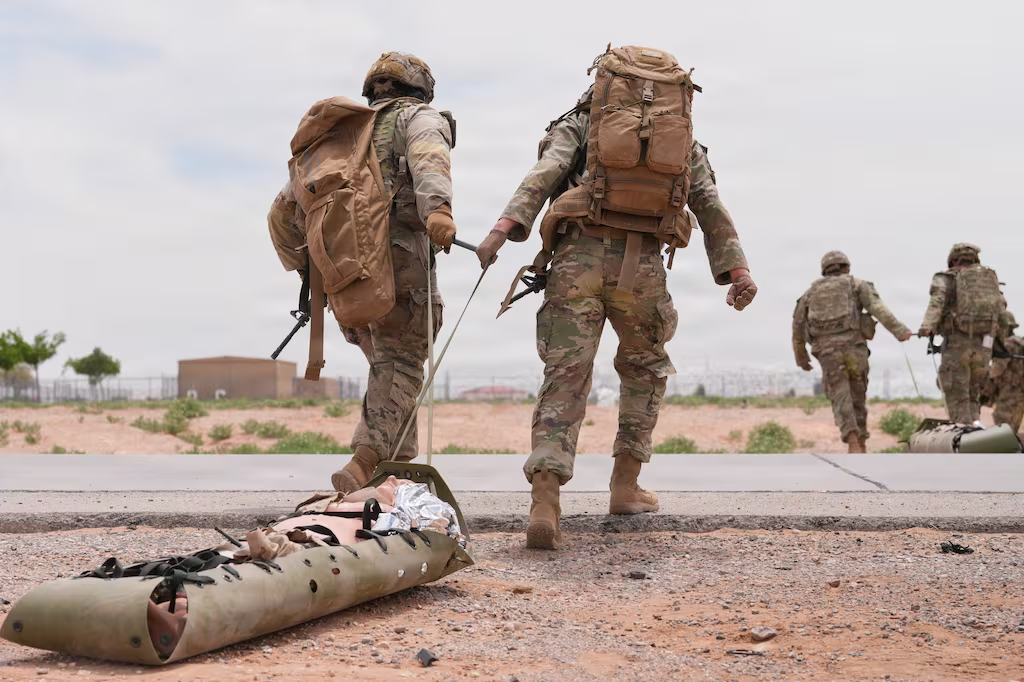
Adding to the problem is the exodus of talent. Rear Admiral David Lane pointed to stubborn bureaucracy and short-sighted budget cuts as the culprits.
After every conflict, Washington bureaucrats hunt for a so-called “peace dividend,” gutting the military medical infrastructure. It’s a familiar story: when the battles quiet down, the bean counters move in and readiness takes the hit.
That erosion of readiness isn’t theoretical anymore. In Iraq and Afghanistan, a wounded soldier could reach an operating table within the hour.
That speed slashed fatality rates from Vietnam’s 36 percent down to about 10 percent. Today, with skies swarming with drones and few surgeons maintaining combat-hardened trauma skills, achieving those life-saving odds will take a miracle.
Military hospitals have little real practice to offer.
Young service members don’t suffer the traumatic injuries that sharpen a surgeon’s combat skills. And while partnerships with elite trauma centers like the University of Maryland and the University of Cincinnati help, those rotations are rare and far too short to make a meaningful difference.
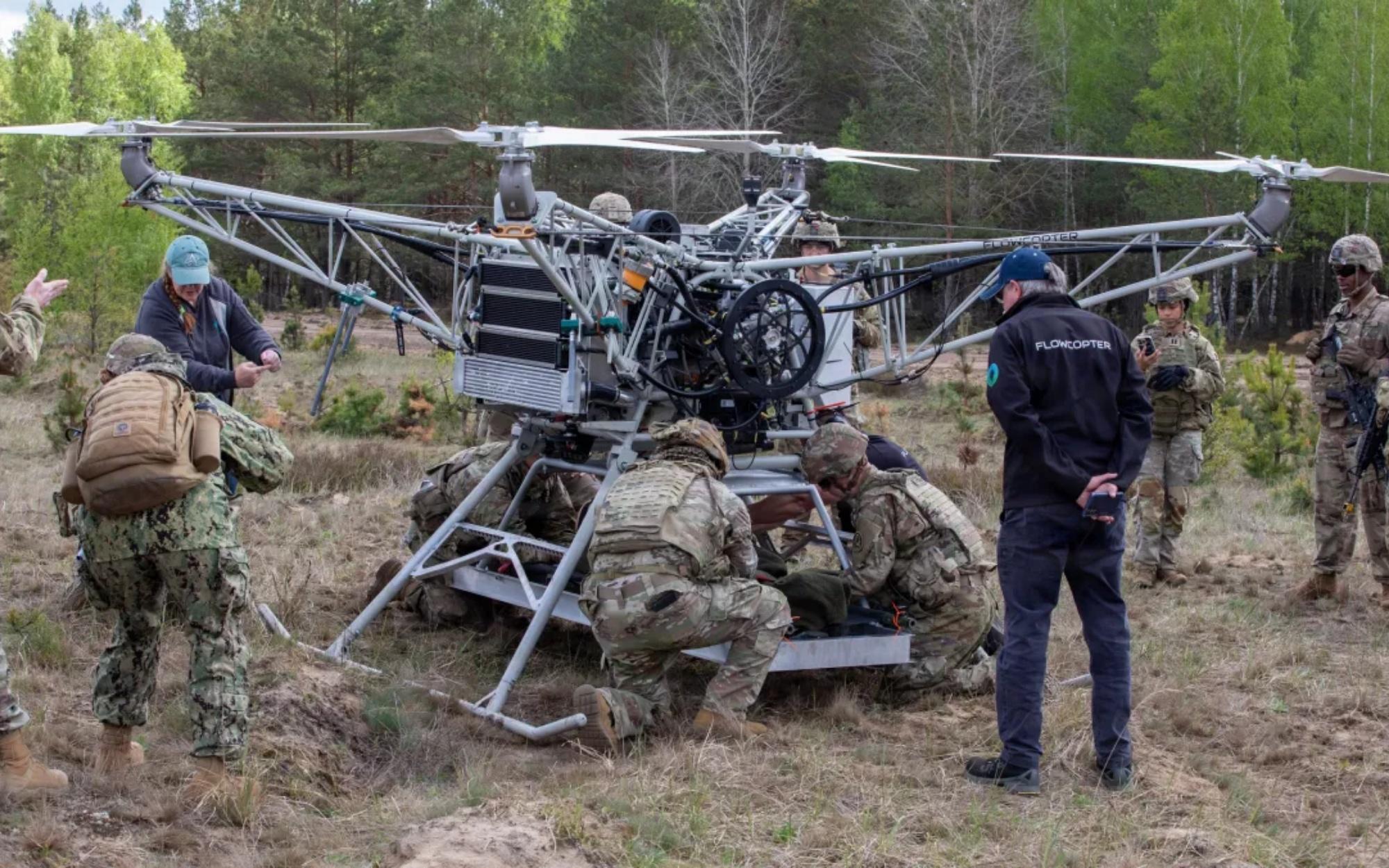
As Dr. Stefani Diedrich, retired Air Force anesthesiologist, put it bluntly: “Doing robotic hernia repair doesn’t prepare you for an explosive amputation.”
Dr. Winslow echoed this concern, warning that if a major campaign breaks out in the Middle East, America’s active-duty surgeons won’t have the recent experience to meet the flood of casualties.
And make no mistake, the threat is real.
With roughly 50,000 American troops deployed across the region and Iran’s Shahed drones prowling the skies, the next fight will be measured not in miles advanced, but in how many can be saved before the next wave hits.
President Trump has vowed to restore U.S. military strength and combat readiness across every domain, from air power to battlefield medicine.
War Secretary Pete Hegseth shares that mission, pressing for a force that can fight and heal under fire, without leaning on peacetime complacency or woke distractions in uniform.
The bottom line? Drone warfare has stripped away the illusion of safety.
The battlefield is everywhere now, and the U.S. medical corps must harden itself for a fight where the front line can change by the minute, and the enemy’s weapon could be a buzzing shape in the sky. If America doesn’t adapt now, lives will be lost not because of enemy fire, but because of bureaucratic blindness.
Are you feeling overwhelmed or hopeless right now? Have you been withdrawing from people or activities you usually enjoy? Are you having thoughts about hurting yourself, or feeling like things will never improve?
You do not have to handle those feelings alone. Support is available, and talking to someone can make a difference. You can reach out to the 988 Suicide & Crisis Lifeline by calling or texting 988, or by chatting online at 988lifeline.org. Trained counselors are available 24 hours a day to listen and help.
If you believe someone is in immediate danger, call emergency services right away. Even a small step, like reaching out to a trusted friend, family member, or professional, can help create a path forward.
Join the Discussion
COMMENTS POLICY: We have no tolerance for messages of violence, racism, vulgarity, obscenity or other such discourteous behavior. Thank you for contributing to a respectful and useful online dialogue.