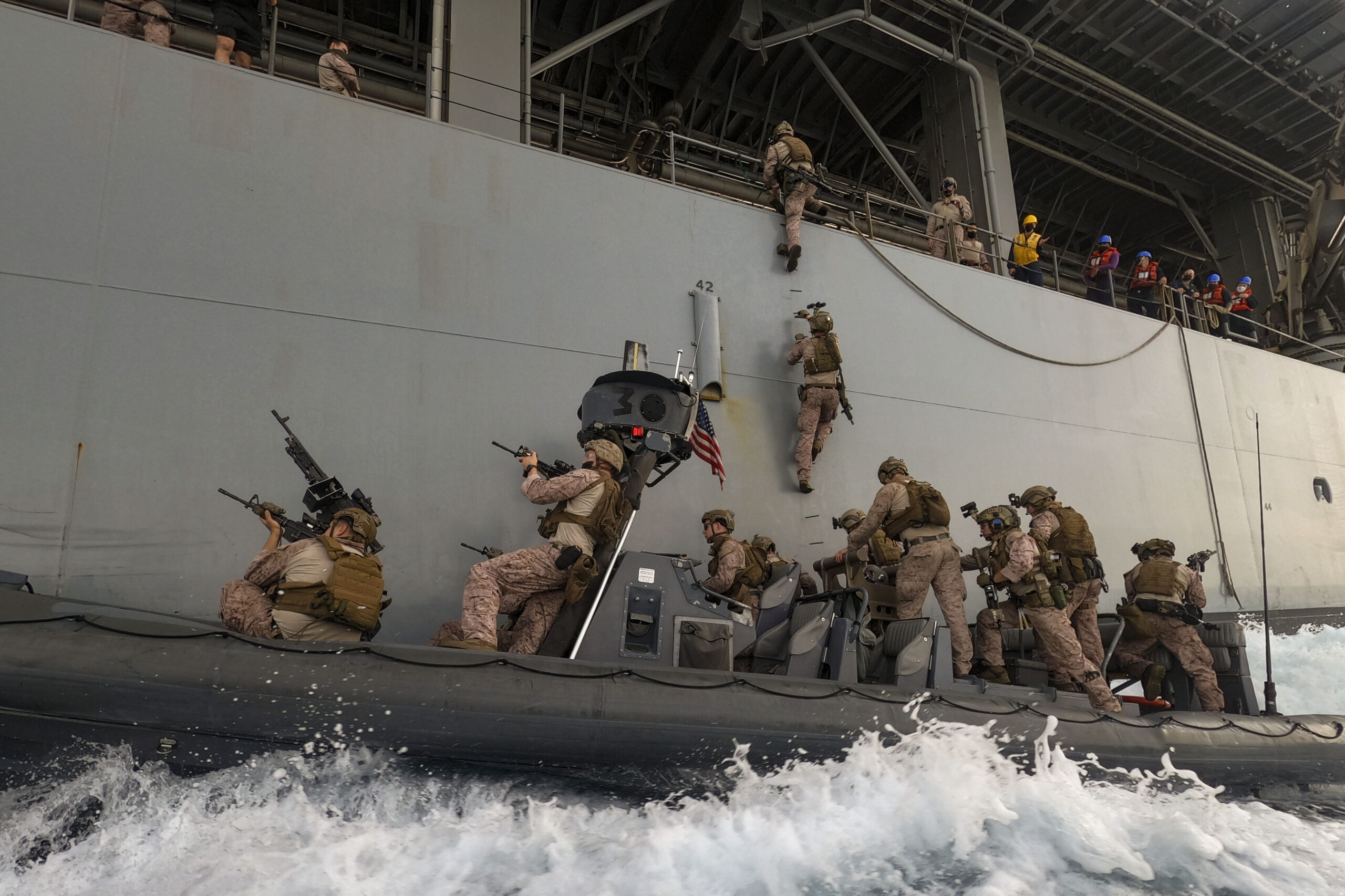
U.S. Marines struck decisively once again, boarding and rerouting an Iranian-flagged tanker this week after it attempted to skirt the ongoing U.S. Navy blockade in the Gulf of Oman.
The operation, led by Marines from the 31st Marine Expeditionary Unit, showcased America’s resolve to choke off Iran’s rogue oil trade and enforce the sanctions the regime has been trying desperately to evade.
According to U.S. Central Command, the boarding took place Wednesday aboard the M/T Celestial Sea, which appeared to be heading toward an Iranian port before being intercepted.
The Marines searched the ship, secured control of the bridge, and redirected it in compliance with the naval blockade order. CENTCOM confirmed that this marks the 91st commercial vessel redirected since the blockade began in early April.
MORE NEWS: Pentagon Confirms First Military Execution in Over 60 Years Will Be Publicly Livestreamed
“U.S. forces continue to fully enforce the blockade and have now redirected 91 commercial ships to ensure compliance,” CENTCOM said, indicating the pressure campaign is both working and intensifying as Iran scrambles to maintain oil revenue under crippling restrictions.
The U.S. Navy blockade, implemented April 12, aims to strangle Tehran’s illegal oil exports used to fund its Revolutionary Guard and terror proxies throughout the region.
Since its launch, American forces have disabled four vessels, destroyed several small attack boats, and intercepted multiple tankers attempting to slip through maritime chokepoints.
On May 8, a U.S. Navy F/A-18 Super Hornet from the USS George H.W. Bush targeted two Iranian-flagged oil tankers with what CENTCOM called “precision munitions.”
The strikes hit smokestacks, neutralizing propulsion and leaving the ships adrift. Both incidents took place as the tankers moved toward Iranian waters in open defiance of the blockade.
That same week, U.S. forces destroyed six small attack boats launched by Iran’s Islamic Revolutionary Guard Corps.
The IRGC boats were speeding toward American naval escorts guarding commercial traffic through the Strait of Hormuz before being obliterated by quick-reacting U.S. defense teams. The message from Washington was unmistakable: any threat in the area would be eliminated without hesitation.
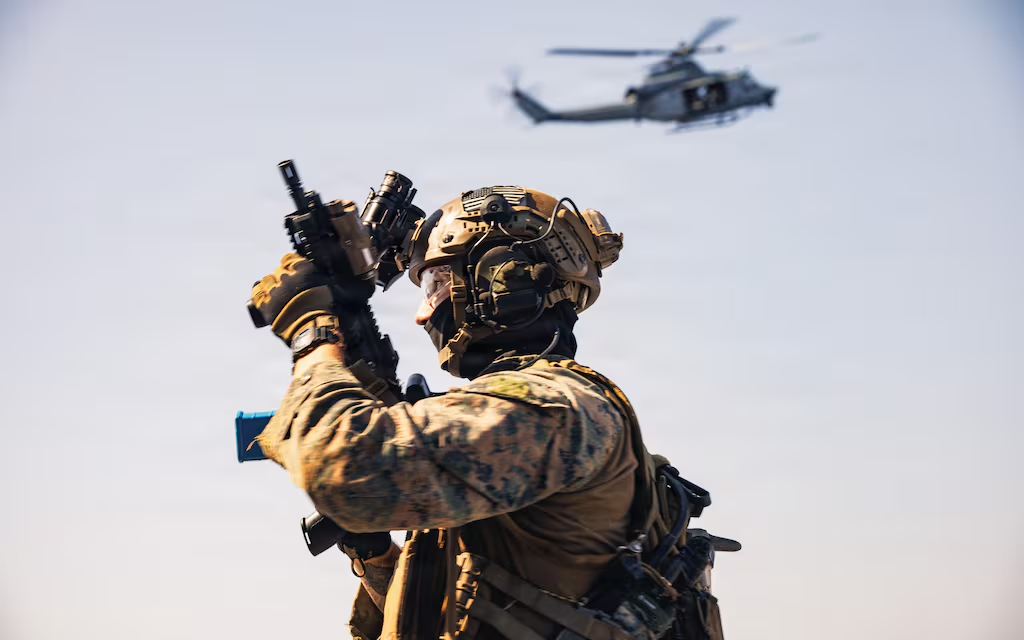
Two days earlier, another Super Hornet from the USS Abraham Lincoln fired on the Iranian tanker M/T Hasna when it ignored multiple U.S. Navy warnings to alter course.
That tanker too was unladen but appeared set to run the blockade, daring a confrontation that ended poorly for Tehran.
The combined operations signal a pattern of measured but forceful U.S. action, a clear departure from the passive hand-wringing that marked the last Democratic administration’s dealings with Iran.
Under President Trump and War Secretary Pete Hegseth, the War Department has maintained a doctrine of decisive deterrence and direct enforcement. The era of empty red lines is clearly over.
President Trump reinforced that posture earlier this week, warning that Washington was prepared to continue strikes if Iran’s leadership refused to engage meaningfully in stalled diplomatic talks.
“Peace through strength” remains his guiding principle, one that the Iranian regime would be wise to take seriously.
American naval power has once again proven capable of imposing real consequences on bad actors in a high-risk region.

The U.S. blockade has not only reduced Iran’s oil flow but also highlighted how quickly U.S. forces can cut off illegal supply lines that fund Tehran’s destabilizing adventures across the Middle East.
Military analysts note that the operations have sent a shockwave through the maritime sector as other nations’ shipping companies recalibrate routes to avoid confrontation or potential seizure.
Even neutral operators now recognize that the U.S. blockade is absolute, and compliance with CENTCOM orders is not optional.
The Gulf of Oman remains one of the most volatile waterways on Earth, but with U.S. warships actively patrolling every corridor and experienced Marines executing precision seizures, American command of the region is clear.
The Iranian regime may still throw rhetoric into the wind, but its seaborne defiance has been met with swift judgment.
The Celestial Sea’s capture underscores that this is not a symbolic blockade.
It is a real enforcement campaign backed by power, precision, and political will from a President unafraid of confrontation when American strength is on the line.
Iran’s oil smuggling games are running out of time, and the United States military is making sure of it.
Join the Discussion
COMMENTS POLICY: We have no tolerance for messages of violence, racism, vulgarity, obscenity or other such discourteous behavior. Thank you for contributing to a respectful and useful online dialogue.